
Why So Many Bulk Apparel Orders End in Frustration (And What's Really Behind It)
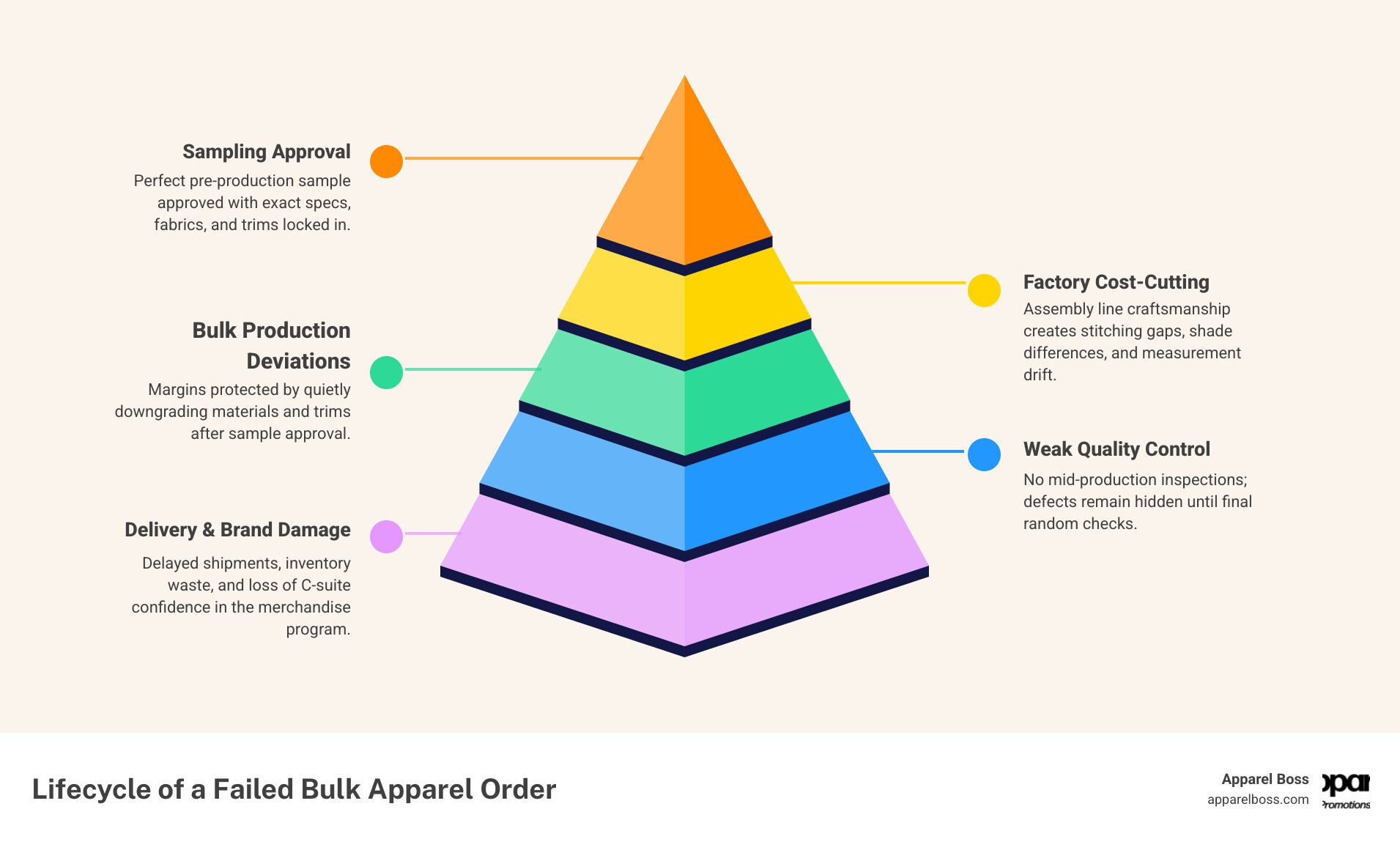
Why bulk apparel orders fail is one of the most common — and costly — problems facing marketing, HR, and operations leaders who manage corporate merchandise programs at scale.
Here are the most common reasons bulk orders go wrong:
- Fabric batch inconsistencies — dye lots and post-processing differ between the sample and the full production run
- Craftsmanship deviations — skilled hands build samples; assembly lines fulfill bulk orders, and the gap shows
- Vague tech packs — missing specs, tolerance ranges, and trim details leave factories guessing
- Factory cost-cutting — once a sample is approved, some factories quietly downgrade materials to protect their margins
- Poor lead time tracking — no milestone system means delays compound silently until it's too late
- Supply chain disruptions — port congestion, labor shortages, and raw material gaps derail even well-planned orders
- Weak quality control — most buyers skip mid-production inspections and only check the final shipment
The result? Garments that don't match what you approved, shipments that miss your launch window, and a merchandise program that damages your brand instead of building it.
This isn't just a sourcing inconvenience. For companies running employee onboarding kits, seasonal brand campaigns, or scaled uniform programs, a failed bulk order means wasted budget, missed timelines, and a C-suite that loses confidence in your process.
The research is clear: fabric-related inconsistencies alone account for more than 60% of problems in bulk clothing orders. And most of those failures were preventable.
I'm Salvatore Vento, Marketing Director at Apparel Boss, where I've spent years diagnosing exactly why bulk apparel orders fail for scaling companies and rebuilding their production workflows to prevent it. In this guide, I'll walk you through every failure point — from sampling gaps to supply chain breakdowns — so you can protect your brand and get predictable results at volume.
The Structural Gap: Why Bulk Apparel Orders Fail After Sampling
Many operations and procurement teams believe that once a sample is approved, the hard work is done. In reality, the transition from a single approved sample to a mass-production run is where the highest risk of failure lies.
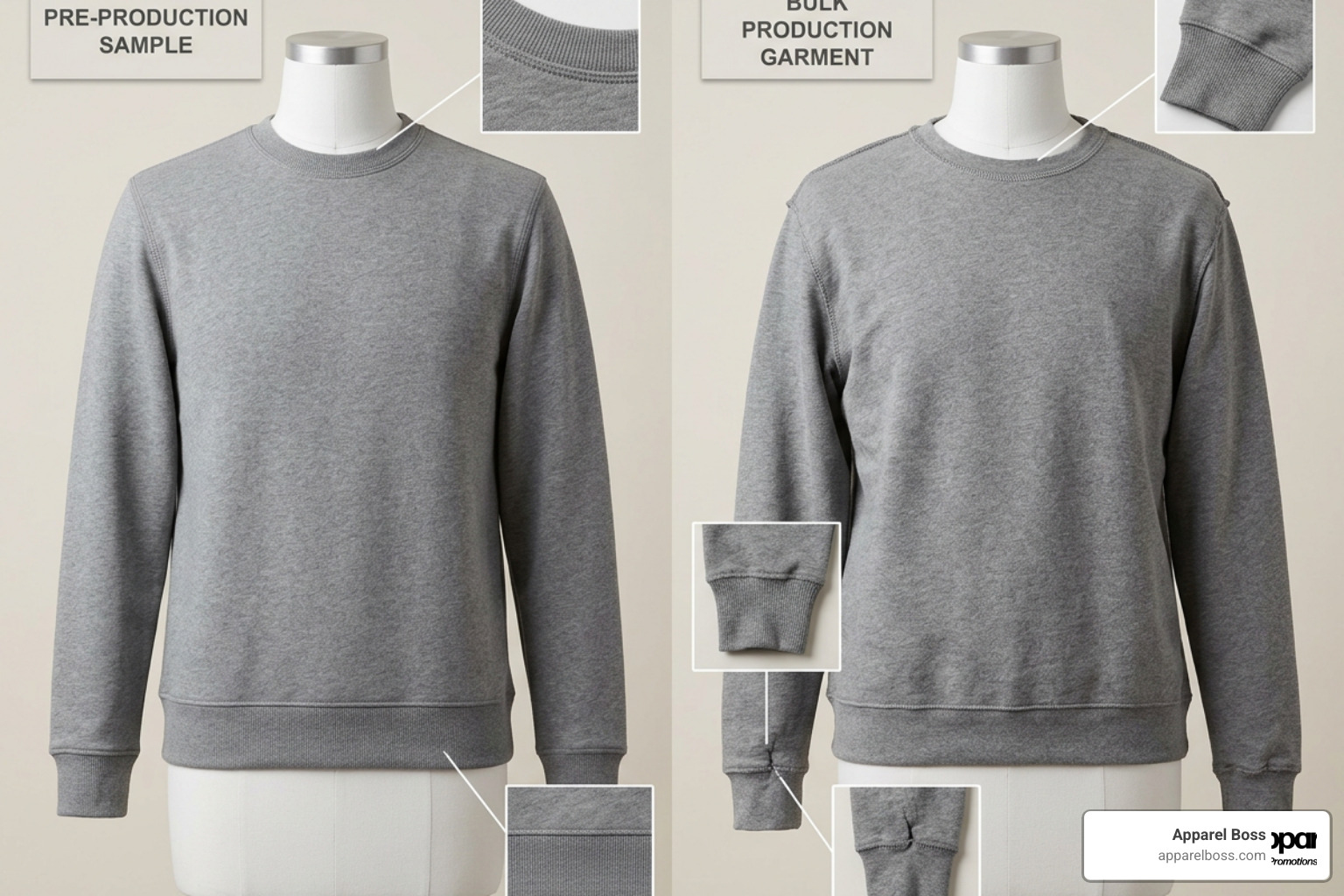
This structural gap occurs because a sample is often a single, hand-crafted representation of an idea, whereas bulk orders are subject to the realities of industrial assembly lines. Understanding this gap is the first step to learning How to Fix Inventory Waste: 5 Methods That Guarantee Results and protecting your corporate investments.
Fabric Batch Inconsistencies and Dye Lot Variations
The most common reason bulk orders deviate from samples is fabric variation. Fabric-related issues account for over 60% of all bulk production defects. When a factory creates a sample, they often use a small swatch of fabric or a refined, manually dyed trial yardage.
When mass production begins, the factory must source large fabric rolls from industrial dye lots. Even slight variations in temperature, water chemistry, or dye concentration can cause the final bulk fabric to look and feel different from the sample. Furthermore, unqualified post-processing—such as skipping the necessary steam-setting and pre-shrinking stages—can lead to severe shrinkage or texture changes after the first wash. Without a documented shade approval process using physical color references, these subtle differences multiply across thousands of units.
Craftsmanship Deviations on the Assembly Line
A sample is usually made by a factory’s most senior sample-maker—a highly skilled artisan working slowly and meticulously. However, when the bulk order goes to the factory floor, it is broken down into an assembly line where workers of varying skill levels handle different components under tight time constraints.
This handoff is precisely Why Did My Knitwear Order Go Wrong — And How to Prevent It | Lin Sweater. In knitwear, for example, linking and seam-sewing are highly skill-dependent. When rushed, assembly line workers may allow stitching gaps, misaligned seams, or tension issues that cause the fabric to pucker or pull. What looked like a flawless sample can quickly turn into a batch of structurally weak corporate garments.
Technical and Communication Breakdowns in Bulk Production
A successful bulk apparel run relies on precise, technical communication. When brands treat custom clothing orders as simple transactional purchases rather than technical manufacturing projects, communication breakdowns are inevitable.
The Danger of Vague Tech Packs and Missing Specifications
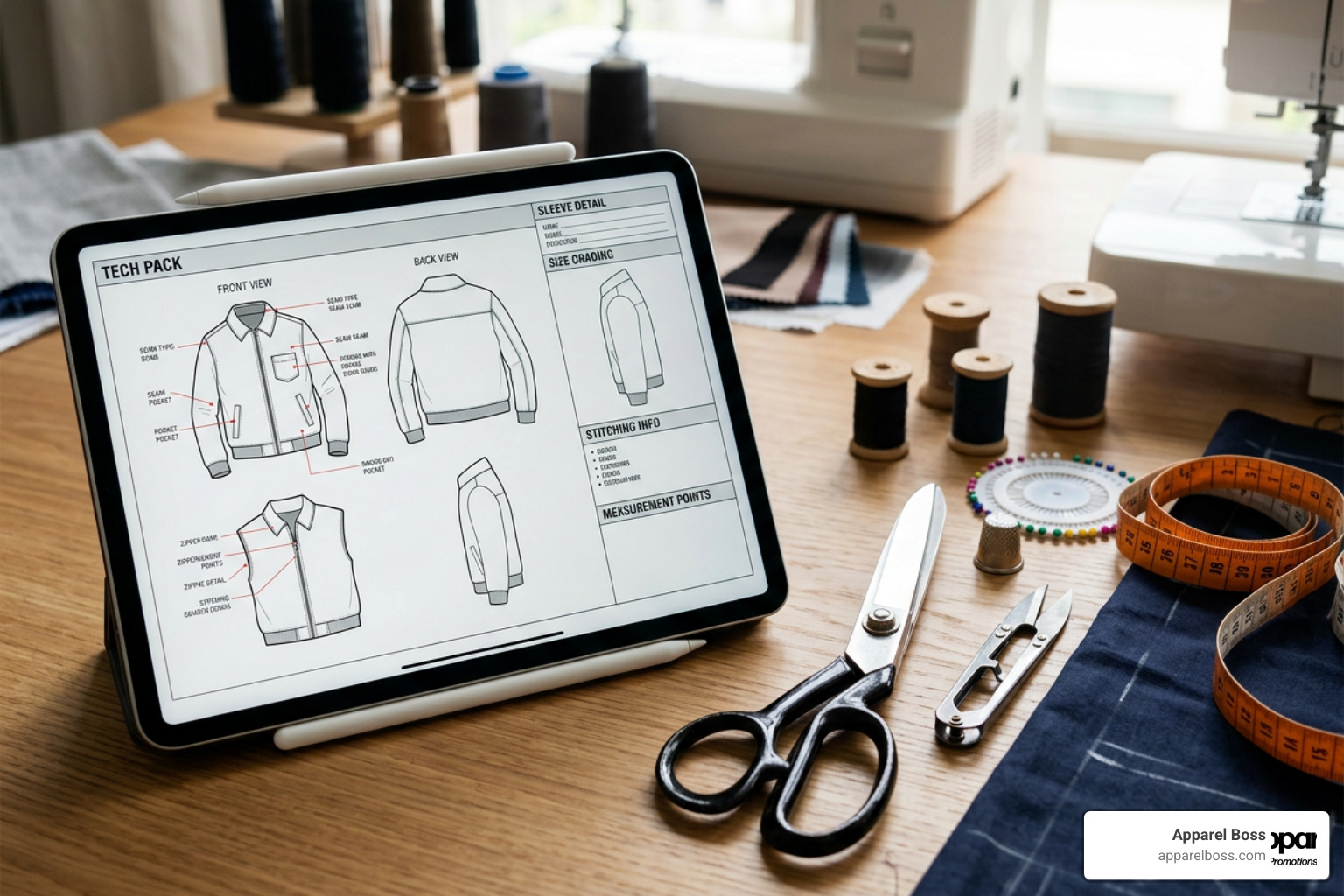
A "tech pack" is the blueprint for your garment. Many corporate buyers make the mistake of sending a factory a basic design file or a flat graphic and expecting perfect results. This lack of detail is a primary driver behind Why Your Custom Shirt Order Is Stuck in Production Limbo.
Without a complete tech pack, the factory is forced to make assumptions. Your blueprint must specify:
- Exact fabric composition and weight (GSM)
- Detailed measurement spec sheets with strict tolerance ranges (e.g., ±1.5cm)
- An accessory standard sheet detailing zipper brands, button types, and thread counts
- Clear placement and sizing rules for custom embroidery or screen printing
If these parameters are vague, the factory may substitute cheaper trims, alter the fit, or misalign your brand's logo entirely.
Why Bulk Apparel Orders Fail Due to Cost Compression
In the B2B world, the lowest bid is often the most dangerous. When corporate buyers squeeze factories on price, the factory's profit margins are compressed. To survive, some factories resort to cost-cutting behaviors after the sample is approved.
This low-price trap leads to quiet material downgrades—such as substituting a 220 GSM combed cotton for a cheaper 180 GSM carded cotton, simplifying the stitching from double-needle to single-needle, or using low-grade sewing threads. To prevent this, your manufacturing contract must bind all material and construction specifications to the final approved sample, making any unauthorized substitution a breach of contract.
Operational and Supply Chain Bottlenecks
Even if your design is perfect, external operational and logistical challenges can stall your program and destroy your timeline.
| Fabric/Trim Component | Typical Lead Time (Stock) | Typical Lead Time (Custom-Dyed/Branded) |
|---|---|---|
| Jersey/Fleece Fabric | 3–7 business days | 15–30 business days |
| Standard Trims (Zippers, Buttons) | 7–12 business days | 12–20 business days |
| Specialty/Branded Packaging | 5–10 business days | 15–25 business days |
Supply Chain Disruptions and Vendor Inventory Failures
Global supply chain disruptions—such as port congestion at the Port of New York and New Jersey, raw material shortages, and labor gaps—directly impact production timelines. However, many failures are actually caused by poor vendor inventory practices.
Many commodity swag vendors operate on a "just-in-time" model, meaning they only buy the blank garments from wholesale distributors after you pay them. If a major mill experiences a shortage of a popular style or color, your order faces immediate backorders or cancellations. This is a common operational bottleneck, and knowing how to navigate it is essential to understanding Is Your Merch Missing? How to Handle Shipping Delays and Store Issues. At Apparel Boss, we mitigate this by managing dedicated inventory programs for our clients, ensuring your core items are always physically secured in our New York warehouses.
Why Bulk Apparel Orders Fail Due to Poor Lead Time Tracking
Delays in bulk apparel production rarely happen all at once; they compound silently over several weeks. Without a proper system to Track Supplier Lead Times in Bulk Clothing Programs: Tech | Fabrikn, buyers remain blind to slips until the shipping deadline is missed.
To maintain accountability, I recommend establishing milestone-based tracking. You must monitor the planned vs. actual dates for every critical stage:
By tracking these milestones and setting clear alert thresholds (e.g., flagging any fabric delivery delay of more than 3 days), you can resolve bottlenecks before they disrupt your entire corporate launch. This disciplined approach is the cure for the issues discussed in Inside the Factory: 5 Common Causes of Production Delays and How to Avoid Them.
Risk Mitigation: Quality Control Systems That Protect Your Brand
To protect your brand’s reputation and budget, you must implement a rigorous quality control (QC) framework that catches errors before the shipment leaves the factory floor.
Implementing Multi-Stage Quality Inspections
Relying solely on a final inspection of finished goods is a recipe for failure. If defects are found at the very end, your choices are either to accept flawed merchandise or face months of production delays.
Instead, implement a multi-stage inspection process:
- Pre-Production Gold Sample: Produce and lock a final "gold sample" that represents the exact standard for bulk production.
- In-Line QC (Mid-Production): Arrange an in-line quality inspection when 20% to 30% of the bulk order is completed. This is the critical window to catch color deviations, stitching gaps, or sizing errors before they are applied to the entire run.
- Final Random Inspection (AQL Standards): Use industry-standard Acceptable Quality Limit (AQL) parameters (typically AQL 2.5) to statistically verify that the batch meets your standards before shipping.
Contractual Safeguards and Dispute Resolution
Your business relationship with an apparel partner should always be backed by clear contractual safeguards. Your agreements should establish:
- Defect Tolerance Levels: Define what constitutes a major vs. minor defect and specify the maximum acceptable percentage.
- Chargeback and Rework Clauses: Outline the factory's financial liability if a shipment fails to meet the approved gold sample, including mandatory rework timelines at their expense.
- Order Termination Terms: Protect your capital by securing the right to terminate the agreement and receive a full refund if critical milestones or quality standards are repeatedly missed.
For a deeper dive into establishing these operational safeguards, read our Stop Throwing Money Away by Solving Your Inventory Waste Issues guide.
Frequently Asked Questions About Bulk Apparel Failures
What are the most common reasons bulk apparel orders differ from approved samples?
The primary reasons are fabric batch variations (dye lots), craftsmanship differences between a master sample-maker and assembly-line workers, factory cost-cutting after sample approval, and vague tech pack specifications that leave design details open to interpretation.
How can corporate buyers prevent factory cost-cutting during bulk production?
You can prevent cost-cutting by using legally binding contracts that lock in specific material weights and trim brands, conducting mandatory mid-production inspections at 20-30% completion, and comparing physical bulk fabric swatches against the approved gold sample before sewing begins.
What steps should a brand take when a bulk order arrives with severe defects?
When a bulk order fails to meet specifications, you should immediately document all deviations with photos and measurements. Depending on your contract, you can negotiate price discounts for minor issues, demand that the factory rework the defective units at their expense, or initiate chargebacks and terminate the contract if the errors are severe. For a systematic look at managing these data and ordering discrepancies, see How to Diagnose Wholesale Ordering Errors in 2026.
Conclusion: Partner with a Team That Eliminates Sourcing Risks
At the end of the day, managing bulk apparel programs shouldn't feel like a roll of the dice. When you partner with Apparel Boss, you bypass the structural, technical, and operational failures that plague commodity swag sites. We bridge the gap between premium brand standards and operational scalability.
Whether you need seamless Online Concierge Company Stores to distribute uniforms globally, custom-tailored employee onboarding programs via Custom Kitting, or artisan-level custom embroidery, our team handles the heavy lifting. We manage the entire lifecycle—from tech pack locking and mid-production quality inspections to white-glove distribution from our New York hubs—ensuring every single piece reflects the prestige of your brand.
Don't let your next corporate merchandise program become another statistic. Let's design a reliable, high-end apparel system for your team.
Explore Apparel Boss Managed Services