Why HR Scalable Onboarding Solutions Need a Physical Delivery System
HR scalable onboarding solutions work best when HR workflows and physical welcome-kit delivery run as one system. Start by connecting the new-hire record to a repeatable process that collects a shipping address and size details, triggers a prebuilt kit, tracks delivery, and gives HR visibility without asking someone to pack boxes by hand.
For growing teams, the essentials are:
- A consistent kit standard with approved branding, packaging, and contents.
- Automated triggers tied to offer acceptance, start dates, or onboarding milestones.
- Centralized inventory and fulfillment instead of supplies scattered across offices or closets.
- Employee self-service for address confirmation, sizing, and shipment updates.
- Delivery and usage data to spot delays, waste, and weak adoption.
This matters because a company can standardize its digital paperwork while still creating an uneven first impression. If one new hire receives an organized, on-brand kit before day one and another gets a last-minute shipment weeks later, the process has scaled its inconsistency.
Strong onboarding begins before the first day and continues beyond the first week. Structured programs support faster productivity and stronger retention, but culture cannot live in documents alone. A well-run company store or managed kitting program adds a reliable physical touchpoint to the digital workflow, whether employees start at headquarters, at home, or across multiple locations.
I am Salvatore Vento, Marketing Director at Apparel Boss. I help scaling teams build HR scalable onboarding solutions through reliable custom kitting, online company stores, and branded apparel programs that reduce manual work while protecting quality and brand consistency.
Core Architecture: HR Scalable Onboarding Solutions vs Administrative HRIS
When companies rapidly expand their headcount, their operational infrastructure is put to the ultimate test. Leaders frequently look at their HR tech stack to understand why onboarding operations are stalling. The culprit is almost always architectural: businesses confuse their administrative system of record with their tangible employee experience engine.
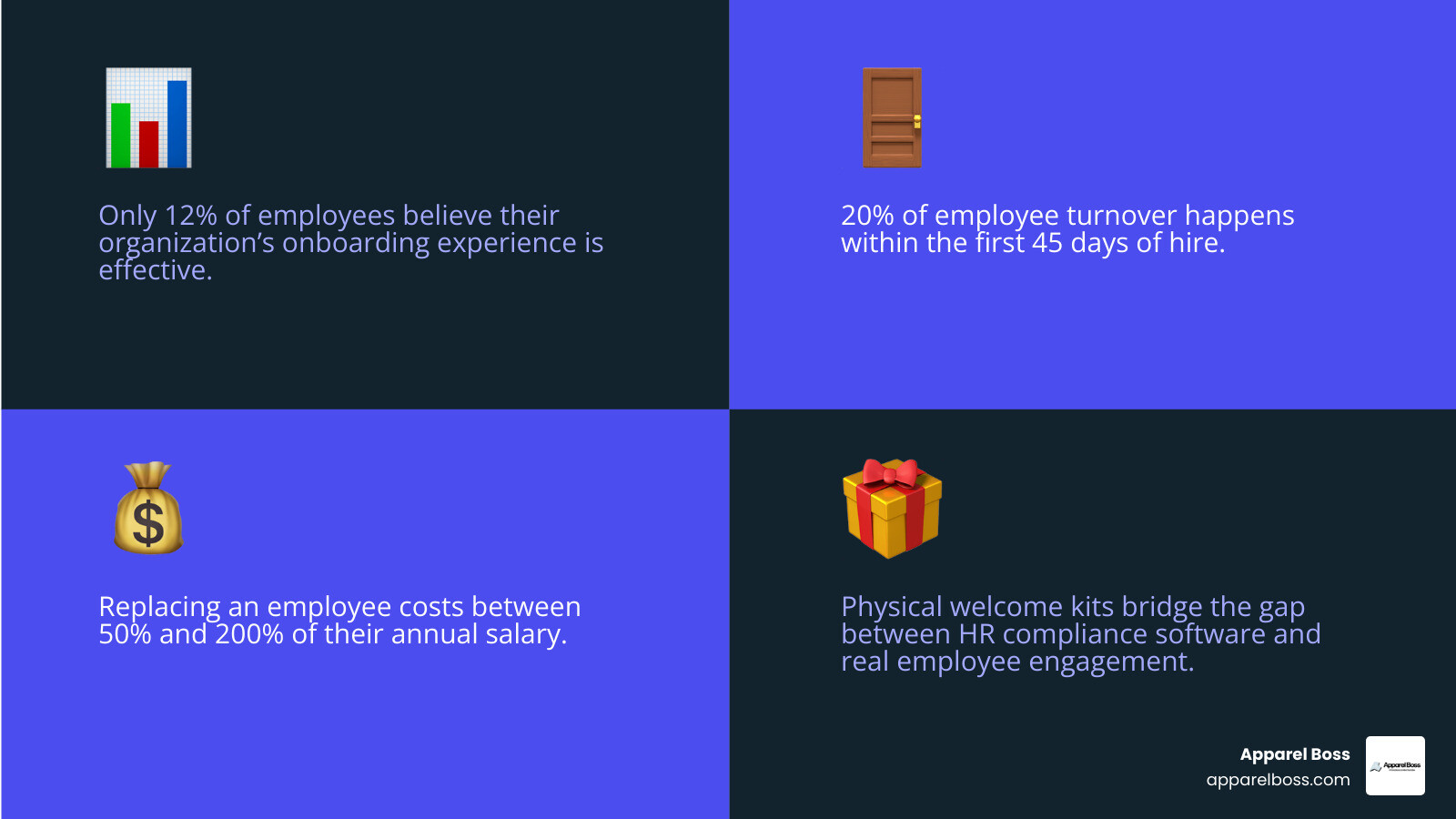
Only 12% of employees believe their organization’s onboarding experience is effective. At the same time, 20% of employee turnover happens within the first 45 days. When you consider that replacing an employee costs between 50% and 200% of their annual salary, the financial cost of a broken onboarding process is massive. To solve this, you need to understand where software ends and operational execution begins.
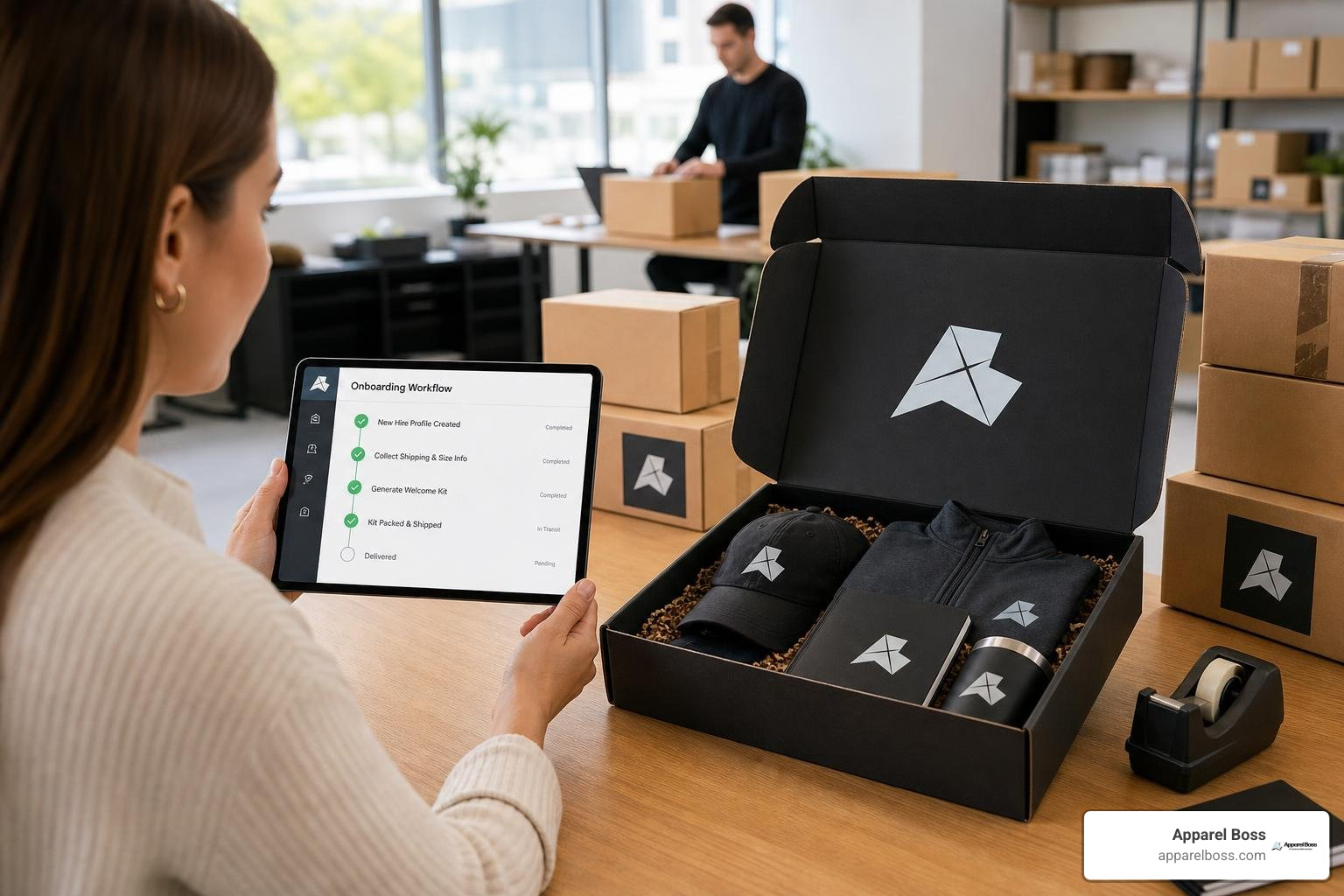
A comprehensive Detailed Guide to the HR Onboarding Process for New Employees highlights how modern onboarding bifurcates into digital compliance and physical engagement.
Administrative HRIS Platforms vs Automated Onboarding Kitting Systems
An administrative Human Resources Information System (HRIS) acts as your system of record. Its primary job is legal, financial, and regulatory compliance. It processes Form I-9 verification, standardizes direct deposit, collects tax declarations, and manages payroll syncs.
Conversely, an automated onboarding kitting system is an operational engine. Its job is physical brand delivery, employee belonging, and cultural integration.
| Feature / Operational Need | Administrative HRIS Platform | Automated Onboarding Kitting System |
|---|---|---|
| Primary Core Role | Data compliance, payroll, benefits, and legal record storage | Physical brand immersion, apparel distribution, and cultural activation |
| Trigger Mechanism | Recruiter candidate status change in ATS | Webhook or automated API trigger upon signed offer |
| Logistics Capabilities | Digital forms, e-Signatures, and document storage | Real-time warehousing, pick-pack-ship operations, and courier management |
| Inventory Control | None (pure software interface) | Live stock tracking, low-threshold alerts, and batch garment decoration |
| Sizing & Preference Handling | Basic text input fields without inventory validation | Smart self-service employee portals with live sizing charts and stock allocation |
| Fulfillment Footprint | Cloud database | Centralized warehouse hubs serving multi-location workforces |
When organizations attempt to force their HR team to manage physical brand distribution through administrative software alone, operations break down. Decentralized shipments get sent from different offices, wrong apparel sizes are purchased at retail prices, and new hires end up with inconsistent gear.
All-in-One HR Suites vs Specialized Kitting and Company Store Solutions
All-in-one software suites like Rippling or BambooHR solve major digital challenges. Users rate platforms like Rippling highly for administrative ease, but no software platform can magically pack a box, embroider a jacket, or manage apparel warehousing.
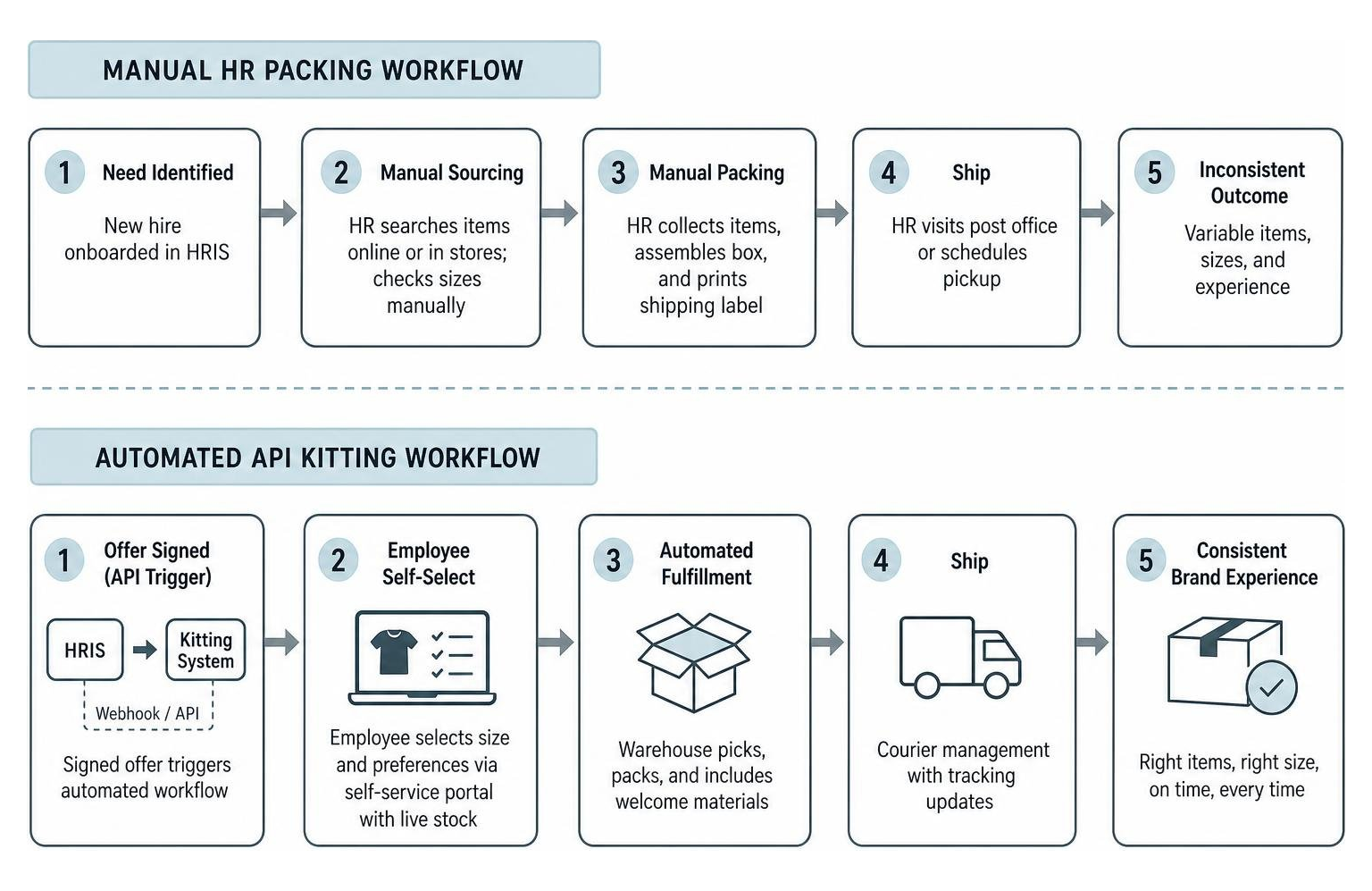
Relying entirely on a digital HR platform creates a physical gap. Without an integrated fulfillment engine, your HR generalists end up spending hours every week running to local post offices, ordering random items from commodity websites, and taping boxes on the office floor.
The scalable solution is pairing your core HR software with dedicated services and custom kitting platforms. By connecting your HR platform's webhooks directly to specialized online company stores, employee milestones instantly trigger automated, artisan-quality merchandise fulfillment.
The Core Pillars of Scalable Onboarding Kit Architecture
Scaling companies cannot afford ad-hoc welcome packages. Creating an onboarding framework that works for your 10th hire just as effectively as your 500th hire requires clear systems. For a complete blueprint, read The Ultimate Blueprint for Creating an Onboarding Process From Scratch.
A reliable onboarding kit architecture rests on three operational pillars.
Preboarding Activation and Automated Kit Delivery
Preboarding begins the minute an offer letter is signed. This critical window sets the tone for the entire employee lifecycle. Leaving a new hire in radio silence between offer acceptance and Day One creates buyer's remorse and spikes early drop-off rates.
By leveraging The Definitive Guide to Remote Onboarding Kit Delivery Solutions, forward-thinking organizations automate address collection and garment sizing through secure portals.
This triggers custom kit assembly instantly, ensuring premium welcome packages land on the employee’s doorstep several days before their start date. Early delivery turns anxious anticipation into excitement and pride.
First-Week Culture Integration and Branded Apparel Distribution
Day One should be about immersion and clarity, not administrative scramble. When a remote or in-person hire opens a retail-quality welcome package on their first morning, it bridges the physical distance between team members.
Standardizing branded merchandise across cohorts ensures equity. No matter their department or location, every employee receives consistent, high-standard branded gear—eliminating the messy experience of low-grade commodity items or missing items.
Milestone-Based Enablement: 30-60-90 Day Recognition Programs
Scalable onboarding does not end on Day Five. Structured onboarding programs drive 82% higher employee retention and 70% higher productivity when sustained over time.
Automating custom distributions across 30, 60, and 90-day checkpoints reinforces achievements as employees ramp up. When linked with an ongoing custom kitting program, milestone fulfillment runs quietly in the background without burdening your People Operations team.
Technology and Logistics: Automation, Warehousing, and Remote Enablement
To eliminate the manual strain on internal teams, organizations must treat onboarding logistics as a connected supply chain.
Operationalizing HR Scalable Onboarding Solutions Across Remote and Multi-Location Teams
Distributed workforces demand centralized operational control. When your hires are spread across multiple locations, attempting to buy, store, and ship merchandise from local regional offices leads to uneven branding, fragmented inventory, and spiraling freight fees.
The solution is centralizing inventory inside a managed warehouse hub. Implementing The Easiest Way to Automate Employee Kit Delivery ensures that your assets are stored, tracked, and dispatched under strict quality control standards.
HRIS Workflow Automation and Kitting Integration
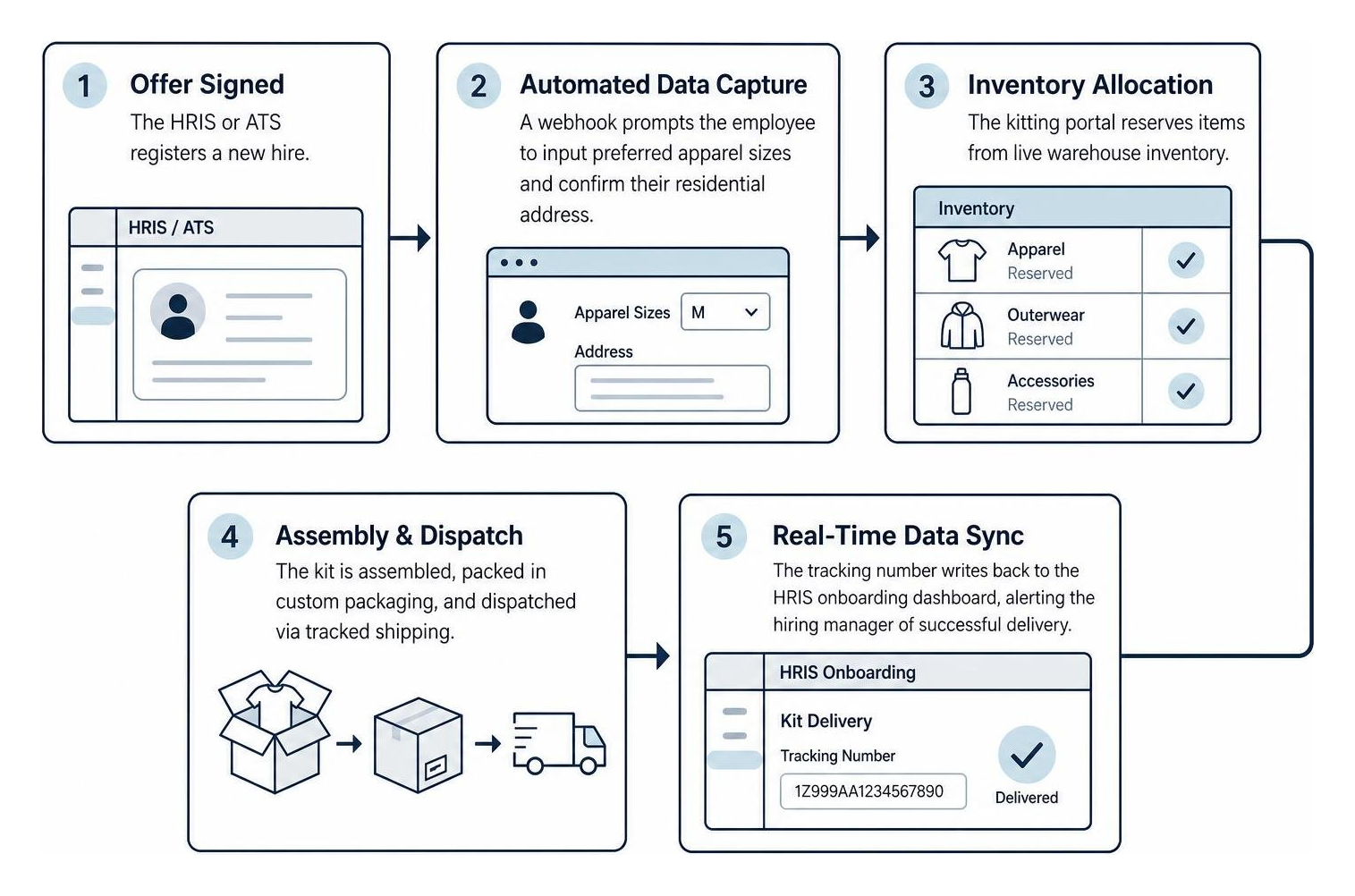
True operational scale requires integrating digital triggers with physical workflows:
- Offer Signed: The HRIS or ATS registers a new hire.
- Automated Data Capture: A webhook prompts the employee to input preferred apparel sizes and confirm their residential address.
- Inventory Allocation: The kitting portal reserves items from live warehouse inventory.
- Assembly and White-Glove Dispatch: The kit is assembled, packed in custom packaging, and dispatched via tracked shipping.
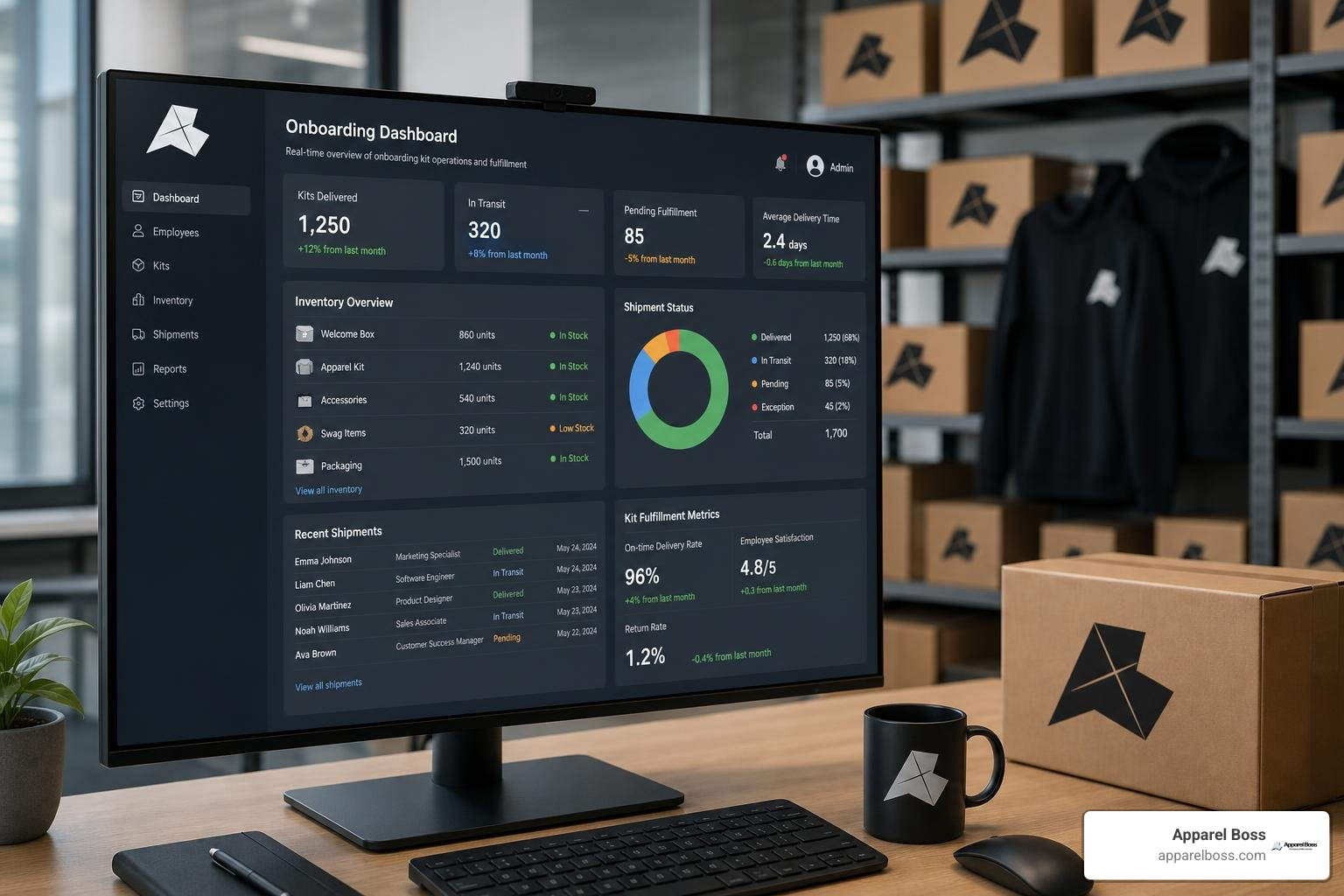
- Real-Time Data Sync: The tracking number writes back to the HRIS onboarding dashboard, alerting the hiring manager of successful delivery.
Eliminating Common Scaling Pitfalls: Closet Packing and Inventory Waste
Informal onboarding breaks down in predictable ways:
- The Supply Closet Trap: HR managers and office coordinators lose hours sorting through messy piles of boxes, hunting for correct apparel sizes.
- Size Inaccuracies: Guessing employee apparel sizes results in excess smalls and XXL sizes gathering dust while medium and large sizes run out immediately.
- Subpar Commodity Sourcing: Buying cheap, unvetted items from transactional web shops damages brand perception from Day One.
- Dead Stock Accumulation: Unmanaged orders create piles of outdated, unusable branded products.
Transitioning to an online company store and managed kitting workflow eliminates inventory waste by aligning production and storage with real-time hiring data.
Business Impact: Measuring ROI, Metrics, and Total Cost of Ownership
Investing in a scalable onboarding program is a strategic business decision that delivers measurable financial returns.
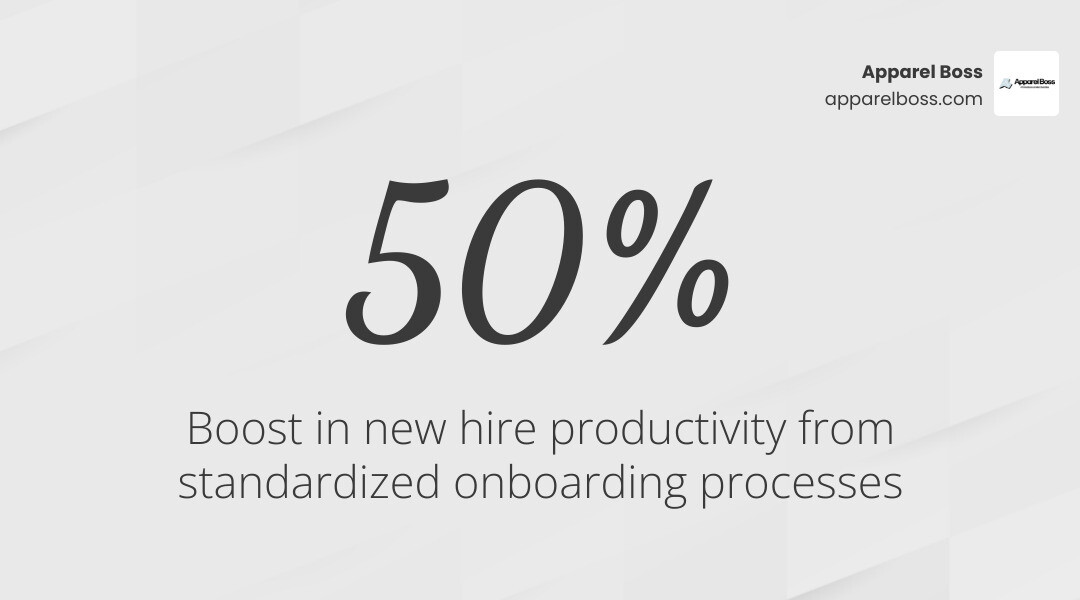
Organizations that build standardized onboarding processes report a 50% boost in new hire productivity. For a deeper breakdown of these figures, see The Definitive Guide to Calculate ROI of Corporate Gifting Retention.
Core Quantitative Metrics: Retention, Adoption, and Administrative Hours Saved
- Time-to-Productivity: Employees integrated through structured onboarding reach full operational capacity faster, saving weeks of wasted payroll.
- Early Retention Gains: Reducing early turnover within the first 45 days protects against costly recruiting cycles and lost momentum.
- Recovered Administrative Time: Automating kit assembly and delivery frees up HR teams to focus on talent development, culture, and strategic priorities.
Evaluating Total Cost of Ownership in HR Scalable Onboarding Solutions
Calculating the true cost of an onboarding program requires looking past product unit costs:
$$\text{Total Cost of Ownership} = \text{Garment & Asset Production} + \text{Warehousing & Kitting} + \text{Freight} + \text{Internal Labor Saved} - \text{Eliminated Waste}$$
When internal staff pack boxes manually, the hidden labor cost, expensive emergency shipping rates, and discarded wrong-size inventory quickly add up. A managed kitting solution stabilizes expenses, avoids waste, and ensures predictable budgeting.
Frequently Asked Questions About Scalable Onboarding
What is the primary difference between HRIS onboarding and physical onboarding kit solutions?
An HRIS platform manages the digital data, compliance forms, and employee records required for hiring. A physical onboarding kit solution manages the production, warehousing, assembly, and automated home delivery of branded apparel and welcome packages. Both systems work together to deliver a smooth onboarding experience.
When should a fast-growing company transition away from manual onboarding kit assembly?
Companies should transition away from manual assembly the moment they hire across multiple locations, onboard more than two to three employees per month, or find that HR staff are losing hours packing boxes and visiting courier drop-offs.
What onboarding workflows should HR teams automate first?
HR teams should first automate address and apparel size collection, followed by inventory allocation triggers tied to signed offers, and automated shipping updates synced directly into their core employee dashboard.
Conclusion
Scaling an organization requires operational systems that handle growth without sacrificing company culture. Modern HR leaders understand that welcome emails and digital handbooks alone cannot build a lasting sense of belonging. By pairing automated software triggers with artisan-quality branded apparel and managed distribution, companies create an onboarding engine that scales reliably.
Modernizing your onboarding infrastructure protects valuable internal time, eliminates wasteful inventory, and ensures every single new team member experiences a memorable first day.
If your team is ready to replace manual logistics with a reliable, white-glove merchandise solution, connect with our team to discover how our managed onboarding kit fulfillment and custom kitting programs can elevate your onboarding process.
Scalable Onboarding Solutions Terms Demystified