The Strategic Business Case for Creating an Onboarding Plan
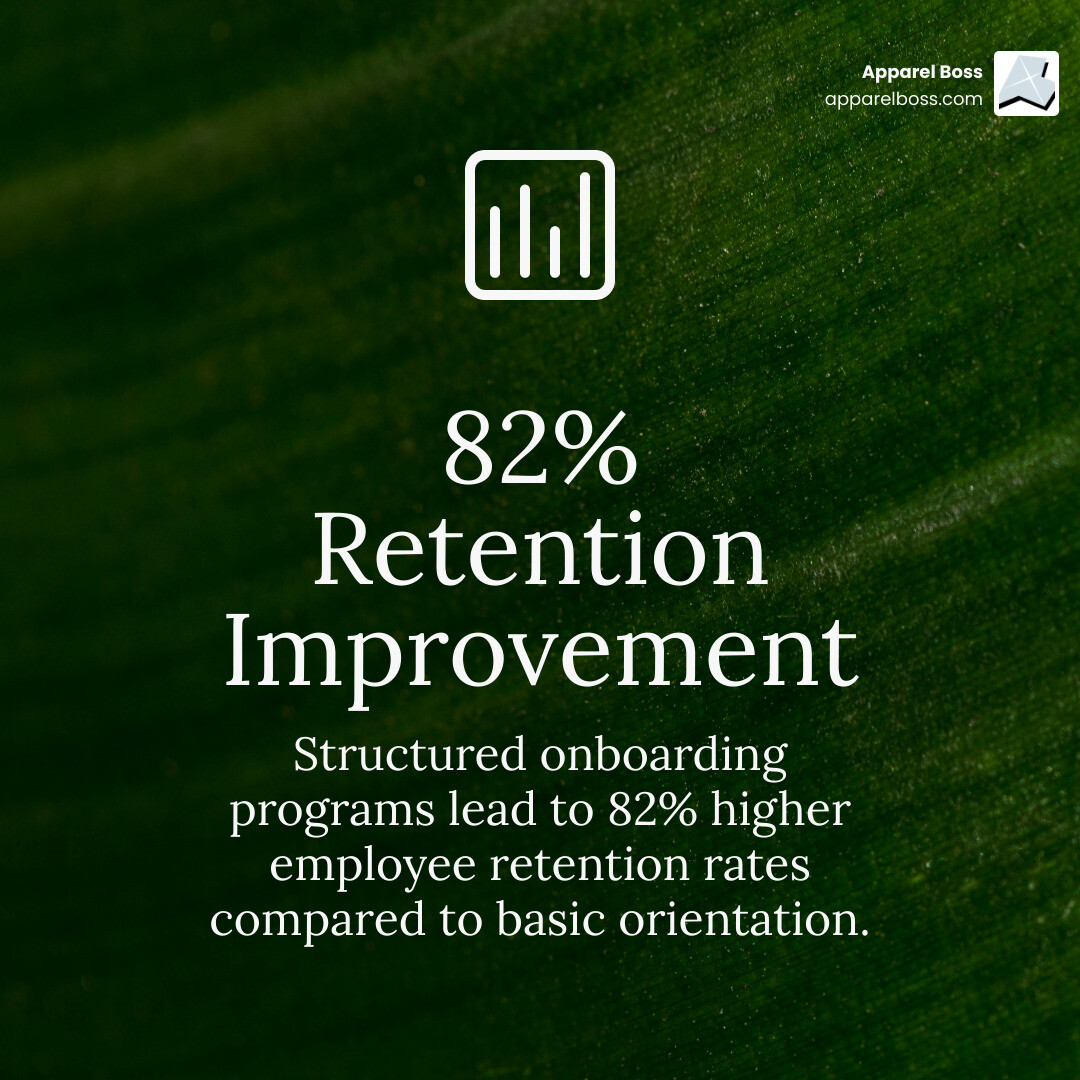
When a business fails to invest in creating an onboarding plan, it isn't just an HR oversight; it is a significant financial risk. Poor integration can cost an organization up to twice an employee’s annual salary when that individual leaves within the first 90 days. According to SHRM, organizations with a standard onboarding process experience 50% greater new-hire productivity. Conversely, a structured approach transforms a "new hire" into a "high performer" in record time by aligning their personal goals with the company's operational objectives.
The 5 C’s Framework for Integration
To move beyond a simple checklist, leaders should utilize the "5 C’s" framework. This ensures the onboarding journey covers every dimension of the employee experience, from legal requirements to social belonging:
- Compliance: The baseline level of teaching employees basic legal and policy-related rules. This includes safety protocols, non-disclosure agreements, and standard operating procedures.
- Clarification: Ensuring that employees understand their new role and all related expectations. This involves defining key performance indicators (KPIs) and the specific metrics of success for their first quarter.
- Culture: Providing employees with a sense of organizational norms—both formal and informal. This is where the company's mission and values are translated into daily behaviors.
- Connection: Helping new hires develop the vital interpersonal relationships and support networks they need to thrive. This includes introductions to cross-functional teams and the assignment of a dedicated mentor.
- Contribution: Shifting the focus toward early wins and the value the employee brings to the team. This phase is critical for building confidence and demonstrating the hire's immediate impact.
Impact on Operational Efficiency
Structured onboarding reduces the administrative burden on managers by automating repetitive tasks. This is particularly critical in the corporate merchandise space. If a new marketing or operations lead isn't properly onboarded into your brand standards and distribution systems, you risk inconsistent quality and delayed production. Understanding the psychology of swag can also help leaders understand how physical touchpoints influence employee adoption and brand pride.
Using systems like corporate apparel stores simplifies this process. When onboarding is integrated with a centralized merchandise system, new hires can select their own gear, ensuring proper sizing and reducing wasted inventory. This builds immediate brand consistency and professional pride while removing the manual logistics of apparel distribution from the HR team's plate.
| Feature | Orientation | Onboarding |
|---|---|---|
| Duration | One day to one week | 90 days to one year |
| Focus | Paperwork and facilities | Integration and performance |
| Goal | Compliance | Retention and productivity |
| Outcome | Awareness | Engagement |
The 30-60-90 Day Framework: A Timeline for Success
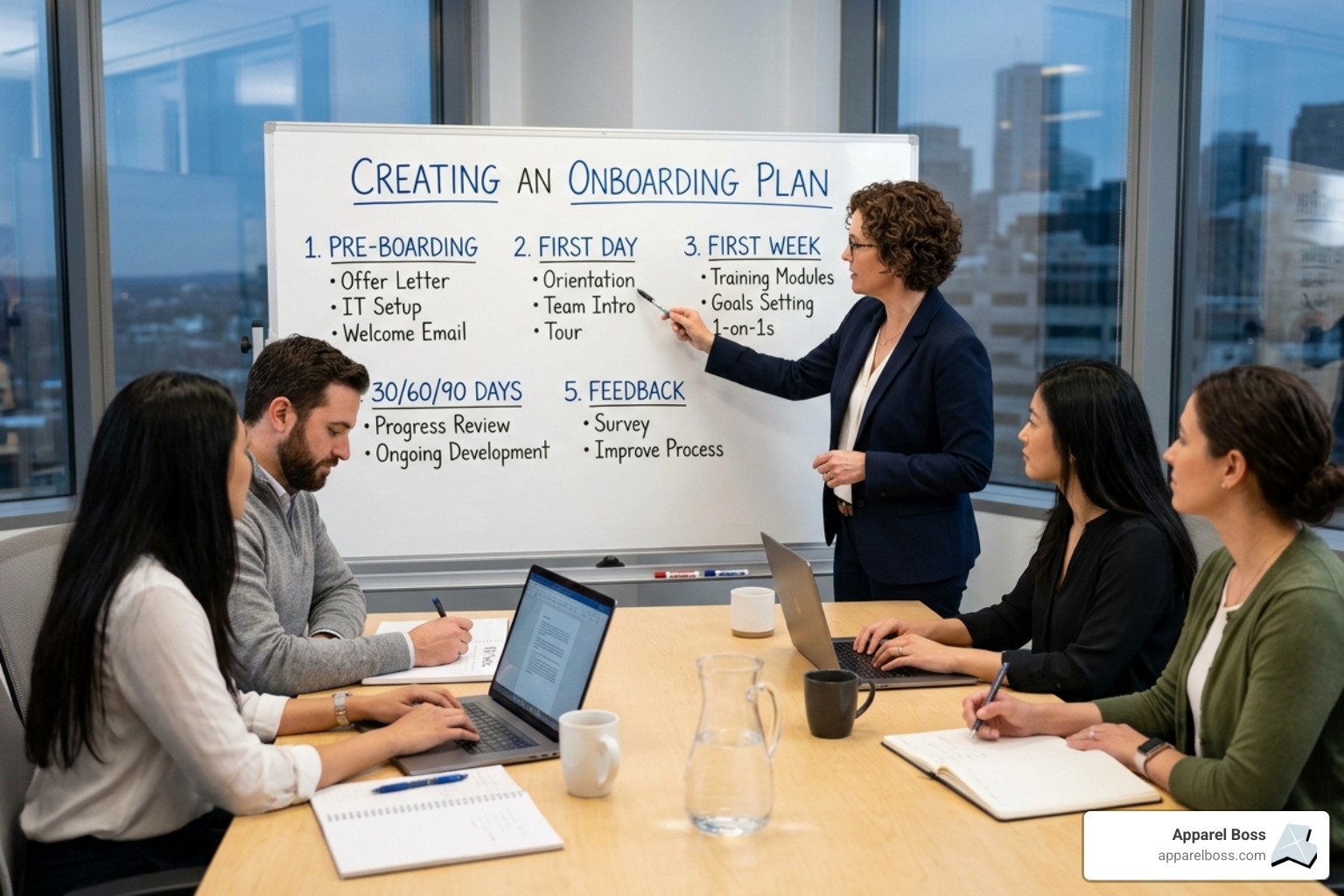
A common mistake is stopping the process after the first week. Research suggests that it takes most employees at least 90 days to reach full productivity. A 30-60-90 day plan provides a definitive framework for this transition, ensuring that the employee moves from a state of learning to a state of full ownership.
Phase 1: Preboarding and Creating an Onboarding Plan for Day One
The journey begins the moment an offer is accepted. Best-in-class companies are 53% more likely to undertake preboarding activities. This phase is about removing friction so Day 1 can be about people, not paperwork. It is the first opportunity to demonstrate operational excellence.
- IT Provisioning: Ensure laptops, logins, and access credentials are ready 48 hours before the start date. Nothing kills momentum faster than a new hire sitting idle because they lack system access.
- Digital Paperwork: Send tax forms and handbooks via an HRIS or digital signature tool to be completed at the hire's convenience. This allows the first day to be focused on cultural immersion rather than administrative tasks.
- Welcome Kits: Ship a curated kit to the employee's home. For businesses in New York, NY or Long Island, NY, timely delivery of physical assets sets a professional tone. This is where custom kitting becomes a strategic advantage, allowing you to send high-quality gear that makes the hire feel like part of the team before they even log in. A well-timed kit reduces "new hire anxiety" and builds immediate brand affinity.
Phase 2: Creating an Onboarding Plan for the First 90 Days
Once the hire is through the door, the focus shifts to performance milestones. This phase requires active participation from the direct manager to ensure the hire is meeting expectations.
- Days 1–30 (Learning): The hire shadows team members, completes training modules, and learns the "language" of the company. The goal here is absorption and understanding the internal landscape.
- Days 31–60 (Contributing): The employee begins taking on small projects. This is the most critical window for a 60-day course correction meeting to address any gaps in understanding or performance before they become habits.
- Days 61–90 (Ownership): The hire takes full responsibility for their core tasks. A formal 90-day review marks the end of the "new hire" phase and the beginning of long-term development. By this point, the employee should be fully integrated into the team's workflow.
Step-by-Step Guide to Building Your Integration Roadmap

Building an onboarding program from scratch takes roughly 8 to 12 hours of focused work, but it saves hundreds of hours in manager frustration later. It requires a collaborative effort between HR, department heads, and IT.
- Define the Stakeholder Matrix: Assign clear ownership. HR handles compliance and benefits; the direct manager owns the 30-60-90 day goals and technical training; and an "onboarding buddy" handles the unwritten rules of the office, such as where to find the best coffee or how to navigate internal communication channels.
- Map the Journey: Identify every touchpoint from the "Welcome" email to the 6-month probationary review. Visualizing this journey helps identify potential bottlenecks where a new hire might feel unsupported.
- Create Role-Specific Playbooks: While 70% of onboarding is universal, 30% must be specific to the department (e.g., Sales, Operations, or Marketing). These playbooks should include specific software tutorials and department-specific KPIs.
Designing the First Week Experience
Day 1 should be about emotional connection. Avoid "death by PowerPoint." Instead, schedule a team lunch and a 1-on-1 with the CEO or department head to discuss the company vision. Use the first week to build "tool proficiency"—ensuring the hire knows how to navigate your internal systems, including how to use the B2B company store to order necessary supplies or apparel. This empowers the employee to take ownership of their professional appearance and tools from the start.
Scaling for Remote and Hybrid Teams
For teams spread across Nassau County, NY and Suffolk County, NY, digital connection must be intentional. Replace "water cooler" moments with scheduled virtual coffee chats. Use asynchronous learning—like recorded video tours of your fulfillment center—so remote hires can learn at their own pace without feeling isolated. Logistics for remote equipment must be handled with the same precision as in-office setups to ensure a consistent experience regardless of location.
Operationalizing Onboarding with Scalable Systems

As a company grows, manual onboarding breaks down. Operational excellence requires moving from spreadsheets to automated systems that can handle the complexities of a growing workforce.
Streamlining Physical Touchpoints
Managing physical assets is often the most disorganized part of onboarding. Hiring managers often scramble to find a spare laptop or an extra shirt in the right size. This chaos is expensive, leading to wasted inventory and a poor first impression for the new hire.
By implementing company store services, you can automate the distribution of branded apparel and equipment. Instead of HR guessing sizes and storing boxes in a hallway, the system handles the fulfillment and distribution. This ensures that every new hire, whether in Deer Park or Manhattan, receives the same high-quality experience. Automation here reduces administrative friction and ensures that your brand standards are maintained across all departments.
Avoiding Common Onboarding Pitfalls
- Information Overload: Don't dump a 200-page manual on a desk. Sequence information by urgency. Focus on what they need to know for Day 1, then Week 1, then Month 1.
- Paperwork-Heavy Day 1: If the first thing a hire does is sign 15 forms, they’ll remember your culture as bureaucratic and slow. Move as much paperwork as possible to the preboarding phase.
- Manager Disengagement: The direct manager is the #1 driver of new hire success. If they are "too busy" to meet the new hire on Day 1, retention will suffer. Managers must be held accountable for their role in the onboarding process.
- Lack of Clear Goals: Without a 30-60-90 day plan, new hires often feel adrift. Clear milestones provide a sense of purpose and a roadmap for success.
Measuring ROI and Long-Term Performance
You cannot improve what you do not measure. Tracking the effectiveness of your onboarding process allows you to make data-driven adjustments that improve retention and productivity. Track these KPIs to ensure your onboarding plan is working:
- 90-Day Retention Rate: Are people leaving before they become productive? High turnover in the first three months is a clear indicator of a failed onboarding process.
- Time-to-Productivity: How many weeks does it take for a new hire to hit their first major milestone? Reducing this number directly impacts the company's bottom line.
- New Hire Net Promoter Score (eNPS): Survey hires at Day 30 and Day 90. Ask: "On a scale of 1-10, how supported did you feel during your first month?" This qualitative data is vital for identifying cultural gaps.
- Manager Confidence Ratings: Survey managers to see if they feel the new hire was properly prepared by the HR-led portions of the onboarding process.
Frequently Asked Questions about Creating an Onboarding Plan
How long should a comprehensive onboarding plan last?
While many think onboarding is a week-long event, research shows it should last at least 90 days. For complex leadership or technical roles, extending the plan to six or even twelve months is recommended to ensure full cultural and operational integration. This extended timeline allows for deeper mentorship and more complex project ownership, which are critical for long-term retention.
What is the difference between onboarding and orientation?
Orientation is an event; onboarding is a process. Orientation covers the "housekeeping" (benefits, ID badges, office tours). Onboarding is the strategic journey of acquiring the knowledge, social connections, and skills needed to become a contributing member of the team. Orientation is about the company's needs, while onboarding is about the employee's success.
Who is responsible for the success of a new hire's onboarding?
Success is a shared responsibility. HR provides the framework and compliance; the direct manager provides the goals and feedback; and the onboarding buddy provides the social integration. However, the direct manager has the most significant impact on whether a hire stays or goes, as they are the primary point of contact for daily operations and performance feedback.
Conclusion
Creating an onboarding plan is more than an administrative necessity—it is a competitive advantage. In a market where talent is mobile and turnover is costly, the companies that win are those that treat the first 90 days as a strategic investment. A well-executed plan not only improves retention but also accelerates the time it takes for a new hire to become a high-contributing member of the organization.
By moving away from ad-hoc welcomes and toward structured, scalable systems, you reduce the administrative friction that bogs down your leadership team. Whether it’s through clear 30-60-90 day goals or automated merchandise fulfillment, the goal is the same: to make your new hires feel valued, prepared, and ready to contribute from day one. This level of organization reflects your company's commitment to excellence.
Apparel Boss helps businesses in the New York area solve these operational challenges. By streamlining the physical touchpoints of onboarding—from custom kitting to automated company stores—we allow your HR and operations teams to focus on what matters most: your people. Whether you are based in Deer Park, Long Island, or Manhattan, our systems ensure your brand remains consistent and your team feels supported from their very first day.
Ready to simplify your team's distribution and improve brand consistency? Start building your scalable company store today and see how structured systems can transform your onboarding experience and drive long-term operational success.
The Ultimate Blueprint for Creating an Onboarding Process from Scratch