
Why Businesses Struggle to How Streamline Bulk Apparel Purchases at Scale
If you need to how streamline bulk apparel purchases for your organization, here is the fastest path forward:
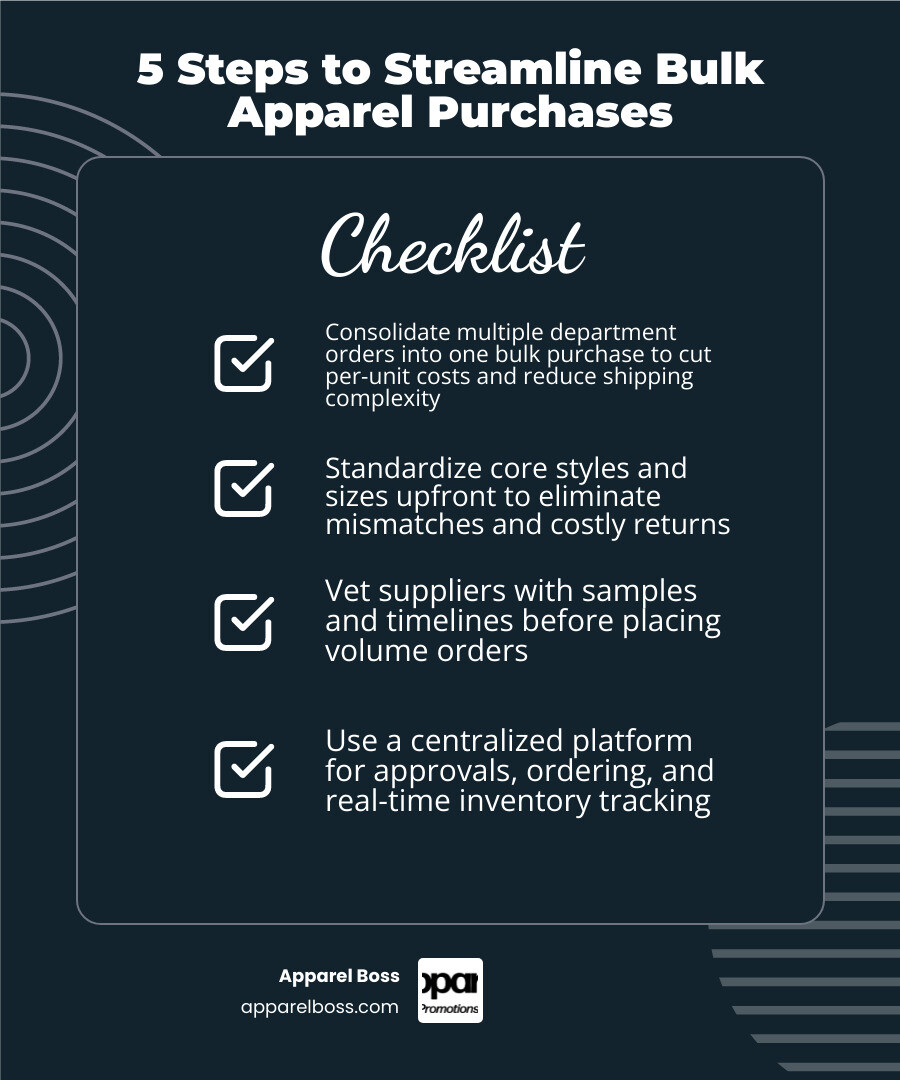
- Consolidate orders — combine multiple department requests into one bulk order to reduce per-unit costs and shipping complexity
- Standardize sizing and styles — define a core product set before ordering to eliminate sizing mismatches and returns
- Vet suppliers early — request samples and review production timelines before committing to volume
- Use a centralized platform — manage ordering, approvals, and inventory tracking from one dashboard
- Plan demand before you buy — forecast seasonal and team-based needs to prevent overstock and waste
Bulk apparel buying sounds straightforward. Order more, pay less. Simple.
But in practice, most companies run into the same wall. Inconsistent quality. Wasted inventory sitting in storage. Missed delivery windows. Employees who never actually wear what gets ordered.
The operational drag is real. Research shows that fashion wholesale brands spend an average of 23 hours per week on administrative tasks alone — and that is before factoring in quality disputes, reorder friction, or the cost of items that miss the mark entirely.
For marketing leaders, HR teams, and operations directors, this is not just a purchasing problem. It is a brand consistency problem. A budget problem. And often, a credibility problem when the C-suite asks why the apparel program keeps underdelivering.
The good news: there is a clear, repeatable way to fix it.
I'm Salvatore Vento, Marketing Director at Apparel Boss, where I specialize in helping scaling companies build structured merchandise programs that eliminate the operational chaos common in bulk apparel purchasing. My work directly addresses the inefficiencies that make it hard to streamline bulk apparel purchases at volume — from tightening sourcing and sampling workflows to building scalable distribution systems that actually hold up under pressure.
How Streamline Bulk Apparel Purchases: The Ultimate Guide for Modern Enterprises
To truly master bulk apparel procurement, you have to look past the unit cost on a spreadsheet. True optimization requires looking at the entire lifecycle: from the initial design proof to the moment an employee pulls a perfectly embroidered jacket out of a custom kit.
When you purchase in bulk, you are not just unlocking economies of scale; you are reducing administrative friction. Instead of processing dozens of small, ad-hoc orders throughout the year—which drains your team's time and inflates shipping fees—consolidating your needs into structured bulk buys simplifies everything.
By grouping your organizational needs, you reduce shipping frequency and slash administrative overhead. To understand how these wholesale mechanisms function under the hood, you can consult this Wholesale Apparel Pricing Guide USA | Bulk Clothing Deals & Savings Tips, which breaks down the structural math of volume tiers.
How Streamline Bulk Apparel Purchases to Maximize Profit Margins
For any business, the most immediate benefit of a streamlined bulk purchase is the direct impact on your bottom line. Transitioning from small-batch or print-on-demand purchasing to bulk wholesale can reduce your per-unit costs by up to 50%. This structural saving gives your budget immense breathing room.
However, managing these high-volume orders can quickly become a logistical nightmare if you do not have the right systems in place. I always advise partners to read our guide on Managing High-Volume Merch Orders Without the Stress to learn how to keep logistics clean when scaling up. By utilizing tiered bulk discounts and consolidating your purchasing timeline, you can optimize your annual corporate merchandise budget, freeing up capital for other high-priority marketing or HR initiatives.
How Streamline Bulk Apparel Purchases to Prevent Inventory Waste
The silent killer of any corporate apparel program is inventory waste. I have visited warehouses across Long Island and New York City only to find boxes of outdated, poorly sized shirts gathering dust in a corner. Overstocking is a direct result of weak demand forecasting and poor sizing distribution.
If you buy bulk without a clear distribution plan, you end up throwing money away on sizes nobody wears. To prevent this, you must implement a structured sizing model based on historical team data rather than guessing.
I highly recommend reading our deep dive on how to Stop Throwing Money Away by Solving Your Inventory Waste Issues to establish better guardrails. By combining smart forecasting with a centralized distribution model, you can dramatically reduce storage costs and ensure every piece you buy actually finds a home.
Sourcing Strategy: Domestic vs. International Bulk Apparel Suppliers
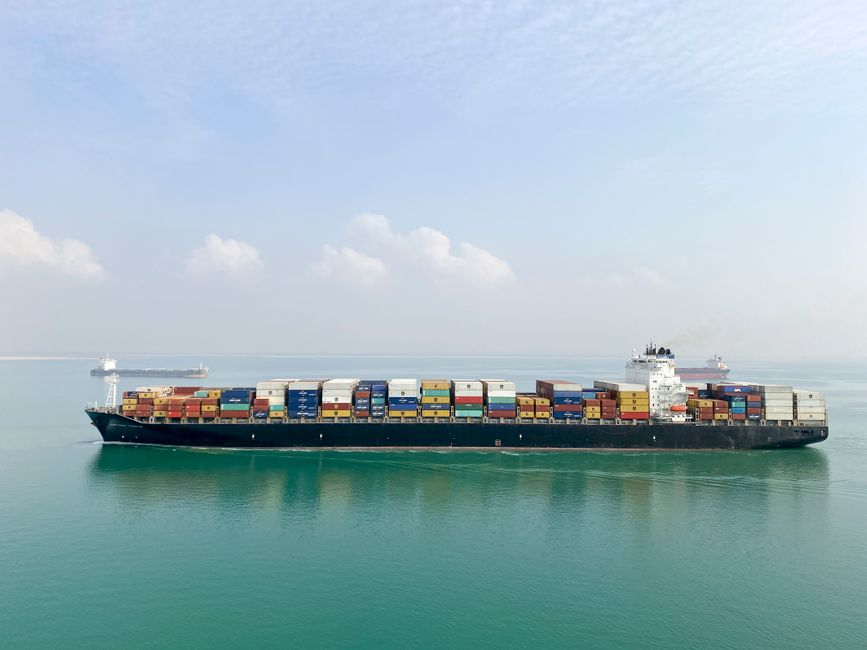
When sourcing bulk apparel, one of the most critical decisions you will make is choosing between domestic and international suppliers. Both paths offer distinct operational trade-offs that will impact your lead times, freight costs, and quality control.
| Sourcing Factor | Domestic Suppliers (U.S. / NY Region) | International Suppliers (Global) |
|---|---|---|
| Lead Times | Fast (typically 2–10 business days) | Long (often 30–90 days) |
| Shipping Costs | Lower, predictable ground rates | High, subject to ocean/air freight volatility |
| Minimum Order Quantities | Lower, highly flexible | High, strict container or pallet minimums |
| Quality Control | Easier to monitor and audit locally | Difficult to verify without onsite agents |
| Compliance Standards | High regulatory alignment (WRAP/GOTS) | Varies; requires rigorous independent vetting |
Balancing Cost, Speed, and Compliance
While international manufacturing often promises lower raw production costs, the hidden expenses can quickly erode those savings. Global shipping routes are notoriously volatile, with sudden shipping rate surges, customs clearance bottlenecks, and tariff risks that can delay your project by weeks or even months.
For businesses operating in environments like New York City or Nassau County, speed to market is everything. If you are launching an onboarding program or preparing for a major corporate event, a three-week delay at a port of entry is a catastrophic failure. Domestic sourcing dramatically reduces these risks, giving you tighter control over your timeline and ensuring compliance with local environmental and labor standards.
Vetting Suppliers to Ensure Consistent Quality and Reliable Supply
Whether you source locally in Suffolk County or look overseas, vetting your suppliers is non-negotiable. Never commit to a bulk order without evaluating physical samples first.
Look for clear communication protocols, transparent contract terms, and a willingness to accommodate third-party quality audits. Building a strong, collaborative relationship with your supplier ensures that your brand receives priority production scheduling and consistent quality control on every run.
Mitigating Risks: Overcoming Quality Control and Customization Bottlenecks
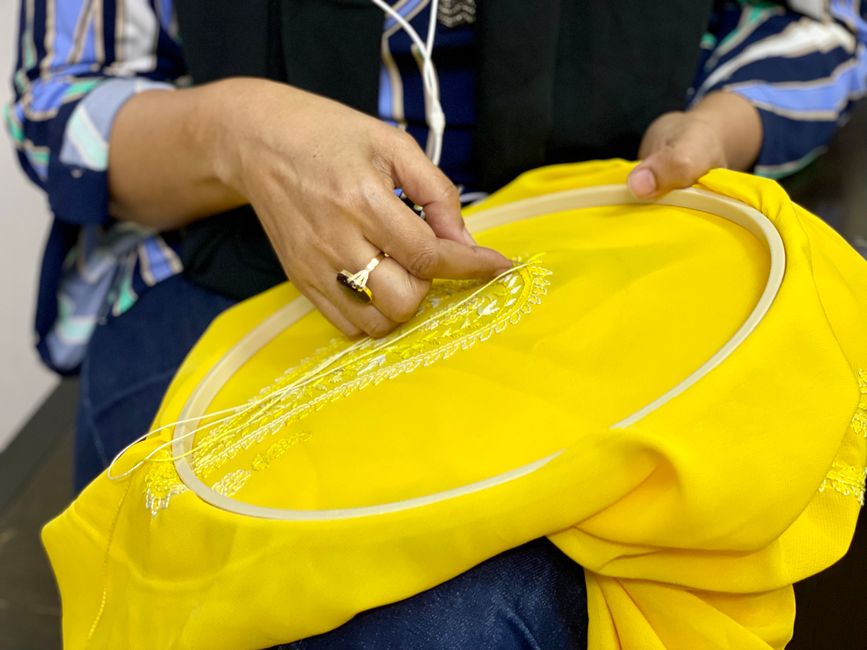
The biggest bottleneck in any bulk apparel program is the customization phase. A blank garment is simply a canvas; the real magic—and the real risk—lies in the decoration. Poorly executed embroidery, peeling screen prints, and misaligned logos will instantly cheapen your brand.
To maintain consistency, you must ensure your chosen garments are fully compatible with your preferred decoration methods. For example, lightweight performance polyesters require different embroidery stabilization techniques than heavy ringspun cotton hoodies.
For uniform programs that require intricate branding across multiple garment types, utilizing a specialized platform like the B2B Wholesale Platform for Uniform Brands | RepSpark can help streamline the design approval process and keep your product data clean.
Leveraging Technology and Modern Tools for Production Efficiency
At Apparel Boss, we believe that artisan-level quality should not compromise operational speed. That is why we integrate modern production technology into our workflows. For instance, using advanced magnetic embroidery hoops like MaggieFrame in our production lines reduces hooping time by 90%, taking a process that once took minutes down to seconds per garment.
This type of technical efficiency allows us to deliver pristine, highly detailed embroidery without the long production delays common at transactional print shops. To keep your internal workflows just as efficient, implementing a modern Apparel Inventory Management Tool 101 will help you track live stock levels and automate replenishment before you ever run into a stockout.
Modern Sourcing Models: Accessibility, Sustainability, and Ethical Procurement
For modern enterprises, bulk purchasing is no longer just about cost and speed—it is about alignment with corporate values. Today's workforce and customer base expect businesses to prioritize sustainability and ethical manufacturing.
Fortunately, modern sourcing models have made ethical procurement highly accessible. By utilizing digital B2B platforms and intelligent tools like Fashion Wholesale Management Software | ModaFlo | ModaFlow | ModaFlow, organizations can gain deep visibility into their supply chains, track fabric compositions, and manage seasonal allocations without heavy manual admin work.
Navigating Eco-Certifications and Ethical Sourcing Standards
When selecting your bulk apparel, look for industry-standard eco-certifications. Worldwide Responsible Accredited Production (WRAP) ensures lawful, humane, and ethical manufacturing, while the Global Organic Textile Standard (GOTS) guarantees the organic status of textiles from harvesting to labeling.
Prioritizing sustainable materials—such as recycled polyesters and organic cottons—not only protects the planet but also elevates your brand reputation. When your employees wear beautifully customized apparel that they know was ethically sourced, their pride in representing your company grows exponentially.
Frequently Asked Questions About Bulk Apparel Sourcing
What are the primary risks of buying apparel in bulk, and how can they be mitigated?
The main risks are inventory obsolescence (owning styles or sizes that are no longer needed), quality defects across large batches, and high storage costs. You can mitigate these risks by requesting pre-production samples, establishing strict quality control agreements, and using a managed concierge company store that handles storage and fulfillment for you.
How do domestic and international bulk apparel suppliers compare in lead times and costs?
Domestic suppliers offer significantly faster lead times (often days instead of months) and lower shipping complexity, making them ideal for tight deadlines. International suppliers can offer lower base production costs but come with higher shipping rate volatility, customs risks, and longer delivery windows.
How can technology like procurement platforms improve bulk apparel customization?
Centralized procurement platforms streamline your entire program by offering automated approval workflows, real-time inventory tracking, and digital design proofing. This eliminates manual back-and-forth emails, reduces human error, and ensures that every department in your organization orders from an approved, brand-consistent catalog.
Conclusion
Streamlining your bulk apparel purchases does not have to be a source of operational stress. By consolidating your orders, focusing on domestic quality, and leveraging modern production technology, you can eliminate inventory waste and elevate your brand's physical presence.
At Apparel Boss, led by Salvatore Vento, we help businesses bridge the gap between premium brand standards and operational scalability. We don't just sell apparel; we build custom-tailored solutions—from custom kitting to fully managed streamlined corporate merchandise programs—designed to make your organization look its best without the administrative headache.
If you are ready to move away from the chaos of transactional swag sites and experience a true white-glove, concierge approach to corporate apparel, visit Apparel Boss Services today. Let's build a program that reflects the true prestige of your brand.