Strategic Audits to Speed Up Slow Fulfillment
When a company experiences a "logistics lag," the natural instinct is often to tell the warehouse team to "work faster." However, research shows that fulfillment problems are usually process-related rather than workforce issues. To speed up slow fulfillment, the first step is a strategic audit of how your space is actually used.
A slotting audit is the most effective "low-tech" fix for a sluggish warehouse. It involves analyzing your order data to identify your "high-velocity" SKUs—the hoodies, tote bags, or polo shirts that make up the bulk of your orders. By using ABC classification, you can categorize inventory:
- Category A: Top 20% of items that account for 80% of movement.
- Category B: Mid-range items with steady but lower volume.
- Category C: Slow-moving "long-tail" items.
The goal is simple: place Category A items as close to the packing stations as possible. Minimizing travel time is critical because walking often accounts for 50% to 70% of a picker's total operating time. If your team is "random walking" to the back of the warehouse for a best-selling tote bag, your fulfillment speed is already capped. According to Order Fulfillment Strategies: Tips for Improving Order Fulfillment Times, organizing storage by pick frequency yields faster results than almost any other software investment.
Optimizing Pick Paths to Speed Up Slow Fulfillment
Once your inventory is positioned correctly, you need a strategy for how your team moves through the aisles. If a picker grabs one item for one order and then returns to the start, they are wasting hours every week. To speed up slow fulfillment, consider these proven picking methods:
- Batch Picking: This is a game-changer for online company stores. If ten different employees order the same black hoodie, the picker grabs all ten at once. This reduces trips and significantly boosts picking productivity.
- Zone Picking: Think of this like a relay race. Pickers are assigned to specific "zones" in the warehouse. They only pick items within their zone before passing the order to the next station. This limits travel time and allows staff to become experts in their specific area.
- Wave Picking: Orders are released in "waves" based on specific criteria, such as carrier cutoff times or shipping zones. This aligns warehouse activity with transportation schedules to ensure no order misses the truck.
By implementing path sequencing—where the Warehouse Management System (WMS) directs the picker in a logical, one-way flow—you eliminate the "zigzag" patterns that kill efficiency.
Eliminating Manual Errors with Automation and WMS
In 2026, relying on paper pick lists is a recipe for disaster. Manual processes are slow, but the rework required to fix a shipping error is even slower. Research indicates that warehouses embracing automation experience 25–50% faster picking times.
A modern WMS acts as the "central nervous system" of your operation. When paired with rugged mobile devices or barcode scanners, it provides real-time visibility into every SKU. Instead of a picker searching for a specific size of a custom-branded jacket, the device tells them exactly which bin to go to. Scan verification at the point of picking ensures the right item is grabbed the first time, zapping away the 1–3% error rates common in manual setups.
As noted in Accelerate Fulfillment | Order Processing Speed Tips, technology like Zebra mobile computers speeds up employee onboarding during peak seasons because the devices are intuitive and reduce the "tribal knowledge" required to navigate the warehouse.
Streamlining Inbound Receiving and Carrier Handoffs
Fulfillment speed isn't just about how fast you can get an item out; it’s about how fast you can get it in. A receiving backlog can distort your inventory counts, leading to "false stockouts" where an item is in the building but not "live" for sale.
To speed up slow fulfillment, aim to reduce your "dock-to-stock" time. Implementing Advanced Shipping Notices (ASN) allows your team to know exactly what is on an incoming pallet before it arrives. For high-velocity items or pre-sold company store orders, use cross-docking. This process moves products directly from the receiving dock to the shipping dock, bypassing storage entirely.
Finally, tighten your carrier handoffs. Many delays occur not on the warehouse floor, but at the handoff to the courier. By setting internal deadlines that work backward from carrier cutoffs (e.g., all Nassau County orders must be staged by 3:00 PM for a 4:30 PM pickup), you ensure that "ready" orders don't sit on the dock for an extra 24 hours.
Scaling Operations Through Technology and Partnerships
For many businesses in the New York and Long Island area, the physical constraints of a home-grown warehouse eventually become the bottleneck. Scaling a merchandise program requires more than just more shelf space; it requires a sophisticated logistics infrastructure.
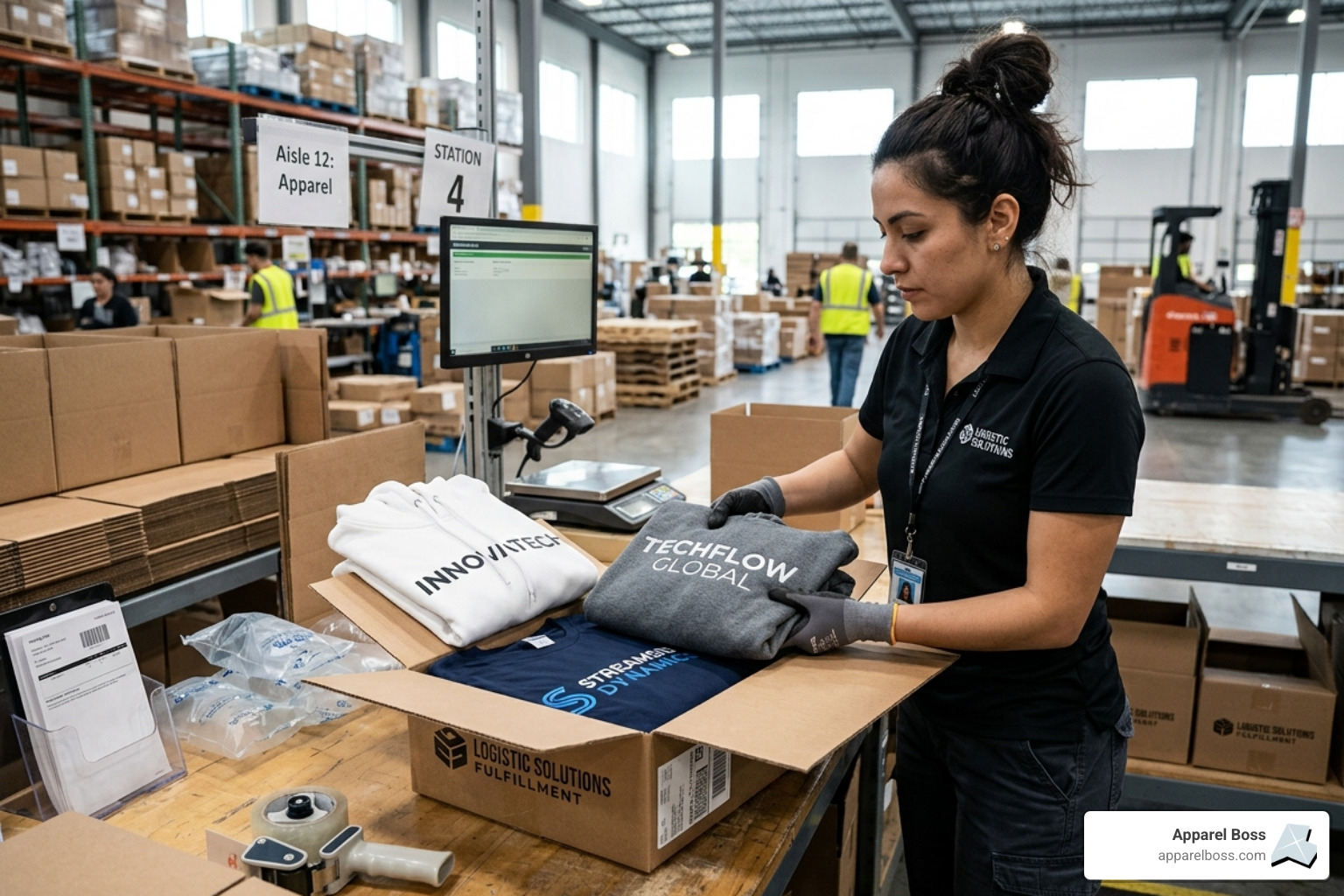
When administrative workloads—such as manually entering addresses or tracking down lost packages—start to consume your HR or marketing team's day, it’s time to look at fulfillment services. Professional fulfillment partners use multi-carrier software to automatically rate-shop between couriers, ensuring you get the best balance of speed and cost for every zip code.
Leveraging Regional Centers and 3PL Networks
If you are shipping from a single location in Suffolk County to a nationwide team, your transit times will vary wildly. Strategic inventory allocation involves storing your branded assets closer to your recipients.
By leveraging regional fulfillment centers, you can:
- Reduce Transit Times: Shorten the "last mile" by shipping from the zone closest to the employee or customer.
- Lower Shipping Costs: Shorter distances mean lower zone charges from carriers.
- Improve Reliability: Regional centers can act as backups if one location faces a weather delay or supply chain disruption.
For companies using custom kitting for remote employee onboarding, distributing those kits across a network ensures that a new hire in California receives their gear just as fast as a new hire in New York City.
Implementing Kitting and Pre-Assembly for Faster Turnaround
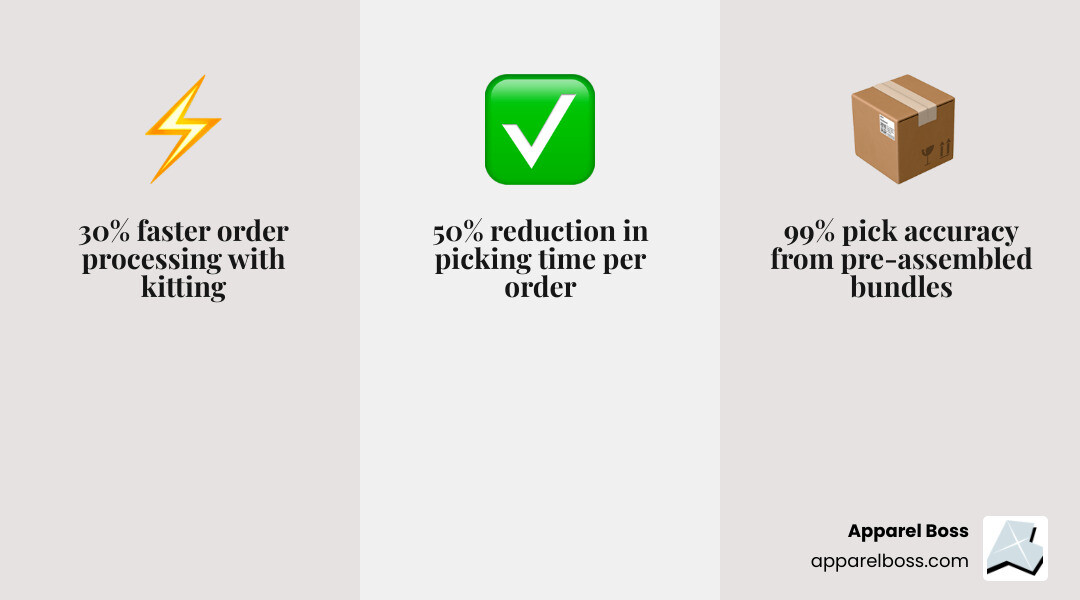
One of the biggest "speed hacks" for apparel programs is pre-assembly. If you know you are going to send out 500 "Welcome Kits" containing a hoodie, a tote bag, and a notebook, don't wait for the orders to come in to start picking.
Custom kitting allows you to pre-pack these bundles during down-times. When an order is placed through your online company store, the picker grabs one "kit" SKU instead of three individual items. This SKU rationalization simplifies the warehouse layout and ensures branding consistency, as every box is packed exactly the same way every time.
Using Data-Driven Metrics to Speed Up Slow Fulfillment
You cannot improve what you do not measure. To truly speed up slow fulfillment, you must move beyond "gut feelings" and look at hard data. Key metrics to track include:
- Order Cycle Time: The total time from the moment an order is placed to the moment it leaves the warehouse.
- Pick Accuracy: The percentage of orders shipped without errors. (Remember: returns cost more to process than the original shipment!)
- Lines Picked Per Hour: A direct measure of your picking productivity.
At Apparel Boss, we believe that fulfillment should be a competitive advantage, not a headache. By integrating your merchandise program with a structured system, you can improve customer Lifetime Value (LTV) and ensure your brand is always represented with quality and speed.
Streamline your program with an online company store to eliminate manual entry and gain real-time insights into your inventory levels. Whether you are distributing hoodies in Deer Park or shipping tote bags across the country, the right combination of technology and process will turn your fulfillment from "late" to "great."
Ready to Eliminate Fulfillment Delays?
Managing a company merchandise program shouldn't feel like a second full-time job. If you're struggling with wasted inventory, inconsistent branding, or slow delivery times, it's time for a more structured approach.
Apparel Boss helps companies in New York and beyond streamline their branded apparel through custom online stores and professional fulfillment. We handle the production, the picking, and the shipping, so you can focus on growing your business.
Request a consultation today to see how we can help you scale your merchandise program with speed and precision.
From Late to Great: Tips for Speeding Up Tote Bag and Hoodie Delivery