
Why the Best Employee Welcome Kits Set the Tone for Everything That Follows
The best employee welcome kits do more than hand a new hire a branded mug and a notebook — they signal, from day one, that your organization is serious about its people.
Here is a quick look at what belongs in a high-impact new hire kit:
| Kit Component | Purpose |
|---|---|
| Branded apparel (tee, hoodie) | Builds belonging and team identity |
| Premium drinkware | Daily-use visibility and utility |
| Notebook and pen | Practical first-week tool |
| Welcome letter or values card | Communicates culture and intent |
| Tech accessories | Supports productivity from day one |
| Role-specific extras | Shows personalization and care |
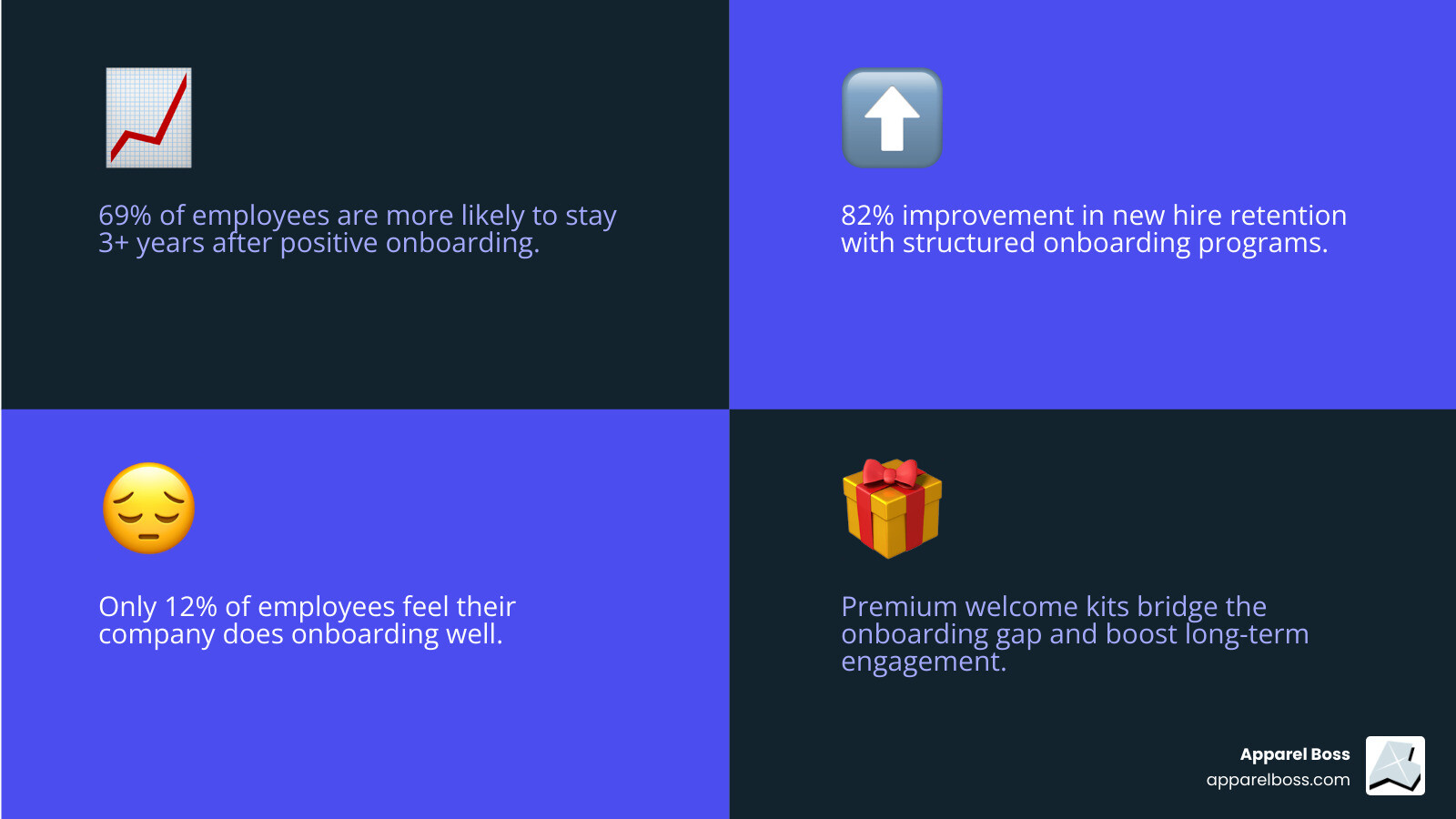
The numbers behind onboarding are hard to ignore. According to research from SHRM, 69% of employees are more likely to stay with a company for three or more years after a positive onboarding experience. Brandon Hall Group research puts new hire retention improvement at 82% for companies with structured onboarding programs.
Yet only 12% of employees feel their company actually does onboarding well (Gallup).
That gap is a real operational problem — and a welcome kit is one of the most visible places where companies either close it or widen it.
A flimsy pen or a generic box of forgettable swag doesn't say "we're glad you're here." It says "we didn't think about this."
For HR leaders and operations teams managing growing headcounts, the challenge isn't just picking the right items. It's building a repeatable, scalable system that delivers a consistent, premium experience — whether you're onboarding three people or three hundred, in-office or fully remote.
This article breaks down the best employee welcome kit ideas, what to include, how to structure your program, and how to make the whole process operationally sound.
The Strategic Value of the Best Employee Welcome Kits
In the modern corporate landscape of April 2026, the best employee welcome kits have evolved from a "nice-to-have" HR perk into a strategic business tool. When a new hire joins a team, they are in a high-stakes transition period. Research indicates that onboarding is a "magic moment" where employees decide whether to stay engaged or begin looking for the exit.
A well-executed kit serves as a tangible manifestation of your company culture. It moves the onboarding process from a dry administrative checklist to an emotional connection. For businesses operating in high-growth environments like Long Island or New York City, where competition for talent is fierce, the quality of this first physical touchpoint matters immensely.
According to a Welcome Kit for New Employees: Small Business Guide | FirstHR, treating a welcome kit as a standardized system rather than a one-off gift ensures that every hire—regardless of their department or location—receives the same high level of care.
Standardized Kits vs. Ad-Hoc Gifting
Many companies fall into the trap of "emergency shopping." When a new hire is starting on Monday, someone from the operations team rushes to a local store or scours a closet for leftover medium t-shirts. This results in inconsistent branding and a poor experience.
| Feature | Standardized Kit System | Ad-Hoc Gifting |
|---|---|---|
| Branding | Consistent, professional, and on-brand | Mismatched logos and varying quality |
| Inventory | Managed, tracked, and predictable | Wasted items or "out of stock" panics |
| Admin Time | Automated through a system | Hours spent packing and shipping manually |
| Impact | High; feels like a curated gift | Low; feels like an afterthought |
Why First Impressions Drive Long-Term Retention
The psychological impact of receiving a high-quality kit cannot be overstated. When an employee unboxes a kit that features premium materials, they immediately associate that quality with the company’s reputation. In fact, 70% of people equate product quality with the reputation of the company behind it.
By providing the best employee welcome kits, you are reinforcing the decision the employee made to join you. This is especially true for remote hires who may not see an office for months; the kit is their only physical link to the team. Why Corporate Branded Apparel Matters because it transforms a new hire into a brand advocate before they even attend their first all-hands meeting.
Solving Operational Friction in Onboarding Kits
From an operations perspective, the "swag closet" is a nightmare. It leads to wasted inventory, poor sizing availability, and an immense administrative burden on HR teams who should be focusing on culture, not folding hoodies.
The real business problem isn't just "what to buy," but how to manage it. Inconsistent quality from different vendors and delayed production times can result in a kit arriving on a hire's third day—which makes it a "late package," not a welcome experience. By utilizing custom kitting services, companies can outsource the storage, assembly, and fulfillment of these kits, ensuring they arrive on the doorstep 2–5 days before the employee's start date.
Essential Components of the Best Employee Welcome Kits
To build a kit that truly "wows," think in three distinct layers:
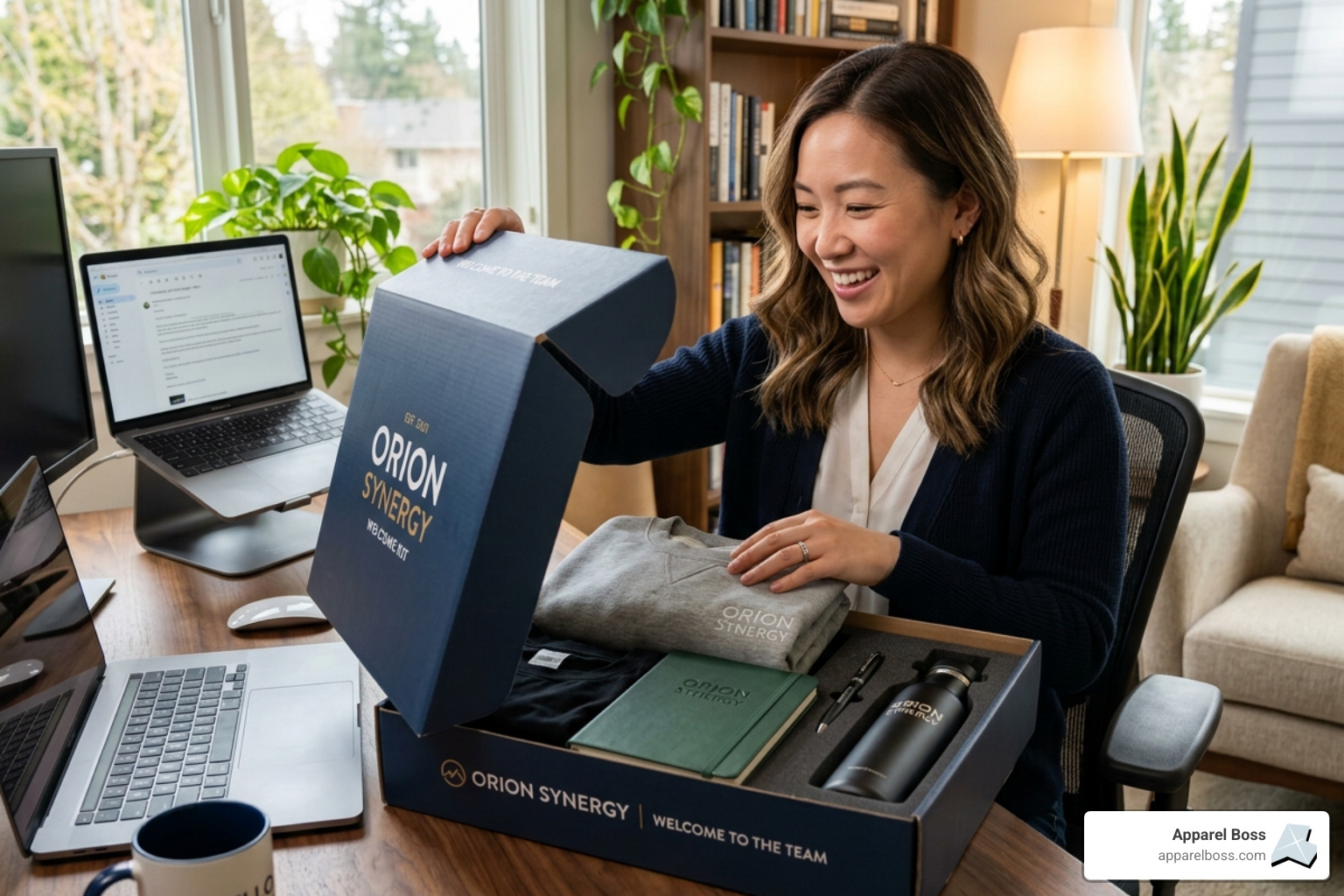
- The Documentation Layer: This is the most functionally useful part. It includes a personalized welcome letter, a first-week schedule, and a "who’s who" contact list. It reduces first-week friction by answering questions before they are asked.
- The Practical Layer: High-utility items like a premium notebook, a pen that doesn't skip, and a high-quality insulated water bottle. These are items the employee will use daily at their desk.
- The Branded Layer: This is where you build belonging. Avoid the "walking billboard" look. Instead, focus on high-quality custom t-shirts or sweatshirts with subtle, stylish logo placement that employees will actually want to wear outside of the office.
Building a Scalable System for New Hire Onboarding
Scaling a merchandise program requires moving away from manual spreadsheets and toward structured systems. For a CEO or Operations Leader, the goal is to make onboarding kits a "set it and forget it" process that maintains 100% brand consistency.
The most effective way to achieve this is through online company stores. Instead of HR guessing sizes and keeping boxes under their desks in Suffolk County, the system handles the heavy lifting. When an offer is accepted, a trigger can be sent to the fulfillment center to pick, pack, and ship a pre-curated kit directly to the new hire's home.
Personalization and Branding at Scale
One of the biggest complaints in employee gifting is the "one-size-fits-all" approach, which usually fits no one. Inclusive sizing is critical. A kit that only offers "Unisex Large" sends a message of exclusion.
By using a self-serve redemption model within a company store, you can allow new hires to select their own apparel sizes and even choose between different items (like a hoodie vs. a quarter-zip). This ensures a perfect fit and eliminates the waste of unused inventory. When selecting these items, consider an essential guide to custom business sweatshirts to ensure the fabrics and cuts align with a modern professional wardrobe.
Logistics: Ensuring the Best Employee Welcome Kits Arrive on Time
Logistics is where most onboarding programs fail. If a kit is caught in customs or delayed in production, the "magic moment" is lost. For companies with a distributed workforce, staging inventory regionally is a game-changer. This ensures that a new hire in New York City and a remote hire in another region both receive their kits simultaneously.
According to a New Hire welcome kit fulfillment guide, the timing should be precise. Aim for the kit to arrive two days before Day One. This builds anticipation and excitement over the weekend, so the employee starts Monday feeling like they are already part of the inner circle.
Measuring ROI and Program Success
How do you know if your investment in the best employee welcome kits is working? Decision-makers should look at three key metrics:
- Employee Net Promoter Score (eNPS): Ask new hires about their onboarding experience in a 30-day survey.
- Brand Visibility: Are employees actually wearing the apparel? High-quality gear has a 69% chance of being worn outside of work, extending your brand reach.
- Administrative Efficiency: Calculate the hours saved by automating the kitting and distribution process. If your HR manager is spending four hours a week packing boxes, that is a significant hidden cost.
By treating merchandise as a managed system, you reduce the "true total cost" of onboarding while improving the employee experience. Apparel Boss acts as a strategic partner in this journey, helping you navigate custom merchandise systems that scale with your growth.
Final Thoughts: Moving Beyond Swag to Systems
The difference between a "box of stuff" and one of the best employee welcome kits is intentionality. When you solve the operational challenges of inventory management, sizing, and fulfillment, you free your team to focus on what matters: welcoming their new colleague.
If your current onboarding process feels like a logistical hurdle rather than a cultural win, it may be time to audit your system. Wasted inventory and inconsistent branding aren't just annoyances—they are drains on your bottom line and your employer brand.
Apparel Boss helps companies streamline and scale their merchandise programs through custom online company stores, custom kits, and in-house production. Whether you are looking to fix a broken "swag closet" or launch a global remote onboarding program, our team is here to help you build a system that works.
Ready to transform your first-day experience? Contact Apparel Boss today to discuss how a structured kitting and fulfillment program can elevate your brand and simplify your operations.