
Why Getting Your Company Online Store Right Is a Competitive Advantage
A company online store is a private, branded e-commerce portal that lets organizations distribute custom merchandise to employees, partners, and clients — all from one centralized platform.
If you're evaluating platforms for a corporate merchandise program, here's a quick comparison of what matters most:
| Feature | Basic Swag Platform | Enterprise Company Store |
|---|---|---|
| User permissions | None or minimal | Role-based, tiered access |
| Budget controls | Manual | Department-level automation |
| Inventory model | Pre-purchased only | On-demand, pre-purchased, or hybrid |
| SSO / ERP integration | Rarely | Standard |
| Approval workflows | None | Configurable per user group |
| Reporting | Basic order history | Real-time dashboards |
This is not the same as a public retail store. It's an internal operational tool — and choosing the wrong platform can scale your problems just as fast as it scales your orders.
The stakes are real. 58% of employees say a company's commitment to recognition and rewards plays a significant role in their decision to stay — and a disorganized merchandise program undermines that effort before a single hoodie ships.
The challenge most companies run into is not finding branded merchandise. It's managing it: inconsistent quality, wasted inventory, no approval controls, and no visibility into spend. A well-built company store solves all of that. A poorly chosen one just digitizes the chaos.
I'm Salvatore Vento, Marketing Director at Apparel Boss, where I help CEOs, HR leaders, and brand teams build scalable company online store programs that eliminate wasted spend and deliver consistent, on-brand results. In this guide, I'll break down what separates a strategic company store from a glorified swag shop — so you can make the right call for your team.
Why Your Business Needs a Dedicated Company Online Store

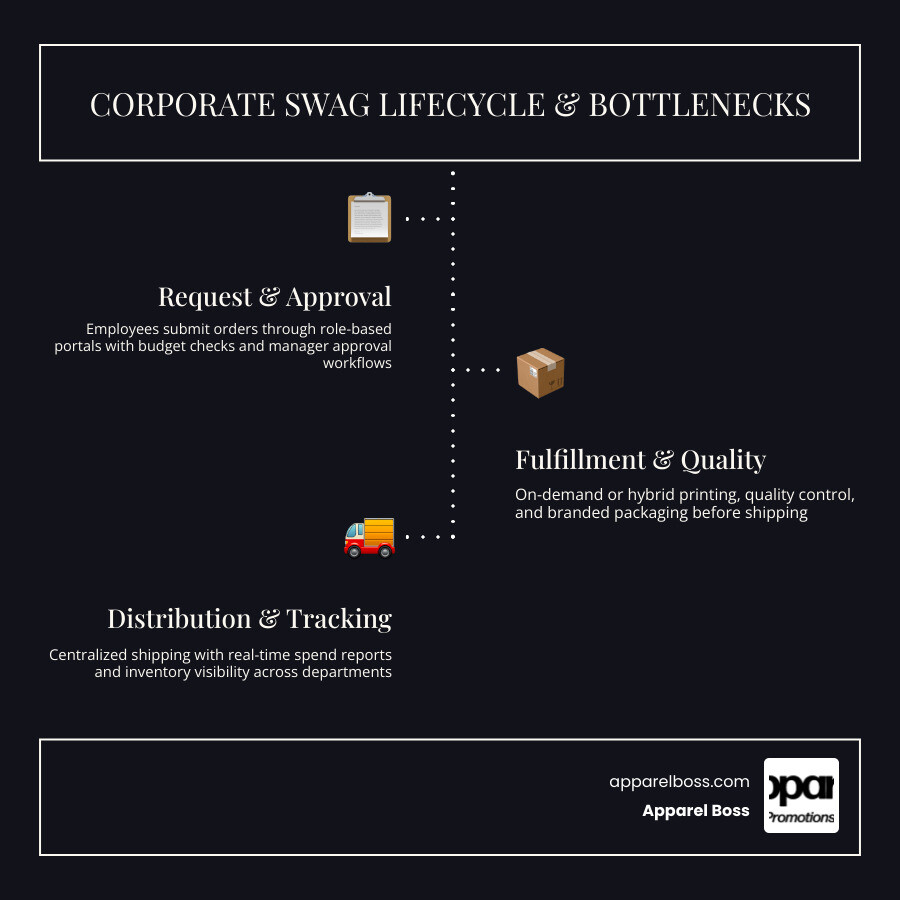
If your company has grown past 50 employees, you have likely felt the operational friction of managing physical assets. Without a centralized system, corporate apparel and gifts quickly turn into a logistical nightmare.
I often see HR managers spending valuable hours sorting through cardboard boxes in a utility closet, trying to find a medium polo for a new hire. Marketing directors lose sleep over local offices printing off-brand logos on cheap garments. Operations teams get hit with unexpected invoices because there is no centralized approval process for department spending.
This is exactly why you need to Stop the Swag Chaos with an Online Company Store. When you centralize your merchandise, you eliminate the administrative burden of manual distribution while protecting your brand's visual identity.
To determine if this operational upgrade is right for your current scale, ask yourself: Is a Merch Store a Right Fit for Your Company? If you are managing multiple locations, onboarding remote staff, or trying to coordinate client gifts across different teams, the answer is almost always yes.
What is a Company Online Store?
At its core, a company online store is a dedicated, secure digital storefront built specifically for your organization. Unlike a public retail shop, its primary purpose is internal distribution and controlled external gifting.
Think of it as a private ecosystem. Authorized users—whether they are HR staff in Nassau County, sales representatives traveling across Long Island, or department heads in our New York City office—can log in and order exactly what they need. It streamlines employee onboarding, simplifies uniform distribution, and automates corporate gifting.
While consumer giants like the Apple Store Online - Apple focus on public retail sales and individual consumer transactions, a corporate store focuses on operational efficiency, brand control, and structured internal distribution.
How It Differs from Traditional E-Commerce
Traditional e-commerce platforms are built for the transactional consumer. Anyone with a credit card can browse the catalog, add items to a cart, and check out.
A modern company online store operates on an entirely different logic. It is built to support complex B2B workflows. It handles user permissions, department-specific budgets, single sign-on (SSO) authentication, and multi-tier approval processes.
For example, when shopping on the Google Store for Google Made Devices & Accessories, the experience is identical for every visitor. In contrast, an enterprise-grade corporate store displays different products, pricing, and payment options depending on who logs in. A regional manager might see high-end executive gifts and have a $5,000 department budget, while a field employee might only see uniform replacements with an option to pay via pre-approved employee points.
Inventory Management: On-Demand vs. Pre-Purchased Models
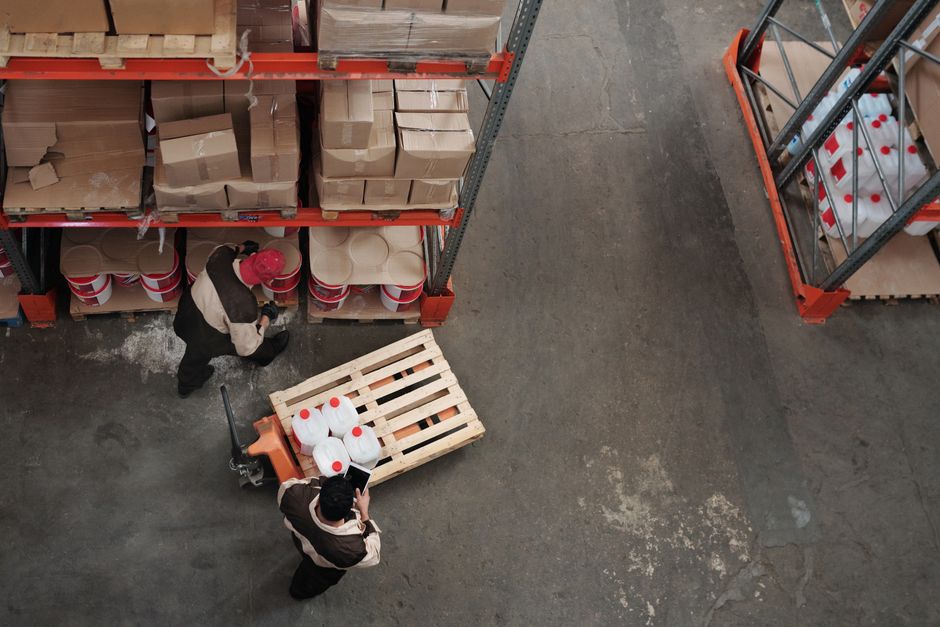
One of the biggest decisions you will make when setting up your store is how to handle fulfillment. Mismanaging this step leads directly to inventory waste or delayed shipping times. To avoid these headaches, you must understand How to Launch an Online Company Store Without Losing Your Mind by aligning your fulfillment strategy with your actual usage patterns.
There are three primary models for handling your inventory:
| Feature | On-Demand Model | Pre-Purchased Model | Hybrid Model |
|---|---|---|---|
| Upfront Investment | Extremely low | Higher upfront cost | Balanced |
| Shipping Speed | 2 to 10 business days | Same-day or next-day | Same-day for core items |
| Inventory Waste Risk | Zero risk of dead stock | Risk of leftover sizes | Minimalized risk |
| Decoration Quality | Digital transfers / DTG | Premium embroidery / Screen printing | Premium on core, DTG on niche |
| Best Used For | Niche items, low-volume designs | High-volume uniforms, onboarding kits | Most scaling organizations |
The On-Demand Model means products are only decorated after an order is placed. This completely eliminates upfront inventory costs and the risk of wasted stock. However, it typically means slower shipping times and limits your decoration options to processes that support single-run production.
The Pre-Purchased Model involves buying your merchandise in bulk upfront and storing it in a fulfillment warehouse. Orders ship almost instantly because the items are already decorated and sitting on shelves. The trade-off is the upfront capital required and the risk of ending up with boxes of unpopular sizes.
For most businesses we partner with in Suffolk County and the surrounding New York area, we recommend a Hybrid Fulfillment Model. Under this setup, you pre-purchase high-volume, fast-moving items—like new hire onboarding kits and standard team polos—to secure the fastest shipping and best pricing. Niche items, seasonal gear, or specialized department apparel are produced on-demand, giving your team a wide selection without the financial risk of dead stock.
Enterprise Controls: Permissions, Budgets, and Integrations
A successful corporate store must integrate seamlessly into your existing business operations. If your store platform doesn't communicate with your identity providers, accounting software, or HR systems, you are simply replacing physical logistics chaos with digital administrative chaos. This is why planning your backend controls is a critical phase of The Expert Way to Handle B2B Company Store Setup Without the Stress.
Key Features of an Enterprise-Grade Company Online Store
To maintain complete control over your brand and your budget, your platform must support these essential enterprise features:
- Role-Based Access Controls: Define exactly what each user can see and do. Your marketing team should see trade show materials, while your service technicians should only see approved safety uniforms.
- Custom Payment Methods: Move away from standard credit card checkouts. Your store should support cost-center billing, purchase orders, department budgets, and employee point allowances.
- Approval Workflows: Set up automatic holds. For example, you can configure the system so that any order exceeding $500 requires an automated email approval from a department manager before it is sent to fulfillment.
- Single Sign-On (SSO) Integration: Allow employees to log in securely using their existing corporate credentials, ensuring immediate access control when employees join or leave the organization.
- Points-Based Rewards: Boost employee engagement by using points as a digital currency for safety milestones, years-of-service awards, or peer recognition programs.
Security and compliance are also paramount. Your store platform must adhere to modern data privacy standards, including CCPA and GDPR compliance, and maintain strict PCI/DSS compliance to protect sensitive financial and employee data.
Frequently Asked Questions about Corporate Stores
How do points-based reward systems work in a company store?
A points-based system replaces traditional currency with digital points. HR or department leaders allocate points balances directly to employees or distribute them via secure "points claim links" sent through email. Employees log in, browse the store, and check out using their points balance. This is an incredibly effective tool for gamifying safety programs, celebrating work anniversaries, or driving peer-to-peer recognition without manual administrative tracking.
What security standards should a company store platform meet?
At a minimum, your platform should utilize secure cloud hosting (such as enterprise-grade Microsoft Azure infrastructure) and maintain full PCI/DSS compliance for payment processing. If you are handling employee data across multiple locations, ensuring the platform complies with CCPA and GDPR regulations is essential for protecting personal privacy and avoiding corporate liability.
How long does it take to set up and launch a corporate store?
A professional, custom-built store typically takes between 4 to 8 weeks to launch. This timeline includes the initial discovery meeting to establish your goals, the curation and merchandising of your product line, custom platform design to match your brand guidelines, setting up domain and DNS configurations, and establishing your backend approval and budget workflows.
Conclusion
Building a company online store is not just about putting logos on products; it is about creating a scalable, reliable system that protects your corporate identity and frees your teams from logistical bottlenecks.
At Apparel Boss, led by industry expert Salvatore Vento, we don't believe in the transactional, self-service model of commodity swag sites. We solve the "Quality-at-Scale" dilemma for brands that refuse to compromise. Based right here in Deer Park, NY, we provide a true concierge experience for businesses across Long Island and New York City.
We combine artisan-level custom embroidery and premium decoration with advanced, white-glove distribution systems. Whether you need custom kitting for remote onboarding or a fully managed corporate apparel program with automated budget controls, we handle the complexity so you can focus on growing your business.
Ready to eliminate the chaos and elevate your brand? Let’s design a program tailored to your organization. Learn more about our concierge approach on our Apparel Boss Company Stores page, or explore our specialized custom kitting services to see how we streamline distribution from our local facilities straight to your team's doorsteps.