Why the Choice Between Company Stores vs Traditional Programs Defines Your Merchandise Strategy
When it comes to company stores vs traditional programs, the model you choose will either streamline your branded merchandise operation or quietly drain your budget through waste, delays, and administrative overhead.
Here is a quick breakdown to address the core question:
| Factor | Company Store | Traditional Bulk Program |
|---|---|---|
| Ordering model | Employees self-serve on demand | HR/ops orders in bulk upfront |
| Inventory risk | Low — on-demand or pre-stocked | High — size mismatches, overstock |
| Best for | Growing, distributed, or high-turnover teams | Stable teams with predictable needs |
| Admin burden | Low — automated fulfillment | High — manual sorting and distribution |
| Scalability | High — multi-location, remote-ready | Limited — requires re-ordering cycles |
| Brand consistency | Centrally controlled | Dependent on who manages each order |
Managing branded apparel sounds simple — until your team grows, locations multiply, or a new hire starts on Monday and waits two weeks for a shirt. The friction is real, and it compounds fast.
Most companies don't realize how much their merchandise model is costing them — not just in dollars, but in HR time, brand inconsistency, and employee experience. The right program architecture changes all of that.
I'm Salvatore Vento, Marketing Director at Apparel Boss, and I've helped scaling teams across multiple industries replace broken merchandise workflows by building structured company stores vs traditional programs frameworks that reduce waste, cut admin overhead, and ensure every product shipped reflects the brand properly. In this guide, I'll walk you through exactly how both models work, where each one wins, and how to decide which setup is right for your team.
Defining the Models: Company Stores vs Traditional Programs
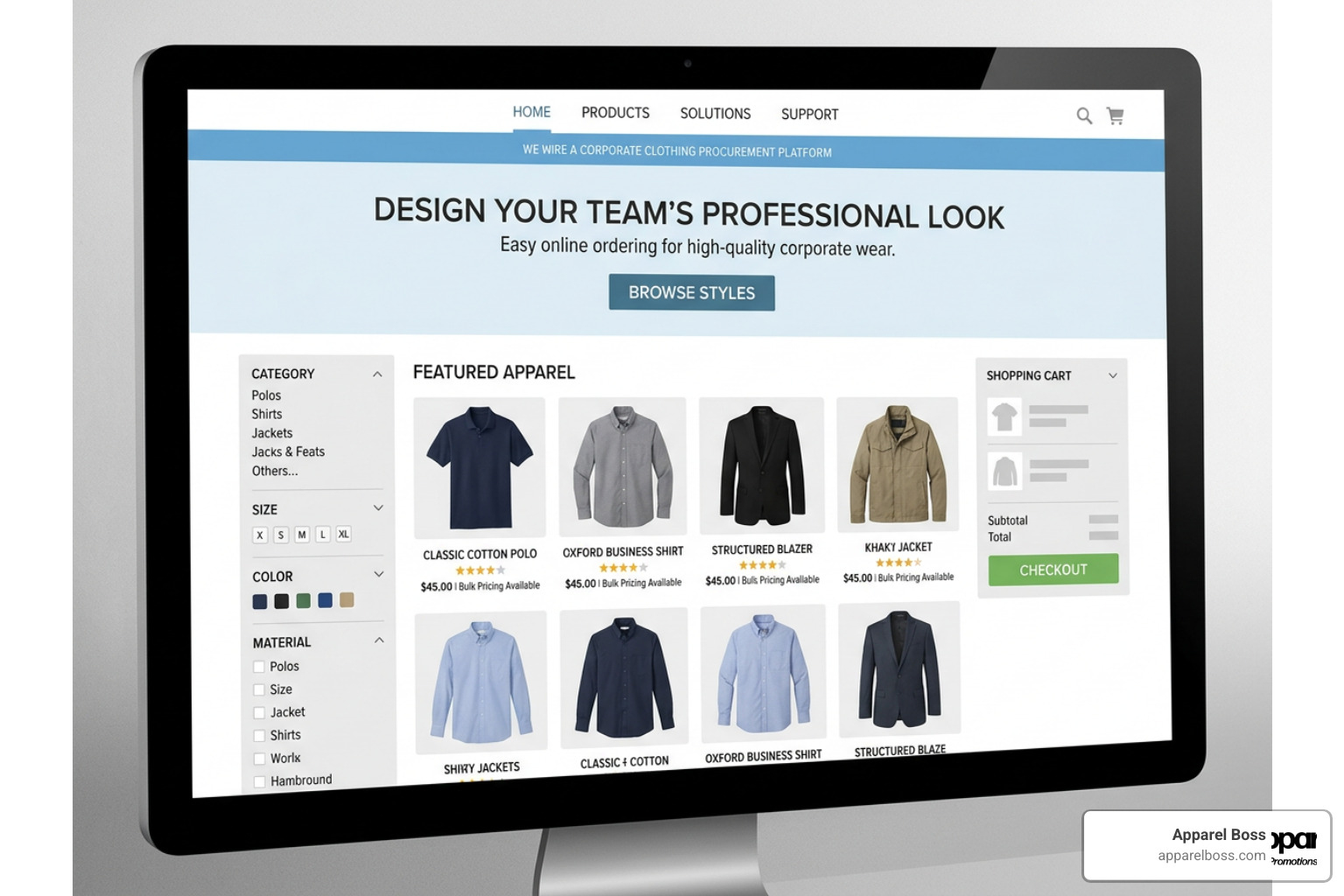
To make an informed decision, we have to look past the modern web interface and understand the operational mechanics of both distribution systems.
Historically, the term "Company store" carried a very different meaning. In the early 1900s, isolated industrial operations—such as the mining towns on the Michigan Iron Ranges analyzed in Terry S. Reynolds' study, Inviting a Pernicious Opposition: —used physical company stores as operational necessities to provide goods where no local retail infrastructure existed. As explored in economic research like Did Coal Miners “Owe Their Souls to the Company Store”? Theory and Evidence from the Early 1900s | The Journal of Economic History | Cambridge Core , these historical systems were physical, localized monopolies.
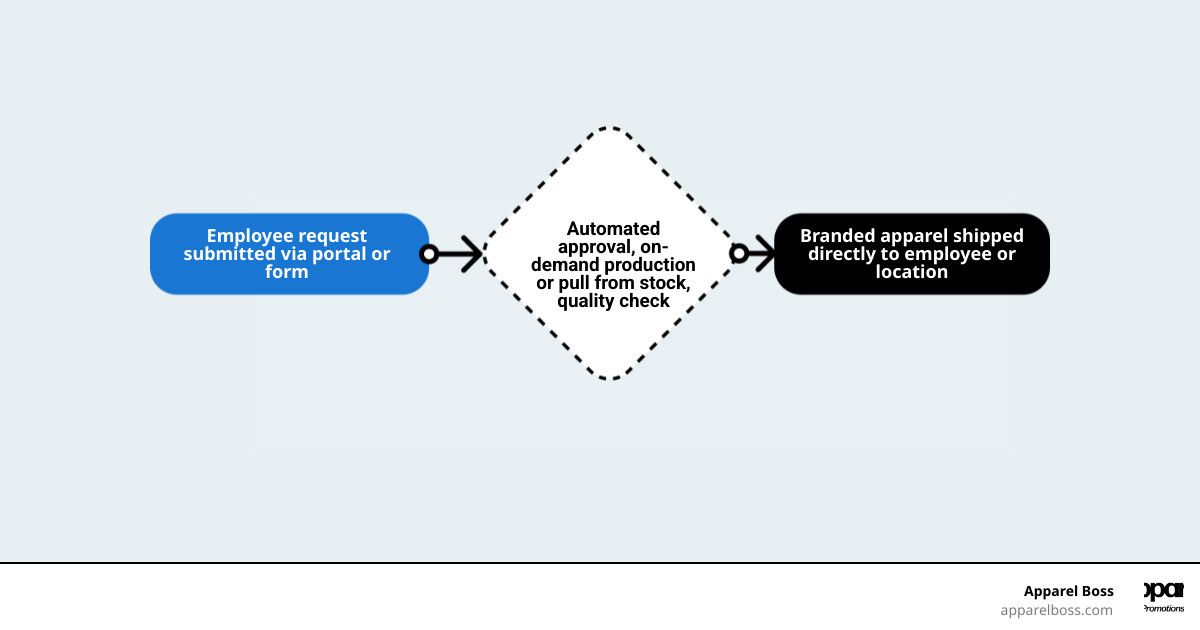
In 2026, the modern online company store is the complete opposite. It is a digital, highly integrated e-commerce portal built specifically to give your employees, partners, or branches direct access to pre-approved, beautifully decorated branded gear. If you are tired of playing the middleman in every apparel order, you can Stop the Swag Chaos with an Online Company Store and hand the ordering process over to an automated system.
What is a Modern Online Company Store?
A modern online company store is a private, branded e-commerce platform where users log in, select their items, and check out using pre-allocated points, gift codes, or corporate credit cards.
Behind the scenes, the store operates on either an on-demand production model, a pre-stocked inventory model, or a hybrid of both. According to the operational guide Company Store Economics for Promo Distributors: Why Portal Revenue Beats Rep-Sold Revenue , these portals shift the administrative burden away from your internal teams. They feature advanced capabilities like single sign-on (SSO) for security, tiered user permissions, and automated budget routing to ensure departments stay within their spending limits without requiring constant manual oversight.
What is a Traditional Bulk Ordering Program?
A traditional bulk ordering program is the classic transactional approach. When your company needs uniforms or event merchandise, an administrator estimates the total quantities and size distributions, places a large manual order, and pays the upfront capital.
Once the shipment arrives at your office in Long Island, Suffolk County, or New York City, the real work begins. Your administrative or HR team has to handle the physical storage logistics, sort through boxes, guess who needs which size, and manually hand out or ship the items. Re-ordering is equally manual, often requiring you to meet high minimum order quantities just to replace a few missing sizes.
Operational Showdown: Cost, Scalability, and Administrative Burden
When analyzing company stores vs traditional programs, looking only at the "price per item" is a critical mistake. To find the true cost of your program, you must evaluate the total cost of ownership over a 12-month cycle, including administrative hours, storage, and wasted inventory.
Hidden Costs of Traditional Programs
Traditional bulk programs look cheaper on paper because buying 500 shirts at once yields a lower unit cost. However, this model ignores several massive, hidden expenses:
- Inventory Obsolescence: You will inevitably end up with 40 extra-large shirts or niche sizes collecting dust in a back closet because your team's actual size distribution didn't match your upfront guess.
- Storage and Space Costs: Whether you are taking up valuable office space in Manhattan or paying for offsite storage in Nassau County, physical inventory carries a real estate cost.
- Administrative Overhead: If an HR manager earning a professional salary spends three hours a week unboxing, sorting, and mailing shirts to remote staff, you are paying a massive premium for basic logistics.
Scalability and Logistics in Company Stores vs Traditional Programs
For a growing business, scaling a traditional bulk program is incredibly difficult. Every new office location or hiring surge requires another round of size-guessing, manual ordering, and physical distribution.
An online company store solves this through automation. The leverage ratio of a company store program is highly efficient; once the portal is live, it requires almost zero ongoing sales or administrative effort. Orders are routed directly to our professional fulfillment facilities, where we handle the inventory management, decoration, and individual shipping. Whether you need to send a single kit to a remote employee on Long Island or ship bulk event gear to a conference in New York City, the system handles the logistics automatically.
Strategic Fit: Choosing the Right Model for Your Business Dynamics
Every business has a unique operational footprint. Deciding if a Is a Merch Store a Right Fit for Your Company? depends entirely on your growth rate, team distribution, and turnover patterns.
Managing High Turnover and Rapid Growth
If your company is expanding rapidly or operates in an industry with natural seasonal turnover, traditional bulk programs will quickly fall apart. New hires will constantly face delays receiving their uniforms or onboarding kits because you are waiting to compile enough demand for a bulk re-order.
A company store handles rapid roster changes seamlessly. When a new hire is added to your HR platform, the system can automatically generate a unique gift code, allowing them to log into your custom store and select their own perfectly fitted gear on day one.
Supporting Remote Teams and Distributed Workforces
The modern New York business landscape is highly decentralized. Managing corporate apparel for a team spread across Nassau County, Suffolk County, and remote home offices is a logistical nightmare under a traditional bulk model. Shipping everything to a central office in Deer Park just to pay to ship it out again is highly inefficient.
Online company stores are built for distributed workforces. According to retail logistics data, such as that detailed in The Retail Sector in New York City: Recent Trends and the Impact of ... , modern fulfillment systems must support direct-to-destination shipping to remain competitive. Our platform allows remote employees to order their gear and have it delivered directly to their home addresses, utilizing optimized shipping routes that save both time and money.
Employee Experience and Brand Integrity
Your brand is your most valuable asset. The way your employees present themselves in front of clients in New York City or at local events reflects the quality of your services.
Employee Satisfaction and Sizing Accuracy
There is nothing inspiring about receiving a cheap, poorly fitted shirt pulled from a dusty box in a storage closet. When employees are forced to guess their sizes or accept whatever is left over, adoption rates plummet.
A custom company store elevates the employee experience by offering a modern, self-service retail experience. Employees can view detailed sizing charts, select from a curated list of high-quality items, and choose pieces that fit their personal style. This self-service approach drastically reduces return rates and ensures your team actually wants to wear your branded apparel.
Brand Consistency in Company Stores vs Traditional Programs
When multiple departments or regional offices place independent bulk orders through different local vendors, brand consistency suffers. You end up with mismatched logo colors, varying embroidery quality, and inconsistent garment standards.
In Manufacturer-owned retail stores , researchers point out that controlling the direct retail channel is the most effective way for a brand to maintain strict price and quality standards. By centralizing your corporate apparel through an online company store, you lock in your exact logo guidelines, decoration methods, and premium brand standards.
At Apparel Boss, we bridge the gap between premium brand standards and operational scalability. Under my direction, our team ensures that every piece of custom embroidery and decorated apparel matches our artisan-level standards, maintaining a uniform, high-end appearance across your entire organization.
Frequently Asked Questions About Corporate Merch Programs
Can we combine bulk ordering and a company store into a hybrid model?
Absolutely. In fact, for many growing enterprises, a hybrid approach is the most efficient strategy. You can use traditional bulk ordering to secure the lowest pricing on high-volume, predictable items (such as core field uniforms or high-use safety gear) and store them in our warehouse.
At the same time, you can use your online company store to manage seasonal apparel, executive gifts, and custom onboarding kits. This hybrid setup gives you the cost benefits of bulk purchasing with the automated distribution power of an online portal.
What is the minimum employee headcount needed to justify an online store?
While there is no hard limit, we typically find that businesses with 50 or more active employees see an immediate return on investment. At this scale, the administrative hours saved by automating the ordering process easily outweigh any initial setup considerations. However, smaller companies with highly active remote teams or strict uniform requirements also benefit significantly from the automated logistics of a digital portal.
How do we handle inventory risk and storage fees?
We offer flexible inventory management strategies to fit your cash flow. For high-volume items, you can pre-purchase stock to secure bulk discounts, and we will store and manage it in our secure warehouse. For niche or seasonal items, we can utilize on-demand printing and decoration methods, meaning garments are only produced when an employee places an order. This hybrid inventory model minimizes upfront capital risk while keeping your store fully stocked.
Conclusion
Selecting the right model in the company stores vs traditional programs debate is a strategic operational decision. Traditional bulk programs still have a place for highly stable, single-location teams with predictable needs. But for growing, modern businesses that refuse to compromise on quality or waste valuable administrative hours, a managed online company store is the superior path forward.
At Apparel Boss, we don't believe in transactional, commodity swag. Led by our commitment to premium decoration and white-glove service, we design custom systems that protect your brand identity while simplifying your logistics. Whether you need an Online Concierge Company Store, custom kitting, or a fully managed apparel program, we are here to help you scale.
If you are ready to eliminate the logistical headaches of corporate apparel and elevate your brand's physical presence, explore our tailored Company Stores solutions or view our full suite of managed services today. Let's build a program that works as hard as you do.
The Ultimate Guide to Company Stores vs Traditional Programs