
Why Inconsistent Branding Apparel Is Costing Your Business More Than You Think
Why inconsistent branding apparel happens comes down to a few core operational failures most growing businesses share:
- No centralized brand guidelines for how logos, colors, and styles should appear on physical apparel
- Multiple vendors interpreting your brand differently across orders
- Material and production method differences — embroidery, screen printing, and direct-to-film each render colors and logos differently
- Decentralized purchasing where departments order apparel independently, without oversight
- Outdated logo files being used by vendors who never received updated brand assets
These aren't design problems. They're operational problems.
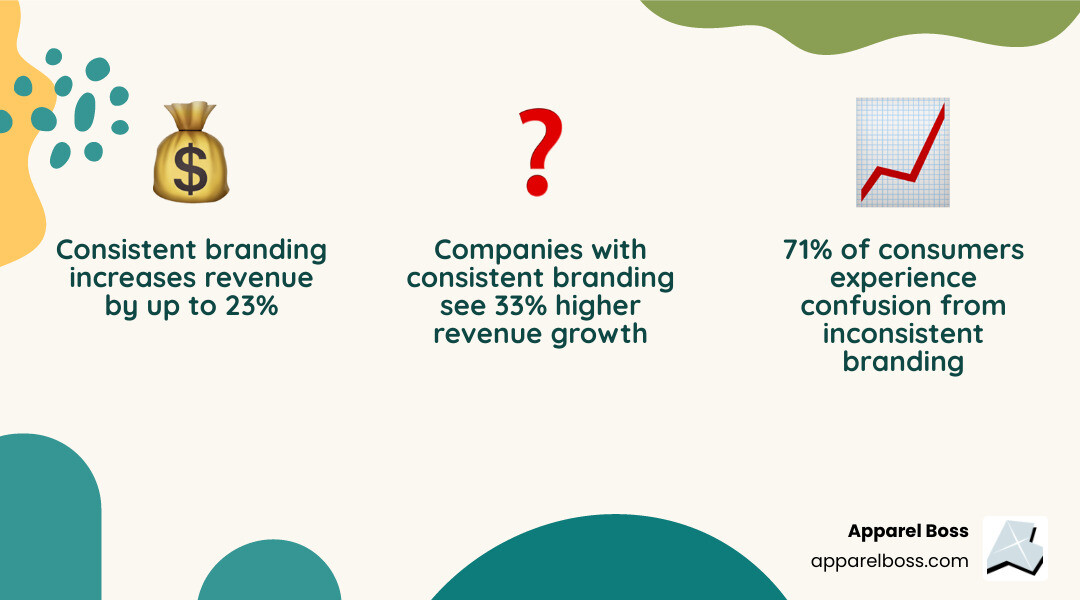
And the business impact is real. Research shows that 71% of consumers say inconsistent branding causes market confusion, and companies with consistent branding report 33% higher revenue growth than competitors. One study found consistent brand presentation can increase revenue by up to 23%.
For growing organizations, branded apparel isn't just a uniform — it's a visible signal of how well your business operates. When your sales team's polos look nothing like your warehouse crew's shirts, or your new hire kit arrives with a logo in a completely different shade of blue, that gap erodes trust — both internally and externally.
Most businesses don't set out to have inconsistent apparel. It accumulates quietly. A rushed order here, a new vendor there, a department that sourced their own shirts before anyone noticed. Before long, your brand looks like it belongs to three different companies.
The sections below break down exactly why this happens at the production level — and what a scalable, centralized solution looks like.
Understanding why inconsistent branding apparel undermines corporate identity
When a customer interacts with your team in the field or at a trade show, they aren't just looking at a logo; they are subconsciously measuring your company’s attention to detail. Why inconsistent branding apparel is so damaging is that it signals a lack of internal harmony. If a business cannot manage its own visual identity across its team’s clothing, a client may wonder if that same lack of coordination extends to the services or products they are buying.
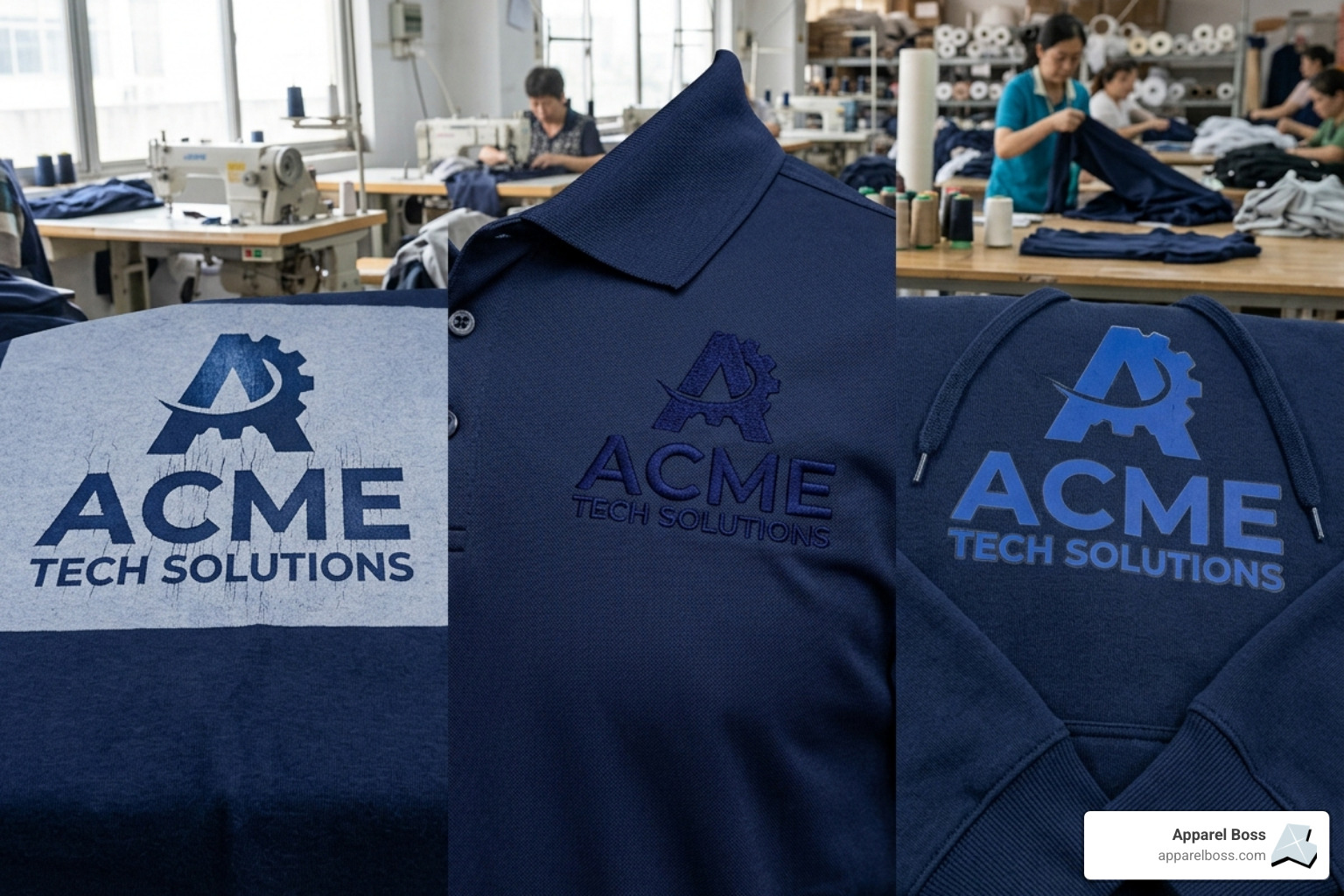
Visual harmony builds a mental shortcut for consumers. It creates a sense of reliability. Conversely, when colors vary wildly between a screen-printed t-shirt and an embroidered jacket, it creates "brand friction." According to research, 71% of consumers say that inconsistent branding causes confusion in the market. This confusion isn't just a minor annoyance; it’s a trust-killer.
Inconsistent color schemes across different platforms and materials can reduce brand recognition by as much as 40–60%. For a business in Suffolk County or Nassau County looking to stand out, losing half of your recognition because your "navy blue" looks purple on one shirt and teal on another is a massive waste of marketing spend. As noted in The Hidden Costs of Inconsistent Branding, these discrepancies often lead to a diluted identity and eroded market share. This is precisely why corporate branded apparel matters—it is the most visible "walking billboard" your company owns.
Technical factors behind why inconsistent branding apparel occurs in production
The root of the problem often lies in treating a logo like a static image rather than a dynamic system. Most businesses have a high-resolution file for their website, but they lack "approved versions" for physical production.
- Logo Systems: A logo that looks great on a white business card might disappear on a black hoodie. Without approved one-color or reversed versions, vendors often "improvise" by adding outlines, shadows, or stretching the file to fit the space.
- Color Codes: Digital colors (HEX/RGB) do not translate directly to physical inks (Pantone/PMS) or thread colors. Without a specific brand style guide that defines these physical codes, every vendor makes their "best guess."
- Material Variance: Fabric absorbs light and ink differently. A screen-printed logo on a 100% cotton tee will look vibrant, while the same ink on a moisture-wicking polyester polo may suffer from "dye migration," where the fabric color bleeds into the logo.
- Embroidery vs. Printing: Embroidery involves physical thread, which has thickness and sheen. Small details in a printed logo often cannot be replicated in thread without "simplifying" the design. If these simplifications aren't standardized, your quality branded apparel will look different every time you change garments.
Understanding the problem with inconsistent branding requires recognizing that physical production is a science. Without a technical plan, you are leaving your brand's reputation to chance.
The impact of fragmented vendor management on sizing and quality
One of the primary reasons why inconsistent branding apparel plagues mid-market companies is vendor fragmentation. When the HR department in Long Island orders onboarding shirts from one local shop, and the operations team in Deer Park orders safety vests from another, you lose all control over quality and sizing.
Different manufacturers use different "blocks" for sizing. An "Extra Large" from a budget promotional brand is often cut differently than an "Extra Large" from a premium retail-aligned brand. When employees receive gear that doesn't fit or feels cheap, they don't wear it. This leads to "wasted inventory"—boxes of shirts sitting in a closet because the fit was off or the fabric was scratchy.
Fragmented ordering also prevents effective production planning. Instead of a cohesive strategy, the company ends up with a "piecemeal" approach. This is why custom company gear is key to branding; it requires a centralized partner who maintains quality benchmarks across every garment type, ensuring that a "Large" always feels like a "Large" and the quality remains consistent whether you are ordering ten items or a thousand.
How to audit and resolve why inconsistent branding apparel erodes employee trust
Internal perception is just as important as customer perception. Your employees are your primary brand advocates. If they are handed a flimsy, poorly branded shirt with a crooked logo, the message they receive is: "We don't care about the details." This can lead to cynicism regarding company values.
To fix this, businesses should conduct a "Brand Audit." Look at every piece of apparel currently in circulation. Do the blues match? Are the logos placed in the same spot? Are the designs reflecting the company’s current personality, or are they outdated?
Establishing comprehensive brand guidelines specifically for apparel is the first step toward rectification. These guidelines should dictate:
- Approved logo placements (left chest, sleeve, back neck).
- Specific thread colors and Pantone matches.
- Approved garment brands and styles to ensure sizing consistency.
By involving teams in the process and providing gear they actually want to wear, you turn apparel into a tool for team cohesion. As the industry evolves, custom apparel is key to the future of corporate branding because it bridges the gap between a paycheck and a shared identity.
Implementing a scalable solution for brand consistency
For most decision-makers, the challenge isn't a lack of desire for consistency; it's a lack of time. Managing a merchandise program is a massive administrative burden when done manually. The solution is to move from a decentralized, "ad-hoc" ordering model to a centralized, structured system.
| Feature | Decentralized Ordering (Old Way) | Centralized Company Store (The Solution) |
|---|---|---|
| Brand Control | Low; vendors guess colors/logos | High; pre-approved assets only |
| Sizing | Inconsistent across brands | Standardized across curated lines |
| Inventory | Wasted; "closet full of shirts" | On-demand or managed stock |
| Admin Work | High; chasing invoices/sizes | Low; automated via platform |
| Employee Experience | Random; "you get what we have" | Professional; "choose what fits" |
Apparel Boss helps companies bridge this gap. By utilizing custom apparel services that include in-house production and sophisticated online platforms, businesses can ensure that every stitch and print matches the brand's exact specifications.
Streamlining fulfillment through centralized company stores
The "closet full of shirts" is a hallmark of an inefficient merchandise program. When companies order in bulk to save on unit costs, they often end up with an excess of sizes no one needs and a shortage of the ones they do. This is a primary driver of wasted inventory and financial loss.
An online company store eliminates this headache. By centralizing the ordering process, you can:
- Automate Fulfillment: When an employee needs a new jacket, they order it through the portal. The order is picked, packed, and shipped without HR ever touching a box.
- Control the Brand: The store only features items that have been pre-approved for color, fit, and logo accuracy. No "rogue" designs can enter the system.
- Reduce Administrative Workload: No more spreadsheets to track sizes or manual invoicing. The system handles the data, providing real-time reporting on spend and usage.
Streamlining this process is why custom branded merch is the secret to success in 2025. It moves merch from a "to-do list" item to a hands-off strategic asset.
Enhancing employee onboarding with custom kits
First impressions are permanent. For a new hire in New York City or Long Island, receiving a high-quality employee onboarding kit on day one—especially for remote roles—creates an immediate sense of belonging.
When onboarding is fragmented, some employees get gear while others don't, or the gear they receive is inconsistent with the rest of the team. This "unboxing experience" is a critical part of the brand story. Custom merchandise drives branding by making the brand tangible. A kit that includes a perfectly sized, consistently branded polo, a notebook, and a high-end hoodie says more about company culture than any handbook ever could.
Maintaining long-term brand integrity with in-house production
The final piece of the consistency puzzle is how the items are made. When a company outsources to a middleman who then outsources to various "trade printers," quality control disappears.
By keeping production in-house, Apparel Boss maintains strict quality benchmarks. Whether it is embroidery (best for polos and outerwear), screen printing (best for high-volume t-shirts), or direct-to-film (DTF) (best for complex, multi-color designs on various fabrics), having a single point of accountability is vital.
- Embroidery: We ensure stitch counts are high enough to prevent "puckering" and that thread colors are mapped to your Pantone requirements.
- Direct-to-Film: This technology allows for vibrant, detailed logos that don't crack or peel, providing a modern alternative to traditional methods while maintaining the benefits of custom apparel durability.
Conclusion: Turning Apparel into a Strategic Asset
Why inconsistent branding apparel persists is usually due to a lack of a unified system, not a lack of effort. In a competitive market, your team’s appearance is a direct reflection of your brand’s strength. By moving away from fragmented vendors and "ad-hoc" ordering, and toward a centralized, in-house production model, you protect your revenue, your reputation, and your team's morale.
Consistency isn't just about looking good; it's about building a foundation of trust that scales as your company grows.
If your organization is struggling with "brand drift," wasted inventory, or the administrative nightmare of managing gear, it’s time to move toward a structured solution. Apparel Boss acts as a strategic partner to help you streamline these operations, ensuring your brand looks as professional on a shirt as it does on your website.
Ready to eliminate the "closet full of shirts" and take control of your brand? Explore how our online company stores can simplify your merchandise program.