
Maximizing Brand Exposure with Calendar Promotional Products
In the business environments of New York and Long Island, staying "top of mind" is a constant operational challenge. Decision-makers are inundated with digital noise, while internal teams are often asked to manage brand visibility with limited time and inconsistent systems. This is where physical calendar promotional products can play a practical role. Because a calendar serves a functional purpose - tracking deadlines, planning meetings, and marking milestones - it is more likely to remain visible in a workspace for the full year. For organizations evaluating the role of calendars within a broader merchandise program, the promotional merchandise category provides useful context for why functional branded items continue to perform in B2B settings.
As we move into April 2026, forward-thinking operations and marketing teams are already planning for 2027 distribution. The challenge is not simply choosing a theme - it is choosing a format and rollout strategy that support adoption, reduce waste, and fit the daily workflow of the people who will actually use it.
Common 2027 themes currently available include:
- Scenic & American Life: Professional imagery that fits office environments and client-facing spaces.
- Classic Cars & Trucks: Industry-aligned visuals that often resonate with construction, automotive, and skilled-trade teams.
- Wildlife & Pets: Broad-appeal themes that work well in community-oriented or service-based organizations.
- Patriotic & Religious: More targeted options for organizations with specific cultural or community alignment.
To help evaluate format fit from an operational perspective, consider this comparison:
| Feature | Wall Calendars | Desk Pads | Magnet Calendars |
|---|---|---|---|
| Visibility | High (Eye-level on walls) | Constant (On active work surfaces) | High (Shared metallic surfaces) |
| Utility | Reference and visibility | Heavy note-taking and planning | Quick date reference |
| Space Required | Vertical wall space | Large horizontal desk space | Small metallic surface |
| Customization | Large image area + Ad lip | Large branded borders | Compact business card style |
Selecting the Right Calendar Promotional Products for Your Audience
Choosing the right format starts with understanding workflow, not preference alone. For a project manager in Suffolk County, a large desk blotter may support scheduling and milestone tracking. For a distributed sales team, a smaller-format option may be easier to place and use consistently. The key business question is whether the item will become part of the recipient's routine or end up stored, discarded, or forgotten.
For businesses looking for the best value in the USA and Canada, high-quality calendar options often represent the intersection of durability and competitive pricing. These items are frequently available in bilingual formats, such as English and French, which can matter for organizations serving diverse teams or cross-border stakeholders. When managed through an online company store, organizations can give departments access to approved merchandise without creating redundant ordering work or fragmented branding decisions.
When selecting your products, it also helps to work with a partner that understands local distribution realities across Manhattan, Long Island, and the surrounding boroughs. Apparel Boss provides the operational support needed to help businesses distribute merchandise efficiently across high-density markets while maintaining brand consistency.
Customization and Imprinting for Calendar Promotional Products
The value of a promotional calendar depends heavily on how well it is customized and how consistently it is deployed. Modern print capabilities now allow for full-color, high-resolution branding that aligns with broader company identity standards rather than relying on generic one-color treatments.
Key customization features to consider:
- Personalized Photos: Premium formats may allow every month to feature business-specific imagery, such as project installations, facilities, or team milestones.
- Digital Integration: Some tools can connect physical planning with mobile scheduling, helping recipients bridge analog and digital workflows.
- Imprinting Options: Branding can be placed on the ad lip, cover, or surrounding visual areas depending on the format.
From an operational standpoint, most wall calendars are sold in increments of 25, with minimum order quantities often starting at 100 units. That means bulk planning matters. If ordering is handled manually, teams can easily overbuy, misallocate inventory, or miss key seasonal deadlines. For companies in Deer Park and across Long Island, combining calendar programs with custom apparel services can support a more unified merchandise strategy and reduce the friction of managing multiple vendors.
Streamlining Your Merchandise Strategy for Long-Term ROI
While individual product costs for items like small business card magnets or wall calendars are relatively low, the "hidden" costs of promotional products often lie in the administration. Many companies suffer from "swag closet syndrome"—a chaotic mess of unorganized boxes, wasted inventory, and inconsistent branding.
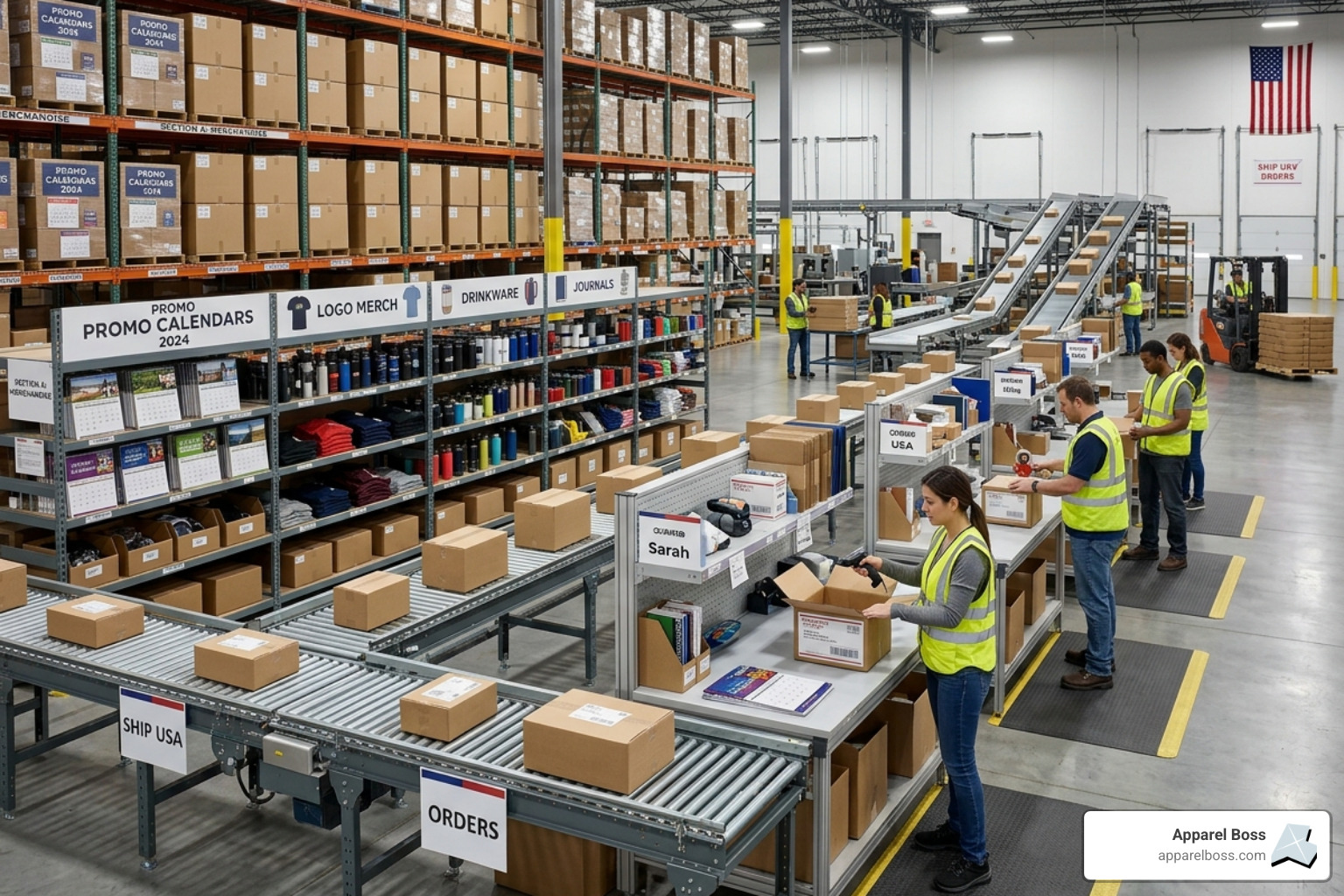
To achieve a real ROI, businesses must look past the unit price and focus on the total cost of ownership. This includes the time spent by HR or marketing staff packing boxes, the cost of storage, and the waste generated when outdated calendars are discovered in a closet in February.
Integrating Calendars into Employee Onboarding and Client Kits
One of the most effective ways to use calendar promotional products is to include them in structured custom kitting programs. Instead of handing out a calendar as a standalone item, imagine it as part of a "New Year Strategy Kit" or a "New Hire Welcome Box."
Apparel Boss helps companies solve the operational headache of kitting by managing the assembly and distribution in-house. By integrating calendars with high-quality branded apparel—such as custom hoodies or polos—you create a high-value package that feels like a gift rather than a giveaway. This approach reduces the administrative workload on your internal teams and ensures that every client or employee receives a consistent, professional brand experience.
This strategy is particularly effective for specific industries. For instance, looking at the Top Promotional Products for Construction Companies, calendars serve as an essential tool for tracking project timelines on-site, making them a natural fit for industry-specific kits.
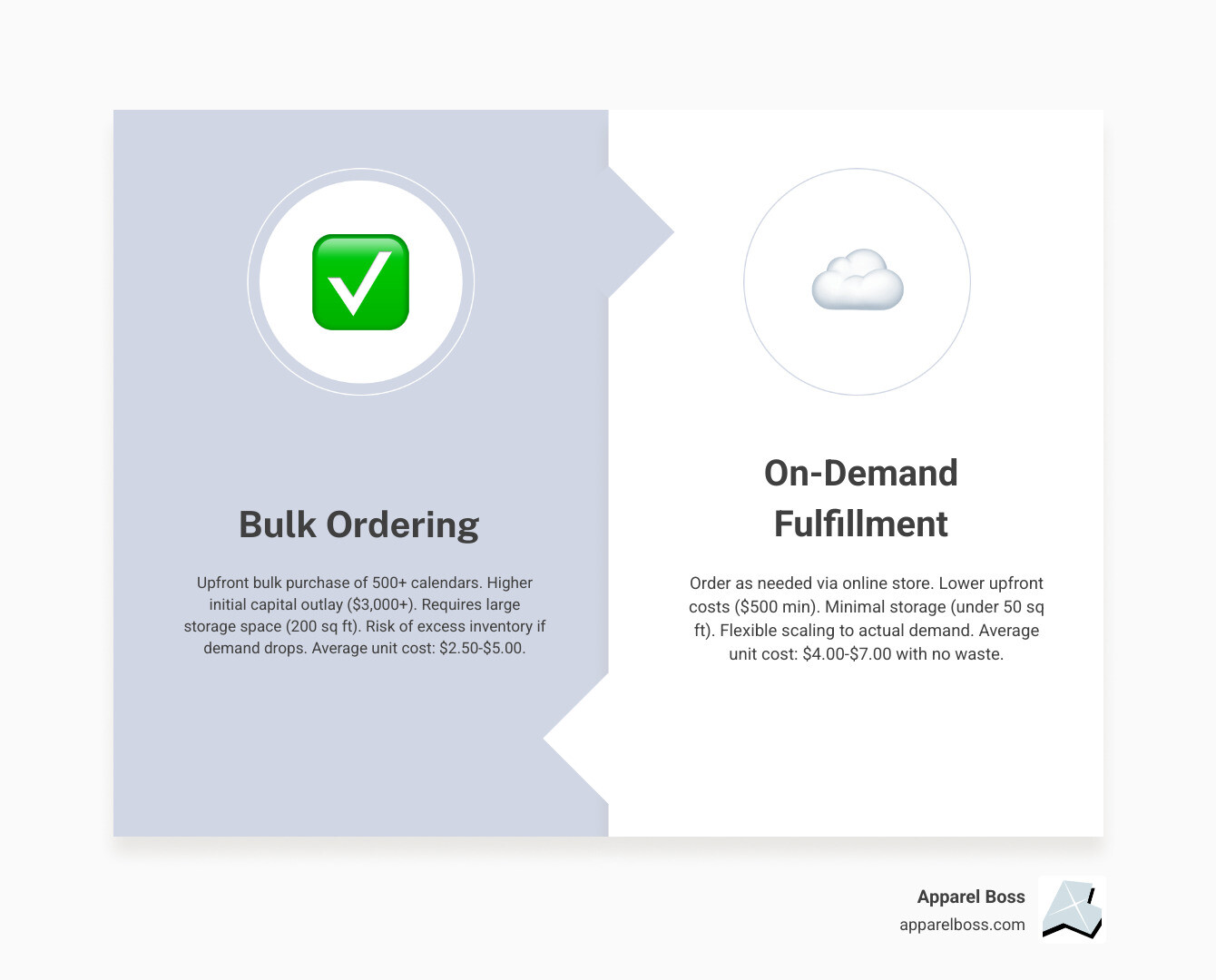
Furthermore, by utilizing an online company store, you can allow department heads to order the exact number of calendars they need for their specific teams. This eliminates the "wasted inventory" problem, as you are no longer guessing how many units to send to each branch office in Nassau County or Suffolk County.
Operational Best Practices for Bulk Ordering and Distribution
To ensure your calendar program is a success for 2027, timing and systemization are everything. Because calendars have a "hard" expiration date (everyone wants them by December), the production rush in the fourth quarter can lead to delays and shipping errors.
Best Practices for Decision-Makers:
- Pre-Year Planning: Finalize your designs and themes by mid-summer. This allows you to take advantage of "early bird" pricing and ensures your inventory is ready for distribution well before the holiday rush.
- Scalable Distribution: Use a centralized fulfillment system. Instead of shipping 1,000 calendars to your main office and having staff mail them out individually, have your merchandise partner handle the direct-to-recipient shipping.
- Complementary Products: Increase the utility of your mailing by including wall calendar envelopes or complementary items like magnets or custom notebooks.
- Audit Your Program: Use the data from your Promotional Products Category sales to see which themes were most popular among your staff and clients.
By moving away from a "one-off" ordering mindset and toward a structured merchandise program, you transform calendar promotional products from a simple giveaway into a strategic asset. You stop worrying about the logistics of boxes and start focusing on the 3+ daily impressions your brand is making on your most important customers.
For companies looking to scale their efforts and eliminate the friction of manual fulfillment, exploring More info about custom merchandise services can provide the roadmap needed to transition from a cluttered swag closet to a streamlined, professional operation.
At Apparel Boss, we specialize in helping businesses across New York and Long Island streamline these exact processes. Whether you are looking to launch an online company store to manage your 2027 calendar distribution or need a partner to handle complex custom kitting for your national team, we provide the infrastructure to help you scale without the administrative burden.
Ready to take the headache out of your company merchandise? Contact Apparel Boss today to learn how we can help you build a more efficient, consistent, and impactful brand presence.