Why Choosing the Right White Label Company Store Platform Changes Everything
If you're evaluating a white label company store for your organization, here's a fast answer before we go deeper:
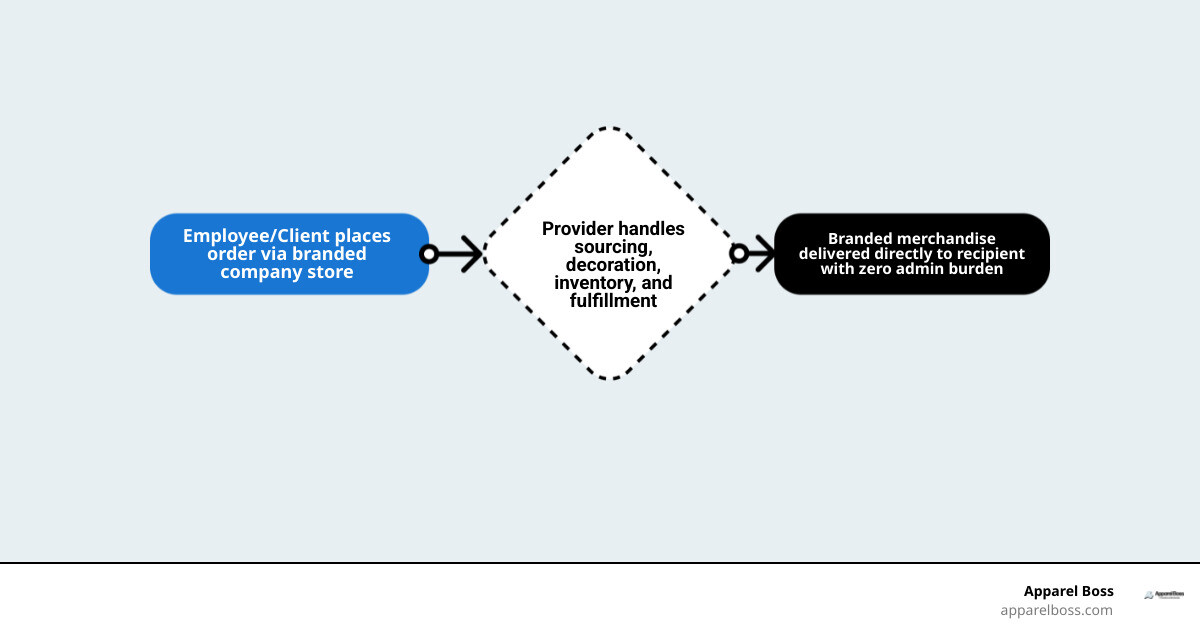
What is a white label company store? A white label company store is a fully branded online merchandise portal — built and operated by a third-party provider — that appears to employees and clients as your own store. The provider handles product sourcing, inventory, decoration, and fulfillment invisibly behind the scenes.
Top platforms generally fall into two categories:
| Type | Best For | Key Trade-off |
|---|---|---|
| Turnkey SaaS platforms | Tech-first teams who want self-serve control | You manage more of the operational work |
| Managed concierge stores | HR, marketing, and ops leaders who want a done-for-you system | Higher service investment, lower internal workload |
Core features to compare when choosing a provider:
- Custom domain and brand design alignment
- Single Sign-On (SSO) and HRIS integration
- On-demand decoration (embroidery, screen printing)
- Managed inventory and kitting capabilities
- International shipping and return handling
- Analytics, budget controls, and permission levels
Managing corporate merchandise at scale is harder than it looks. Most companies start with spreadsheets, shared drives, and one vendor contact. That works until it doesn't — until a new hire cohort gets the wrong size, a client gift ships late, or a rogue department orders off-brand polos that make your CMO wince.
A well-configured white label company store solves these problems by centralizing ordering, enforcing brand standards, and removing the administrative burden from your team entirely. The challenge is that the provider landscape is fragmented — ranging from lightweight SaaS tools to full-service fulfillment partners — and the wrong choice can scale your problems instead of eliminating them.
I'm Salvatore Vento, Marketing Director at Apparel Boss, where I've helped CEOs, HR leaders, and brand teams build structured white label company store programs that eliminate inventory waste, protect brand consistency, and hold up reliably at volume. This guide breaks down exactly what to look for so you can make the right call for your organization.
Understanding the White Label Company Store Model
To build an effective merchandise strategy, you must first understand how a white label company store operates under the hood. At its core, white labeling means an external partner builds and maintains the technology, inventory infrastructure, and fulfillment logistics, while presenting a end-to-end branded front-end to your users. When an employee logs in, they see your enterprise logo, primary colors, custom typography, and curated merchandise line. They experience a native corporate portal, while the provider manages storage, decoration, packaging, and parcel logistics invisibly in the background.
This model fundamentally replaces fragmented purchasing with centralized administration. Rather than permitting managers across regional locations to order off-brand items from unvetted vendors, a white label company store establishes strict visual guardrails. By integrating with enterprise software through Single Sign-On (SSO), employees gain frictionless access using existing corporate credentials, allowing leaders to Stop the Swag Chaos with Professional Online Company Stores.
Core Benefits of Implementing a White Label Company Store
The modern enterprise faces distinct operational hurdles when distributing physical goods to hybrid, remote, and office-based teams:
- Elimination of Inventory Waste: Unmanaged bulk ordering frequently leads to closets packed with outdated apparel, odd sizing leftovers, and discarded collateral. A managed online store aligns demand with live inventory or on-demand decorated programs, curbing budget waste.
- Brand Standards Protection: Unapproved logo modifications and substandard decoration cheapen your brand identity. Centralizing your catalog ensures every decorated item adheres to exacting visual standards.
- Automated Employee Recognition and Gifting: Modern platforms leverage system triggers to issue gift allowances, streamlining onboarding and milestone rewards without manual administrative oversight.
- Logistical Efficiency for Distributed Workforces: Shipping individual parcels to home addresses across multiple regions consumes valuable administrative hours. Partnering with a white label fulfillment specialist outsources address verification, customs clearance, and trackable distribution.
White Label vs Private Label vs Traditional Corporate Merch
Understanding the functional distinctions between white label systems, private label goods, and traditional transactional sourcing is essential for leadership teams evaluating store infrastructure.
Traditional corporate merch buying relies on one-off, transactional orders handled through ad-hoc requests. In contrast, a white label company store provides a permanent, scalable web portal where curated items are stored or decorated on demand, combining enterprise control with operational agility.
Key Evaluation Criteria for a White Label Company Store Platform
Selecting the ideal software and fulfillment provider requires vetting both front-end digital user experience and back-end logistical capabilities. A platform may boast sleek administrative dashboards, but fail when managing peak holiday shipping volumes or intricate embroidery requirements.
When auditing options, evaluate whether the provider offers multi-tenant administration, robust allowance systems, and enterprise-grade architecture capable of scaling across complex organization structures.
E-Commerce Features, Integrations, and Platform Security
Your company store platform must integrate securely into your enterprise IT stack while protecting user access and company capital:
- Custom Subdomains and Branding: The storefront should operate seamlessly on your corporate domain extension with fully custom CSS, transactional email messaging, and branded packing slips.
- SSO and HRIS Integration: Single Sign-On protocols ensure only active personnel access internal stores. Automated HRIS data feeds trigger onboarding allowances the moment a new employee joins the team.
- Budgeting and Stipend Management: Administrators require granular tools to assign points, gift card values, or purchasing allowances based on department, seniority, or project parameters.
- Enterprise-Grade Data Security: Ensure platform architectures comply with modern data handling regulations, maintain encryption standards, and support multi-tenant security separation.
Sourcing, Warehousing, and Fulfillment Capabilities
The underlying fulfillment engine determines whether your store operates as an asset or an ongoing headache:
- On-Demand vs. Managed Inventory: Evaluate whether the vendor supports hybrid fulfillment — maintaining safety stock for high-volume onboarding items while offering print-and-embroider-on-demand for specialized items.
- Custom Kitting Capabilities: Onboarding remote talent requires precise assembly. Your provider must excel at assembling multi-item packages in custom branded boxes with hand-packed attention to detail through dedicated custom kitting solutions.
- Global Trackable Shipping: The provider must manage address verification, international customs documentation, and automated tracking notifications across domestic and overseas destinations.
Comparing Top White Label Store Models and Fulfillment Providers
Evaluating provider structures helps match your enterprise resources with the appropriate operational model. To choose wisely, read our guide on How to Evaluate Online Company Store Platforms for Your Business.
Turnkey SaaS vs Managed White Label Company Store Platforms
The primary architectural divide lies between standalone SaaS platforms and managed concierge store programs:
- Turnkey SaaS Storefronts: These self-serve platforms provide e-commerce store engines and basic vendor API connections. While offering software flexibility, your internal operations team remains responsible for selecting products, negotiating with third-party decorators, managing inventory levels, and handling user inquiries.
- Managed Concierge Company Stores: Concierge providers take complete single-source accountability. They handle store deployment, curate premium catalogs, manage decoration, house physical stock, assemble employee kits, and handle customer service. This approach eliminates internal operational burdens, delivering a high-end experience backed by comprehensive corporate services.
Comparing Costs, MOQs, and Pricing Structures
Understanding fee structures prevents unexpected operational expense:
- Platform Setup and Subscription Fees: SaaS providers typically charge recurring active-store subscription fees alongside initial setup costs, whereas managed partners often bundle store deployment into broader managed merchandise agreements.
- Minimum Order Quantities (MOQs): Low or zero-MOQ structures offer flexibility for executive gifting, but unit decoration costs decrease significantly when leveraging strategic bulk production runs for planned events.
- Warehousing and Pick-and-Pack Fees: Review storage calculations, pallet fees, packaging assembly charges, and shipping markups to ensure long-term program sustainability.
Overcoming Operational Risks in Corporate Merchandise Programs
Deploying a white label company store mitigates major operational pain points, but leadership must navigate common execution risks:
- Supplier Dependence and Production Delays: Relying on unvetted supply chains leads to unexpected backorders and missed delivery windows. Partnering with vertical providers who maintain direct oversight of decoration processes ensures strict lead-time compliance.
- Decoration Quality Inconsistencies: Low-grade screen printing and poor embroidery digitizing degrade brand prestige. Artisan-level decoration standards protect your visual identity across every garment.
- Sizing Mismatches and Excess Inventory: Sizing imbalances waste budget capital. Implementing structured employee allowance systems and on-demand replenishment controls eliminates static shelf inventory. To streamline purchasing workflows further, consult The Complete Guide to Promotional Items Online Ordering.
Frequently Asked Questions About White Label Company Store Platforms
How does a white label company store integrate into existing corporate websites and HR software?
A white label store integrates using API architecture and Single Sign-On (SSO) protocols like SAML 2.0 or OAuth. This allows employees to access the store via your internal intranet or main corporate site without re-entering credentials. HRIS integrations allow automated employee directory syncing to trigger onboarding allowances automatically upon hiring.
What pricing models and setup fees should businesses expect from providers?
Providers generally utilize two pricing structures: technology-focused SaaS platforms that charge upfront setup fees along with monthly per-store software fees, and fully managed concierge providers who structure costs around product decoration, inventory management, and white-glove fulfillment services.
How do providers ensure brand consistency and high decoration quality?
Managed store providers uphold quality by establishing digital brand guidelines, enforcing pre-approved embroidery digitizing files, maintaining strict color-matching standards, and conducting physical quality inspections during production and kitting.
Conclusion: Elevating Your Corporate Merchandise Strategy
Implementing a white label company store is a strategic investment that transforms corporate merchandise management from a chaotic administrative chore into a streamlined, brand-building asset. By centralizing ordering, securing IT integrations, curbing inventory waste, and delivering premium physical touchpoints, your enterprise projects uncompromising standards to remote employees, clients, and prospective talent alike.
If you are ready to replace transactional swag headaches with a fully managed, artisan-decorated corporate merchandise program, I invite you to explore our tailored solutions. Explore Managed Company Store Solutions with Apparel Boss today to build a store experience worthy of your brand.
Compare White Label Company Store Providers: An Essential Guide