Is a Business Casual Polo and Khakis Outfit Actually Professional?
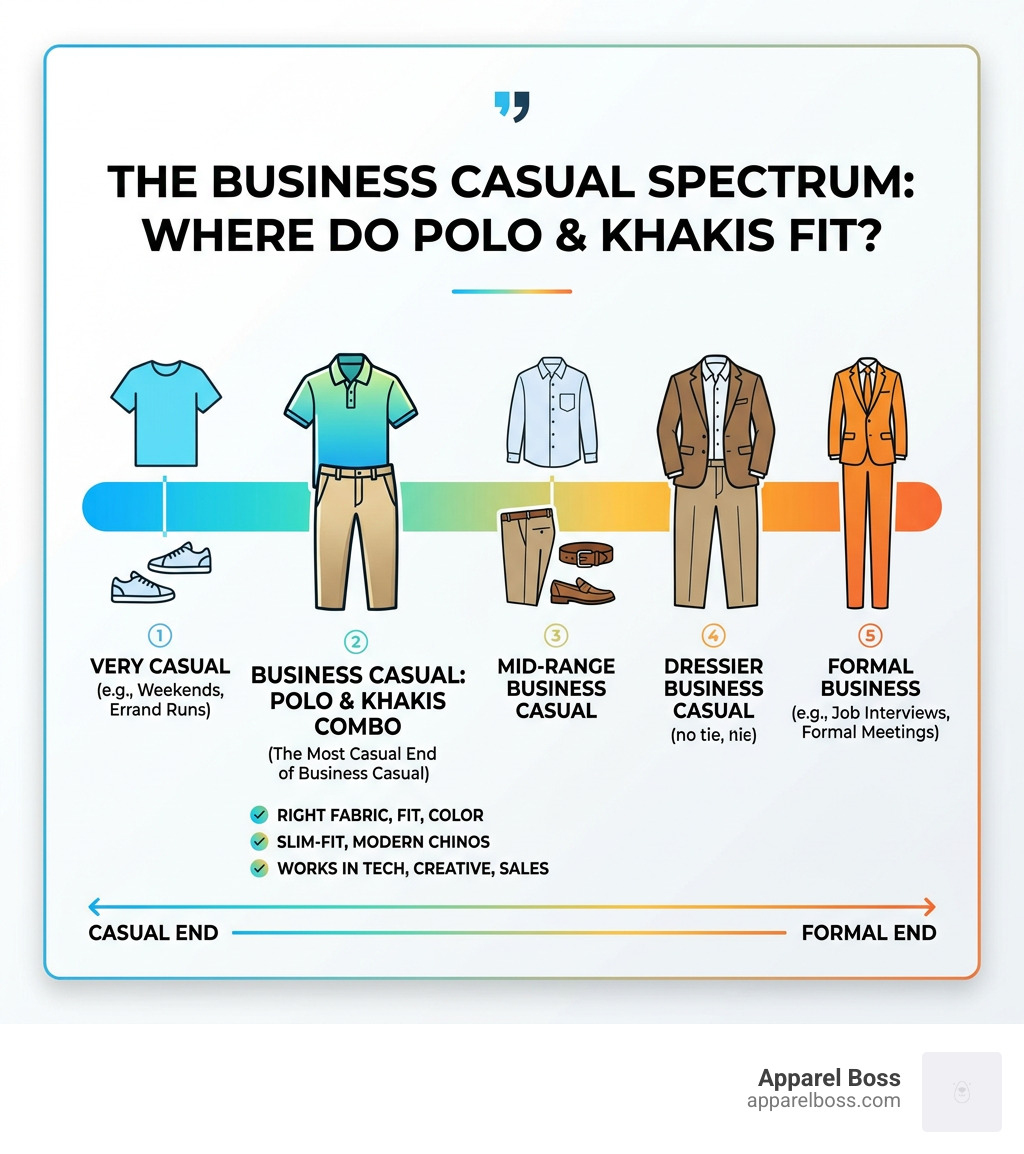
Business casual polo and khakis is one of the most common workplace outfit combinations — but it's also one of the most misunderstood.
Here's the quick answer:
| Factor | What It Means for You |
|---|---|
| Polo shirt | Yes, business casual — if it's the right fabric, fit, and color |
| Khakis | Yes, business casual — if they're slim-fit, modern, and wrinkle-free |
| The combo together | Depends — it sits at the most casual end of business casual |
| When it works | Tech, creative, sales, casual Fridays, networking events |
| When it doesn't | Finance, law, formal meetings, DC-style offices, job interviews |
So the outfit can be business casual. But the details matter — a lot.
Most people get it wrong not because of the pieces they choose, but because of how they wear them. A baggy polo with faded khakis reads more "weekend errand run" than "professional." A slim-fit merino polo with tailored chinos and loafers? That's a sharp, polished look.
The line between sloppy and smart is thinner than you'd think.
I'm Steven, and through my work in sales, marketing, and branded apparel at Apparel Boss, I've helped dozens of companies define what business casual polo and khakis looks like when it's done right. In this guide, I'll walk you through exactly where most outfits go wrong — and how to fix them.
The Anatomy of a Business Casual Polo and Khakis Outfit
To understand why some versions of this outfit fail while others succeed, we have to look at the "ingredients." Not all polos are created equal, and the same goes for your trousers. When we talk about business casual polo and khakis, we are looking for pieces that bridge the gap between a weekend barbecue and a boardroom.
Fabric Choice and Structure
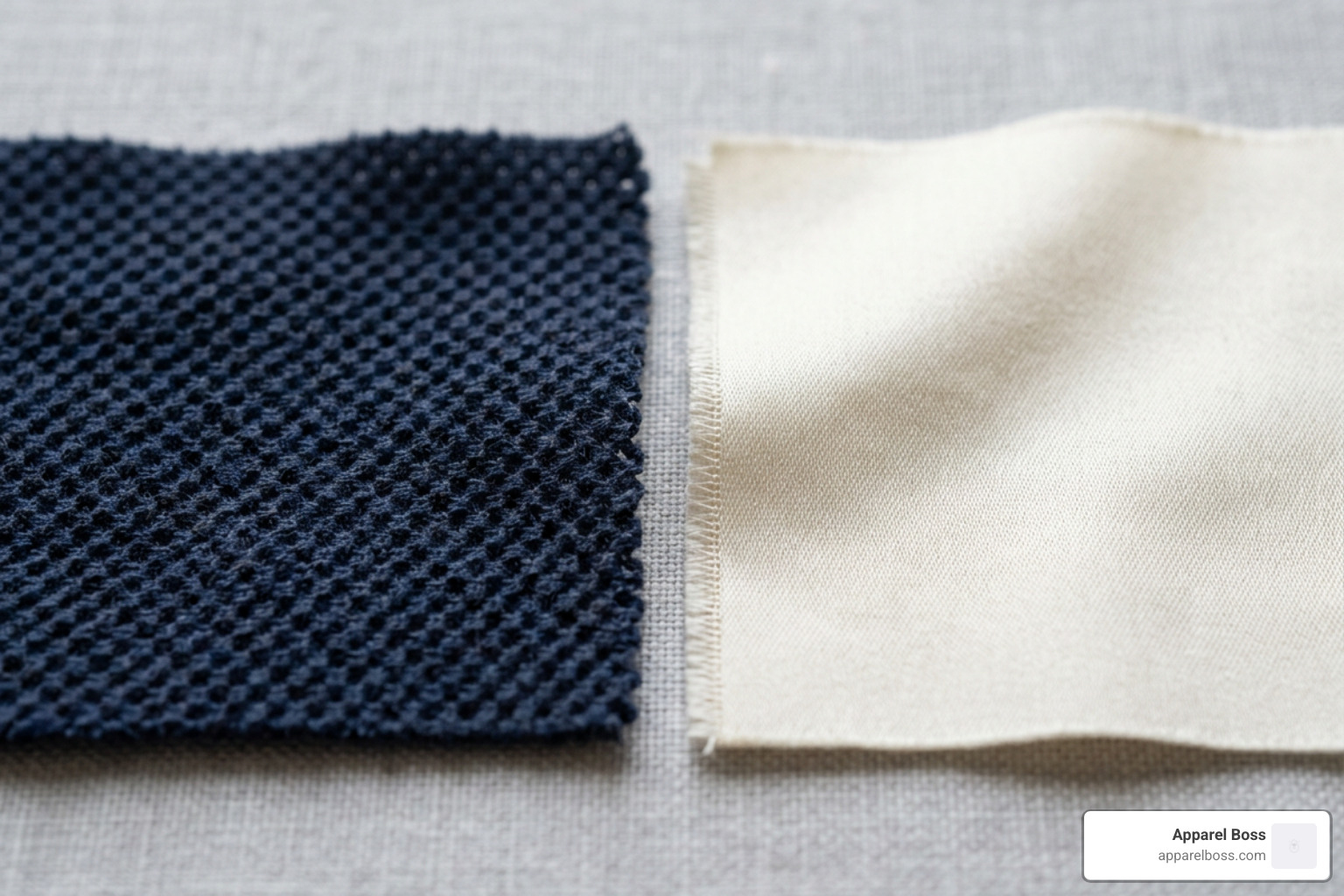
The biggest differentiator in a professional polo is the material. Most "standard" polos are made from heavy, rough piqué cotton that loses its shape after three washes. If you want to look like a leader, you need refined fabrics.
Pima cotton is a game-changer here. Because it has longer fibers than standard cotton, it creates a smoother, stronger, and higher-quality fabric that holds its color and shape. It doesn't pill, and it has a slight natural sheen that looks much more expensive than a basic gym polo.
For specific styles that hit these marks, see our roundup of the best business casual polo shirts.
Styling a Business Casual Polo and Khakis for the Modern Office
If you want to move away from the "IT guy" stereotype, you need to experiment with different textures and collars.
- Piqué Texture: While we mentioned avoiding cheap piqué, a high-quality, fine-knit piqué offers a structured look that hides wrinkles well.
- Merino Wool: For cooler months or air-conditioned offices, merino wool is the gold standard. It’s breathable, naturally odor-resistant, and has a drape that looks incredibly sophisticated under a blazer.
- Johnny Collars: A Johnny collar (a collar without buttons) offers a "varsity-inspired" or "mid-century modern" vibe. It feels more like a sweater and less like a uniform.
- Neutral Tones: Stick to a "core color" palette. Navy, charcoal, olive, and white are your best friends. They are easy to mix and match and always look intentional.
Modernizing the Fit of Your Trousers
The "khakis" of the 1990s—baggy, pleated, and heavy—are the reason this style gets a bad rap. Modern business casual polo and khakis requires a "slim-straight" fit. This means the pants follow the natural line of your leg without being skin-tight.
- Chino vs. Khaki: While the terms are used interchangeably, "chinos" usually refer to a lighter-weight fabric with a more tapered cut, whereas "khakis" are traditionally heavier. For the office, the cleaner lines of a chino are usually preferred.
- No-Pleat Designs: Flat-front pants are mandatory. Pleats add unnecessary bulk to your midsection and look outdated.
- Tapered Hems: Your pants should have a slight taper toward the ankle and a "minimal break," meaning they just barely touch the top of your shoes. This prevents that "puddling" effect at the ankles that makes an outfit look sloppy.
Why Your Current Combo Might Be Failing the Office Test
We’ve all seen it: the "Lazy Casual" look. It’s the guy who wears a polo because he doesn't want to iron a dress shirt, and khakis because he can't wear jeans. This "minimum requirement" mindset is what leads to style failure.
| Feature | Lazy Casual (Avoid) | Polished Business Casual (Aim For) |
|---|---|---|
| Fit | Baggy, oversized, "tent-like" | Tailored, slim-straight, structured |
| Fabric | Faded jersey or shiny polyester | Pima cotton, merino wool, or silk blends |
| Collar | Curled, "bacon" collar | Ribbed, stay-flat, or button-down |
| Pants | Pleated, baggy, cargo pockets | Flat-front, tapered, clean lines |
| Branding | Large chest logos | Minimalist or no visible branding |
Common Mistakes with the Business Casual Polo and Khakis Look
The devil is in the details. Even if you have expensive pieces, these mistakes can ruin the look:
- The "Bacon" Collar: If your polo collar is curled, wrinkled, or won't stay flat, it looks messy. Look for polos with "stay-flat" technology or ribbed collars.
- Performance Golf Fabrics: Moisture-wicking polyester is great for the 18th green, but in the office, the shiny texture looks too sporty. Stick to natural fibers.
- The "Bro" Factor: Avoid the "frat boy" uniform—oversized polos tucked into baggy tan khakis with athletic sneakers. It lacks authority.
- Untucked Long Hems: If your polo hem falls past your back pockets, it’s meant to be tucked in. Leaving a long polo untucked makes you look shorter and unkempt.
How to Elevate the Look with Layering and Accessories
The secret to making business casual polo and khakis look high-end is "Power Casual" styling—adding layers and accessories that signal you put effort into your appearance.
The Power of Layering
A polo on its own is casual. A polo under a structured blazer is a "power move." When layering, ensure the polo collar stays tucked under the blazer lapels. If it’s a cooler day, a lightweight cardigan or a "shacket" (shirt-jacket) can add visual interest without the formality of a suit jacket.
Accessories That Matter
- Leather Belts: If you tuck in your shirt, your belt is on display. Match your belt color to your shoe color. A slim, chocolate brown leather belt is a versatile choice.
- Minimalist Watches: Avoid the chunky digital sports watch. A simple leather-strap or metal-link analog watch adds a touch of class.
- The Right Bag: Swap the nylon backpack for a leather briefcase or a structured canvas messenger bag.
Footwear Choices to Complete the Ensemble
Your shoes can either "dress up" or "dress down" your polo and khakis.
- Loafers: The ultimate business casual shoe. Suede loafers in tan or chocolate brown are perfect for summer.
- Oxfords: If you need to lean more "business," a pair of Beckett Simonon Dean Oxfords in black or cognac provides a sharp finish.
- Chelsea Boots: A great option for fall and winter, providing a sleek, uninterrupted line from your trousers to your feet.
- Leather Sneakers: In very modern offices, minimalist white or navy leather sneakers are acceptable, but they must be spotless.
Industry Standards: Where This Look Works (and Where It Doesn't)
Geography and industry play a huge role in whether business casual polo and khakis is appropriate.
- Tech and Creative Agencies: This is the standard uniform. You can be more adventurous here with colors (like olive or burgundy) and even high-end leather sneakers.
- Finance and Law: Proceed with caution. In these conservative fields, a polo is often reserved for "Casual Friday" or office outings. On a normal Tuesday, stick to a button-down.
- Regional Differences: In places like New York or DC, "business casual" often trends more formal (think blazers and dress shoes). In the South or West Coast, the polo and khaki combo is much more widely accepted due to the climate.
Seasonal Variations
- Summer: Opt for linen-blend khakis and short-sleeve Pima cotton polos.
- Winter: Switch to long-sleeve merino wool polos and heavier-weight chinos. A long-sleeve polo under a field jacket is a great "rugged professional" look.
Frequently Asked Questions about Polo and Khakis
Can I wear a polo and khakis to a job interview?
It depends entirely on the industry. If you are interviewing at a tech startup or a construction management firm, a polished polo and khakis are likely fine. However, for most corporate roles, we recommend "dressing one level up." If the office wears polos, you should wear a button-down shirt. First impressions are about showing respect for the opportunity.
Is a polo shirt considered business professional?
No. Business professional requires a suit and tie. A polo shirt, no matter how expensive, is firmly in the "casual" or "business casual" category. If you have a meeting with a high-stakes client or a court appearance, leave the polo at home.
Should I tuck in my polo shirt for work?
Generally, yes. Tucking in your polo creates a cleaner silhouette and allows you to show off a nice belt, which elevates the professional feel. The exception is if the polo has a short, straight hem designed specifically to be worn untucked—and even then, it’s only appropriate for the most casual of offices.
Conclusion
At the end of the day, business casual polo and khakis isn't a "set it and forget it" outfit. It requires an eye for fit, a preference for quality fabrics, and an understanding of your company's unique culture. When you get the details right, you don't just look like you're following a dress code—you look like you're in charge of it.
At Apparel Boss, we specialize in helping companies create that perfect first impression. We build and manage custom online company stores with in-house production of premium branded apparel. Whether you need high-end Pima cotton polos for your executive team or durable, modern khakis for your sales force, we provide white-glove service and a fast 2-3 week turnaround.
Ready to elevate your team's look? Learn more about our custom company store services to start designing your professional wardrobe today.
Why Your Polo and Khakis Might Not Be Business Casual