Why the Business Professional Polo Is the Smarter Alternative to a Suit
A business professional polo sits at the sweet spot between casual comfort and polished appearance — making it one of the most versatile pieces in a modern professional wardrobe.
Here's what defines a business professional polo at a glance:
| Feature | Business Professional Polo | Casual Polo |
|---|---|---|
| Collar | Structured, no-roll | Soft, often floppy |
| Fabric | Cotton piqué, performance blend | Basic jersey or cotton |
| Fit | Tailored or slim | Relaxed or oversized |
| Buttons | Quality buttons, clean placket | Standard or decorative |
| Use case | Office, meetings, client events | Weekend, leisure |
The polo shirt has quietly earned its place in professional dress codes across industries — from sales floors and medical offices to tech companies and corporate events. It offers something a dress shirt sometimes can't: all-day comfort without sacrificing a sharp look.
As dress codes shift toward business casual, more companies are turning to the polo as a practical uniform solution — one that works just as well in a client meeting as it does on a casual Friday.
I'm Steven, and with a background in sales, marketing, and branded merchandise, I've helped businesses find the right business professional polo solutions to build cohesive, polished team identities. In this guide, I'll walk you through everything you need to look sharp and dress your team with confidence.
Defining the Professional Standard
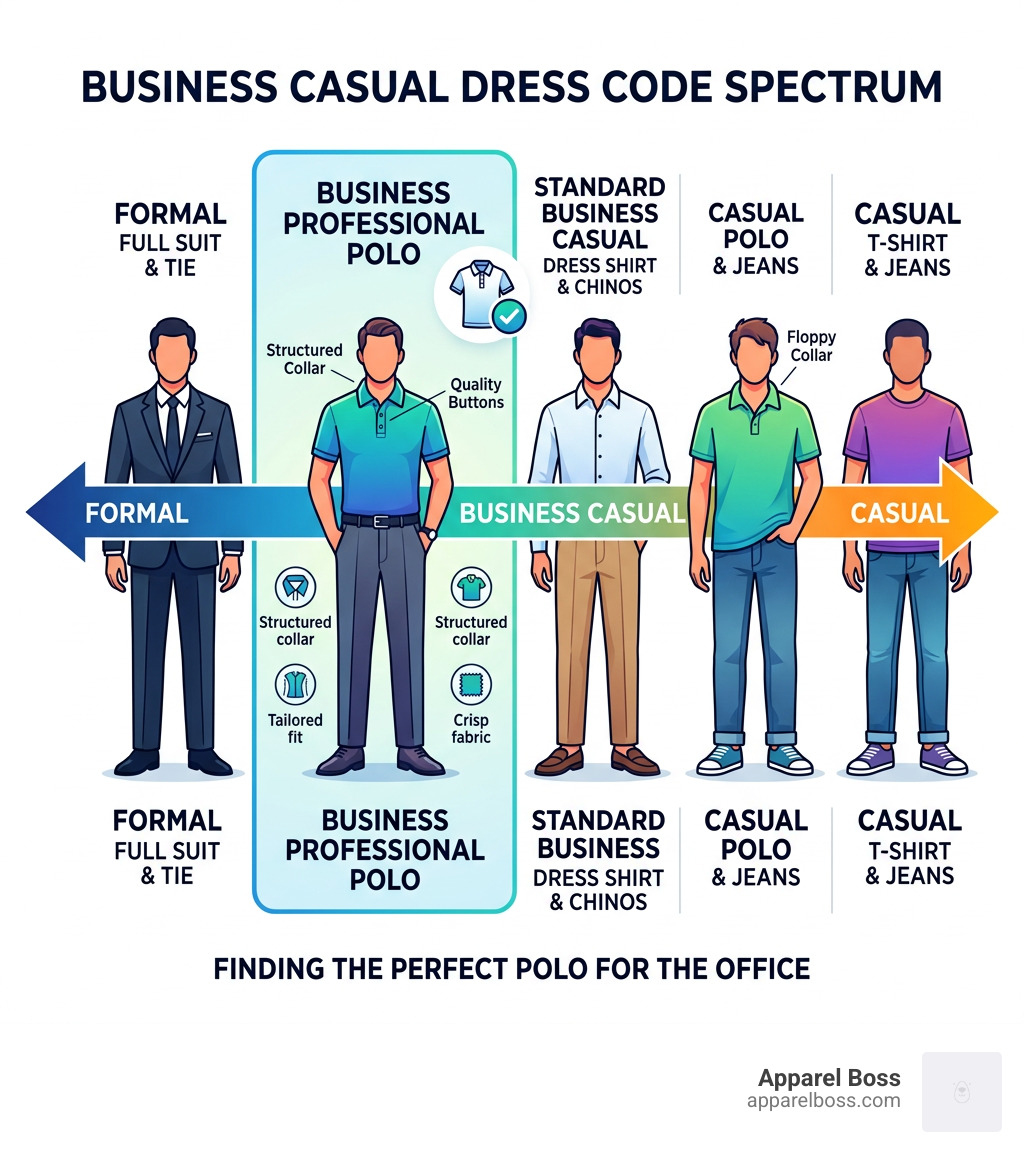
Not all polos are created equal. While the polo you wear to a backyard barbecue and the one you wear to a quarterly board meeting might share the same DNA, the execution is worlds apart. A business professional polo is defined by its structure and its ability to mimic the "seriousness" of a dress shirt while providing the mobility of athletic wear.
In a modern office environment, the standard is set by how well the shirt holds its shape throughout an eight-hour day. A flimsy collar that curls at the tips (often called "bacon collar") or a fabric that wrinkles the moment you sit down in your office chair immediately moves the garment into the "casual" category. To maintain a professional standard, we look for "stay-flat" collars and fabrics with enough "body" to drape cleanly over the torso.
Key Differences Between Casual and Business Professional Polo Shirts
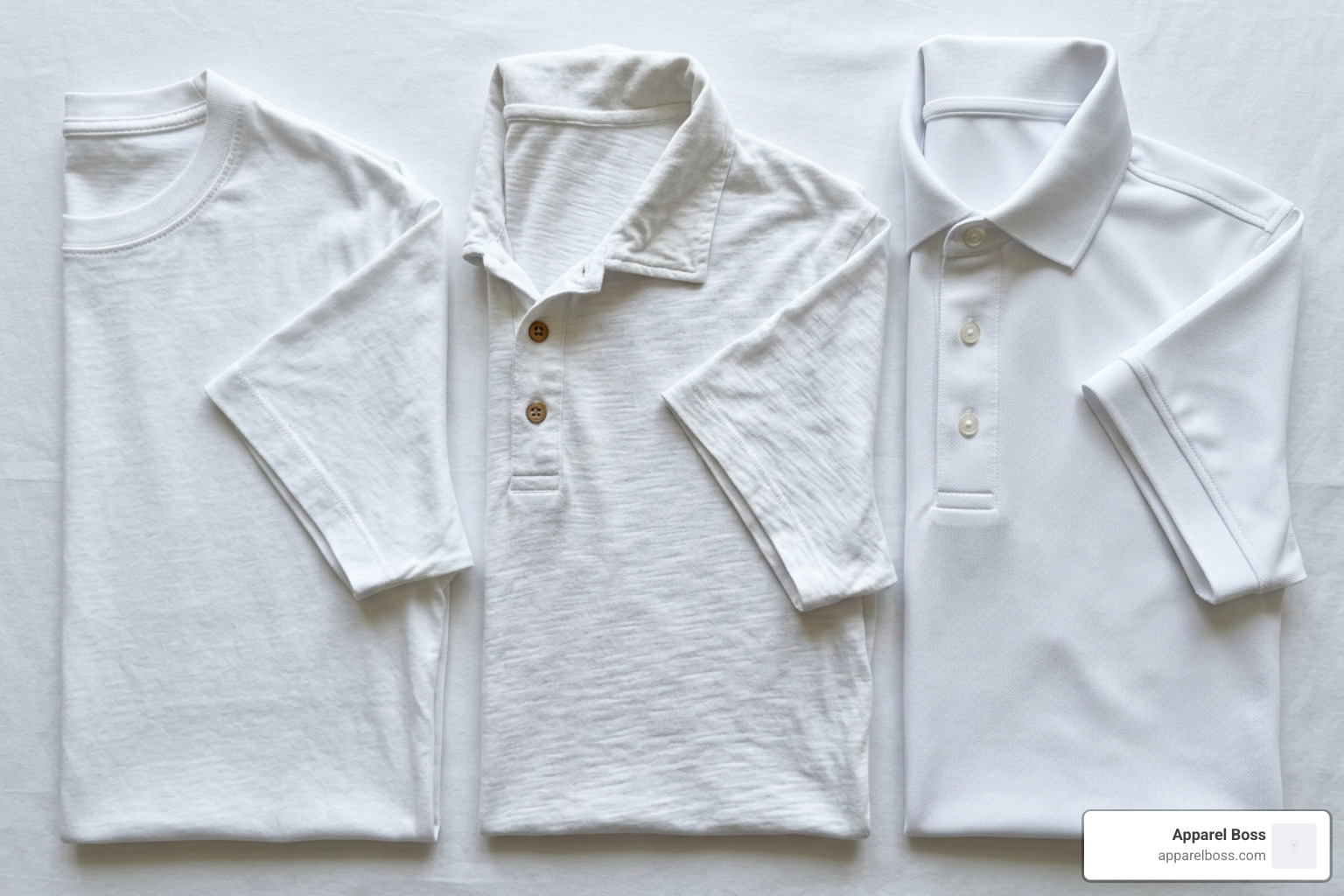
To the untrained eye, a polo is just a polo. But for those of us building a professional brand, the details matter:
- Structured Collars: Professional versions often feature "no-roll" collars or hidden button-down stays. This ensures the collar stands up under a blazer or stays crisp on its own, rather than collapsing flat against the collarbone.
- High-Quality Buttons: Look for dyed-to-match buttons or premium pearlized finishes. Casual polos often use cheap, bulky plastic buttons that can detract from a streamlined look.
- Refined Hems: A professional polo typically has a subtle side vent and a straight hem. Casual versions might have "tennis tails" (longer in the back) which are designed to stay tucked in during sports but can look sloppy if worn untucked in an office.
- Sophisticated Aesthetics: This includes tonal stitching rather than contrast stitching. You want the shirt to look like a single, cohesive unit of clothing, not a piece of sports equipment.
Essential Features and Fabrics
The "feel" of a business professional polo is dictated entirely by its construction. At Apparel Boss, we’ve seen a massive shift toward performance materials, but the classics still hold their ground in traditional corporate settings.
- Cotton Piqué: This is the "gold standard" for texture. The honeycomb-like weave is breathable and has a substantial weight that looks expensive. High-quality cotton piqué is often treated to be shrink and pill-resistant.
- Performance Blends: Usually a mix of polyester and spandex (elastane), these are the workhorses of the modern office. They offer incredible stretch and a silky-smooth hand feel.
- Poly-Cotton Blends: These are often the best choice for company uniforms. They combine the softness of cotton with the wrinkle-resistance of polyester. Statistics show that high-performance mesh polos in these blends frequently receive top ratings (averaging 4.7 out of 5 stars) for their durability in daily work environments.
- Wrinkle Resistance: In a professional setting, looking "rumpled" is the enemy. Premium polos are engineered to go from the dryer to your body without needing an iron.
If you are looking to outfit your entire team with these high-quality materials, you can Submit a request for corporate orders to get started on a custom solution.
Performance Advantages in the Workplace
Why have performance polos taken over the office? It comes down to science. Modern textile technology has introduced features that were once reserved for the golf course:
- Moisture-Wicking: This pulls sweat away from the skin to the surface of the fabric where it evaporates. This is a lifesaver during high-stakes presentations or commutes in the New York humidity.
- Anti-Odor Technology: Many performance polos are treated with antimicrobial finishes that prevent the growth of odor-causing bacteria, keeping you fresh from your 9 AM meeting to your 6 PM dinner.
- Cooling Technology: Some fabrics are designed with "Glacier Cooling" or specialized knit patterns that increase airflow, effectively lowering your skin temperature.
- All-Day Comfort: The inclusion of 3% to 5% spandex allows the shirt to move with you. Whether you’re reaching for a file or typing at a desk, the shirt doesn't "pull" or restrict your movement.
Mastering the Fit and Style of Your Business Professional Polo
Fit is the most important factor in whether a polo looks "professional" or just "casual." A shirt that is too baggy looks like a hand-me-down, while one that is too tight can feel inappropriate for a corporate setting.
- Tailored Fit: This is the sweet spot for most professionals. It features a gentle taper through the waist and a slightly higher armhole, creating a clean silhouette without being restrictive.
- Slim Fit: Best for leaner builds, this fit eliminates excess fabric around the torso and sleeves. It looks particularly sharp when layered under a tailored blazer.
- Classic Fit: A more generous cut through the chest and waist. This is the traditional choice for staff uniforms as it accommodates the widest range of body types comfortably.
- Sleeve Length: For a professional look, the sleeve should hit about mid-bicep. If the sleeve is reaching your elbow, the shirt is too large; if it’s hugging your shoulder, it’s too small.
- Untuckable Tails: Some modern brands design polos with a shorter, "untuckable" length. While tucking in is still the standard for "business professional," a clean, untucked polo with chinos can work for a "laid-back workday" look if the hem is straight and hits just below the beltline.
Choosing Colors and Patterns for a Business Professional Polo
When it comes to color, versatility is your best friend. You want colors that can pair with multiple pairs of pants and jackets.
- The Power Trio: Navy, Charcoal, and White. These three colors should form the foundation of your wardrobe. They are universally accepted in every business environment.
- Muted Tones: Olive, burgundy, and slate blue are excellent "secondary" colors. They add variety without being distracting.
- Subtle Stripes: A fine "micro-stripe" can add visual interest and texture. Avoid bold, wide "rugby" stripes, which lean too far into the casual/sporty category.
- Colorfastness: High-quality professional polos are designed to resist fading. There is nothing less professional than a "black" polo that has faded into a dusty gray after three washes.
How to Style Your Polo for the Office
Styling a business professional polo is about balancing the shirt's inherent casualness with more formal "anchors."
- With Chinos: This is the classic business casual uniform. For a sharper look, choose chinos in a contrasting color (e.g., a navy polo with khaki chinos).
- With Dress Pants: Yes, you can wear a polo with wool trousers. To make this work, the polo must be tucked in, and you should wear a high-quality leather belt that matches your shoes.
- The Blazer Layer: Adding a blazer instantly elevates a polo. Ensure the polo collar is tucked neatly under the blazer lapels. This is a go-to look for client meetings where a full suit feels too stiff.
- Footwear: Loafers, Chelsea boots, or clean dress shoes are the best companions. While "office sneakers" are trending, stick to leather dress shoes if you want to remain firmly in the "business professional" camp.
| Occasion | Polo Style | Bottoms | Footwear | Layering |
|---|---|---|---|---|
| Client Meeting | Solid Navy/White (Tucked) | Grey Dress Slacks | Leather Loafers | Navy Blazer |
| Daily Office Wear | Performance Blend (Tucked) | Slim-fit Chinos | Suede Derbies | Optional Cardigan |
| Casual Friday | Piqué or Micro-stripe | Dark Denim | Clean Sneakers | None |
Long-Sleeve Polos and Formal Settings
Long-sleeve polos are an underrated gem for the cooler months in New York. They offer a "sweater-like" appearance that feels more formal than a short-sleeve version.
- Button-Down Collars: Many long-sleeve versions feature hidden buttons on the collar, which keeps the neckline looking sharp even when worn under a V-neck sweater.
- Ribbed Cuffs: Look for cuffs that have some elasticity so you can push them up slightly for a "relaxed professional" vibe.
- The Sweater-Polo Hybrid: These are often made from merino wool or fine-gauge cotton. They bridge the gap between a polo and a sweater and are highly appropriate for formal business environments when paired with a suit jacket.
Frequently Asked Questions about Business Professional Polos
Can I wear a polo shirt to a formal business meeting?
In most modern "business professional" environments, a high-quality, well-fitted polo is perfectly acceptable, especially when paired with a blazer and dress trousers. However, if the meeting is with a traditional law firm, a high-finance institution, or specifically requests "Business Formal," a dress shirt and tie are still the safer bet. When in doubt, look at what the leadership team is wearing.
What is the best fabric for a polo that doesn't wrinkle?
For a 100% wrinkle-free experience, performance polyester-spandex blends or poly-cotton "easy-care" blends are the winners. These fabrics are engineered to hold their shape and resist creasing even after a long day of travel or sitting. 100% cotton piqué is beautiful but will require a quick steam or iron to look its best.
How should a professional polo shirt fit?
A professional polo should skim the body without hugging it. You should be able to pinch about an inch or two of fabric on either side of your torso. The shoulder seam should sit exactly where your arm meets your shoulder. If it hangs over the edge, the shirt is too big.
Conclusion
The business professional polo has evolved from a simple sports shirt into a cornerstone of the modern workplace. It represents a shift toward a more practical, comfort-focused professional identity that doesn't compromise on authority or style.
At Apparel Boss, we specialize in helping companies harness this style through custom branding. Whether you need embroidered logos for a unified team look or high-performance fabrics for a corporate golf outing, our white-glove service ensures your team looks sharp with a fast 2-3 week turnaround. We believe that when your team feels comfortable and proud of what they’re wearing, it reflects in their work and your brand’s reputation.
For more information on how we can help you build your company’s professional wardrobe, you can view our Privacy policy and wholesale terms or explore More info about Apparel Boss services to see how we manage custom online stores for businesses like yours.
Ready to upgrade your professional look? Let's get started on your custom order today.
Business Professional Polo: How to Look Sharp Without the Suit